
Last updated October 15, 2026
 Whole-home duct cleaning
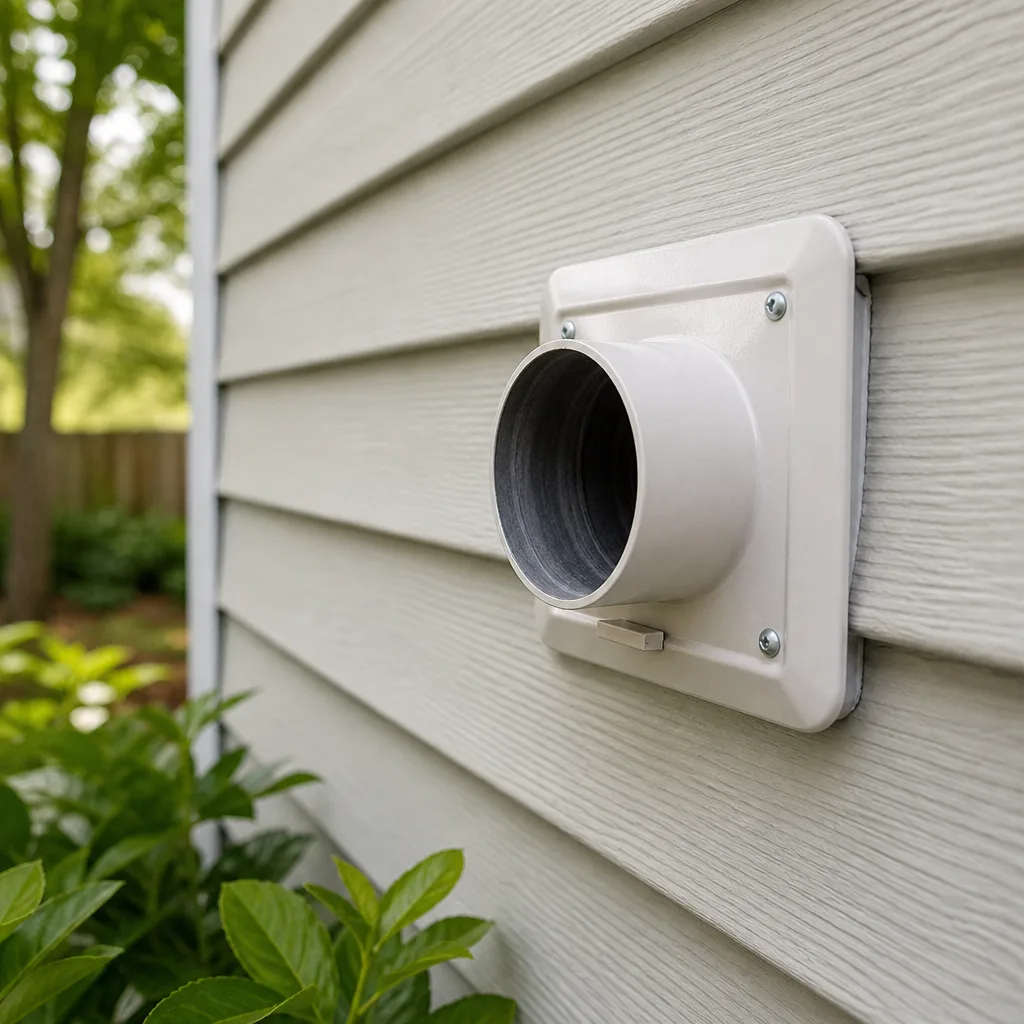 Dryer vent cleaning
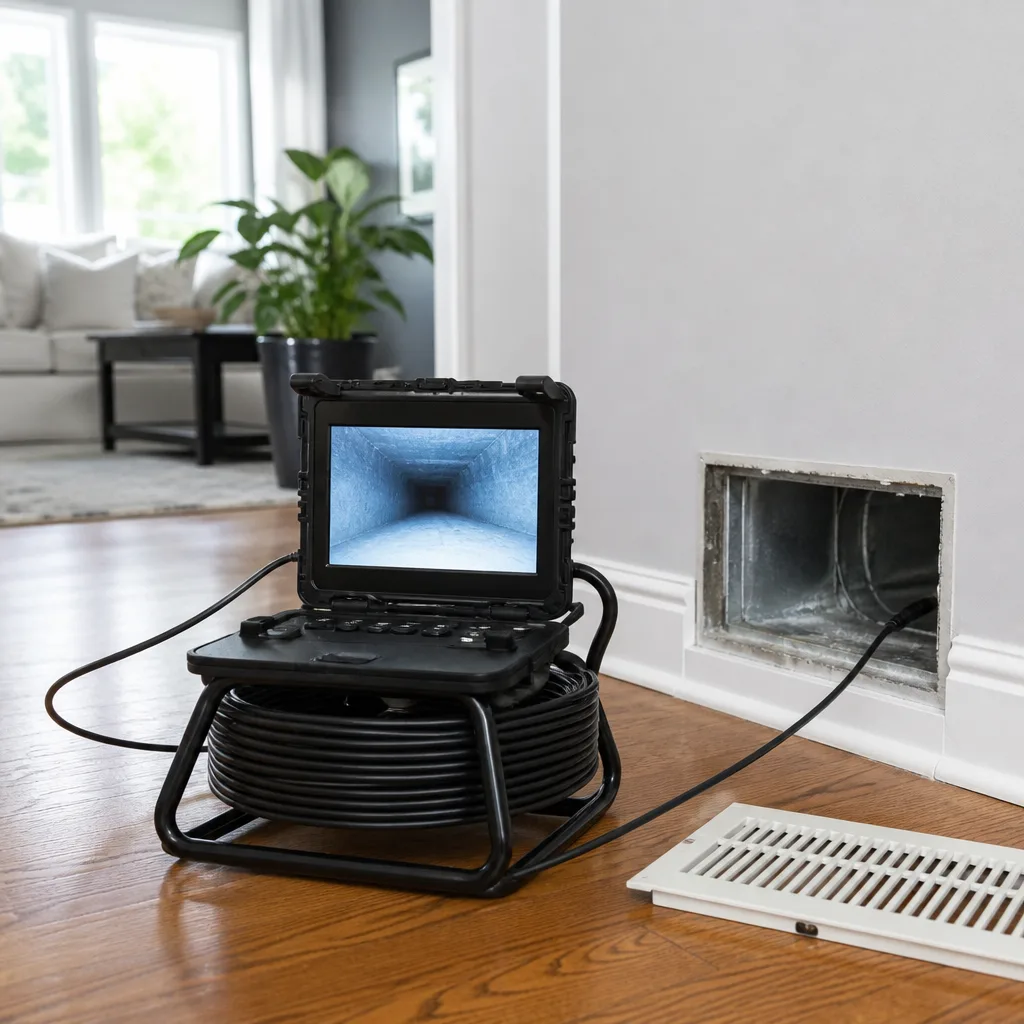 Camera inspection
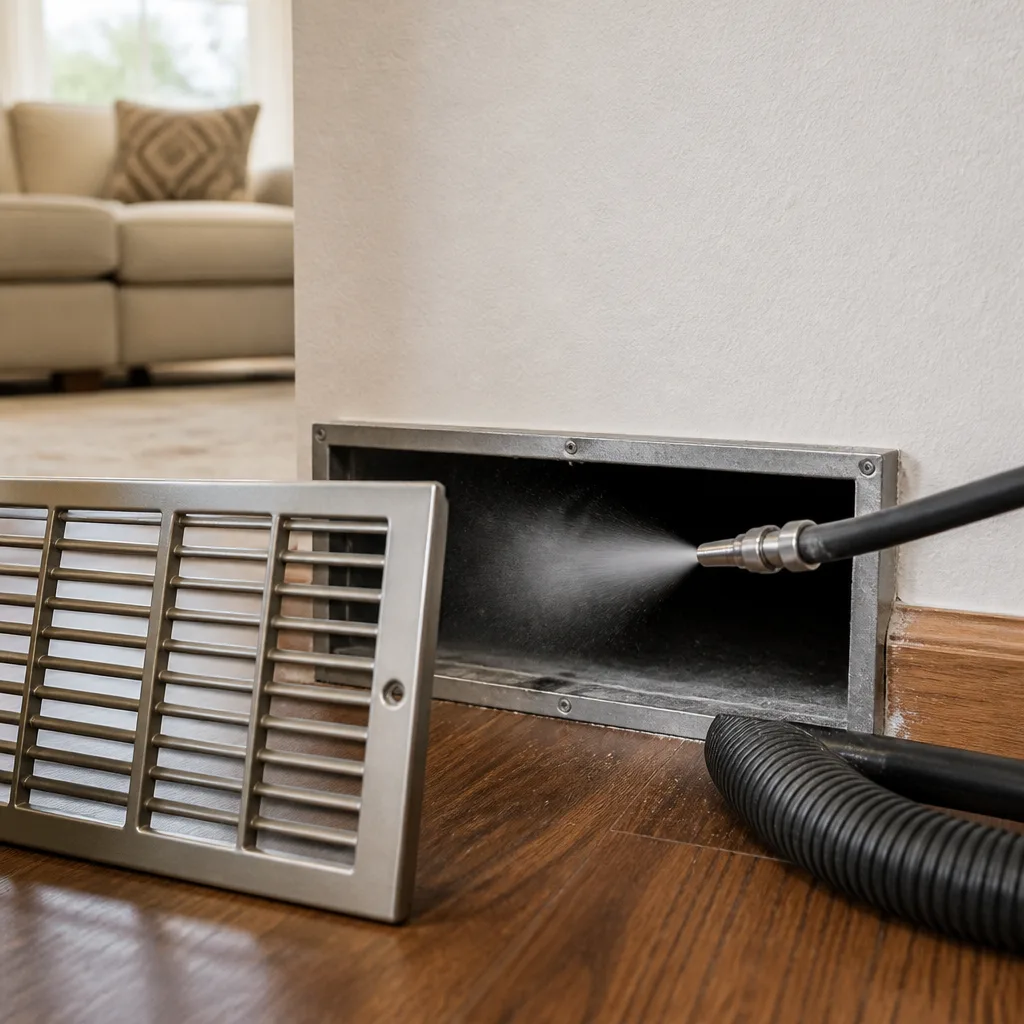 Sanitizing & deodorizing
Whole-system duct and dryer vent check with before-and-after photos - you see exactly what came out of your vents
That "$99 whole-house special" is a bait ad - the real number appears once they are in your hallway, or the "clean" is a shop-vac at the register. We photograph the inside of your ducts before and after instead.
Air Duct Cleaning Maintenance Checklist for Houston Homeowners
The most common duct problem Houston technicians find isn’t dust. It’s a disconnected flex duct joint that’s been conditioning unconditioned attic space for months, running up energy bills while the homeowner keeps changing filters and wondering why the house won’t cool. In a city where the AC runs from March through November, your ductwork is the only part of your HVAC system you never see working, and it fails quietly. This guide gives Houston homeowners a month-by-month inspection routine built around the failure points that actually show up in our climate: moisture intrusion, duct separation, and filter bypass. For a deeper look at when professional help is needed, see our Air Duct Cleaning Warning Signs: A Houston Homeowner’s Reference Guide. You’ll learn what to check, when to check it, and when a maintenance walkthrough reveals something that needs a professional’s tools, not a homeowner’s flashlight.
Quick Answer
The core air duct maintenance routine for Houston homes comes down to this: inspect return grilles and supply registers monthly during cooling season, replace or clean filters every 30 to 60 days depending on MERV rating and household load, visually check accessible flex duct in the attic twice a year (April and October), and schedule a professional Air Duct Cleaning in Houston every 3 to 5 years, or sooner if you see moisture staining, mold, or heavy debris at the registers. Houston’s humidity makes moisture intrusion and duct separation the two biggest risks, so this checklist is built around catching those early signs before they become a full remediation job.
Styles & brands we work with
Table of Contents
- Why Houston Ducts Fail Differently
- Your Houston Month-by-Month Inspection Calendar
- The Five Physical Checkpoints You Can Inspect Without Tools
- Filter MERV Ratings for Houston Allergen Seasons
- How to Document Duct Condition Over Time
- When a Maintenance Check Reveals a Professional Problem
- Common Mistakes to Avoid
- When to Call a Professional
Why Houston Ducts Fail Differently
Houston’s climate punishes ductwork in ways that drier cities simply don’t experience. The numbers tell the story: Houston averages 75 to 80 percent relative humidity during peak summer months, and dew points regularly stay above 70 degrees from May through September. When you run air through metal or flex ducts at 55 to 60 degrees inside an unconditioned attic that’s sitting at 130 degrees with 80 percent humidity, condensation forms wherever insulation is thin, compressed, or missing. That moisture soaks into insulation, drips onto drywall, and creates the conditions for biological growth inside the duct system.
In our experience serving the Houston metro since 2004, we’ve seen four failure patterns that account for the large majority of duct problems in this market. First, flex duct joints separate where the inner liner pulls away from the metal collar, usually because the original install used cheap zip ties instead of proper metal bands and mastic. Second, insulation gets compressed or torn when someone walks through the attic, and the exposed duct sweats. Third, return air leaks pull hot, humid attic air directly into the system, which raises humidity inside the house and forces the AC to work harder. Fourth, drain pans overflow because the primary drain line clogs with algae, a problem Houston’s warm, damp conditions make almost inevitable without regular treatment.
What does this mean for your maintenance routine? You’re not just checking for dust buildup. You’re looking for signs of air moving where it shouldn’t, moisture collecting where it shouldn’t, and airflow becoming restricted by a filter system that’s either too dirty or too restrictive. The checklist below is organized around those physical failure points, not around a generic cleaning schedule.
Your Houston Month-by-Month Inspection Calendar
Houston has essentially three seasons that matter for duct maintenance: pre-summer (March through May), peak humidity (June through September), and post-hurricane recovery (October through November). Winter, such as it is, runs from December through February and is the lightest load period. Here’s the month-by-month routine that aligns with what’s actually happening in your attic and your HVAC system during each of those windows.
March: Pre-Summer Tune-Up
March is when Houston homeowners should do their most thorough annual inspection. The AC hasn’t been running hard yet, the attic is still bearable to enter, and any problems you find can be fixed before the first 95-degree day. During March, we recommend the following steps.
- Replace the air filter with a fresh one and note the date on the filter frame with a permanent marker.
- Walk the attic (if accessible and safe) and inspect every visible flex duct run for sagging, kinks, or separated joints.
- Check the condensate drain pan under the indoor unit for standing water or staining that indicates overflow.
- Inspect all visible supply registers and return grilles throughout the house for dust accumulation, moisture staining, or loose fit.
- Run the AC for 15 minutes and feel for airflow at each register. A weak register usually means a leak or blockage somewhere upstream.
June through September: Peak Humidity Monitoring
During peak cooling months, the system runs hard and continuously, which means small problems compound quickly. A filter that was fine in April may be loaded by July, especially if you have pets or live near construction. Check the filter every 30 days. Look at the return grille for dust caking. Listen for whistling sounds at registers, which often signals a duct leak pulling air through a small gap. If you notice condensation on any visible duct surface, that’s a red flag that insulation has failed or been displaced.
October: Post-Hurricane Season Inspection
After hurricane season winds down and the first cool fronts push through, give the system a thorough post-summer check. High winds and heavy rain can shift attic insulation, dislodge duct connections, and drive moisture into the attic that lingers for weeks. Check for water staining on attic decking above the duct runs. Feel for soft spots in flex duct insulation. Look for damp insulation batts. If you had any roof work done during the summer, check that workers didn’t compress or tear duct insulation while moving around the attic.
December through February: Light Duty Period
Winter in Houston is short and mild, which makes it the ideal time to schedule Air Duct Cleaning services or sealing work while demand is lower. It’s also a good time to replace an aging filter system or upgrade to a media cabinet if you’re still using a 1-inch filter slot. We’ll cover filter options in more detail below, but the takeaway for winter is this: use the light-load months to prepare the system for the next cooling season.
The Five Physical Checkpoints You Can Inspect Without Tools
You don’t need specialized equipment to spot most early warning signs. These five physical checkpoints are visible from inside the house or from a safe position at the attic access point, and each one tells you something specific about the health of the duct system.
Checkpoint 1: Supply Registers
Walk the house and look at every supply register, which is the vent where conditioned air blows into a room. What you’re looking for: dust buildup on the register face itself (normal in small amounts, a problem in thick layers), moisture staining on the surrounding drywall (signals a condensation or leak problem), and airflow strength when the system runs. Hold a tissue near each register while the AC runs. It should flutter visibly. If one register has noticeably weaker airflow than others, that room’s duct run likely has a leak, a kink, or a disconnected joint. Note which rooms feel warmer than others during peak heat. That’s diagnostic information a contractor can use to locate the problem faster, and it’s information you can document yourself.
Checkpoint 2: Return Grilles
The return grille is where air gets pulled back into the system, and it’s usually located in a hallway or central living area. Houston return grilles often show dust caking faster than supply registers because they’re pulling unfiltered air if the filter isn’t seated correctly. Check for dust accumulation on the grille face, check that the filter behind it (if applicable) is seated flat with no gaps around the edges, and listen for a hissing sound when the system runs, which can indicate air bypassing the filter. A return grille that’s caked with dust means unfiltered air has been entering the system, and that dust loads the blower motor, the evaporator coil, and the entire duct network.
Checkpoint 3: Visible Flex Duct
From the attic access point, visually inspect as much flex duct as you can safely see. Look for three things. First, sagging: a properly supported flex duct should have a gentle curve, not a U-shaped dip that creates a low spot where condensation collects. Second, kinks: flex duct gets bent when it’s compressed or mishandled, and a kinked duct can cut airflow to a room by half or more. Third, separation: the inner liner of flex duct connects to the metal collar with a band, and over time that connection can loosen, especially in Houston attics where extreme heat cycles cause the materials to expand and contract. If you see exposed metal collar, separated inner liner, or duct ends that look pulled apart, you’ve found the problem.
Checkpoint 4: Drain Pan
Every air handler in Houston has a condensate drain pan underneath the evaporator coil. During cooling season, the coil pulls gallons of moisture out of the air, and that water routes through the drain line to the outside. If the drain line clogs, which happens frequently in Houston due to algae growth in the warm, wet line, the pan overflows. Water then leaks into the ductwork, the attic, or the ceiling. Check the drain pan for standing water, staining, or mineral deposits. Check the drain line outside for steady drip during AC operation. If the drip stops while the AC runs, the line is likely clogging. A simple check, but it catches one of the most common causes of water damage in Houston homes.
Checkpoint 5: Filter Housing Seal
The filter only works if air actually flows through it. If the filter housing has gaps around the edges, air bypasses the filter entirely, pulling unfiltered air directly into the blower and the ductwork. Check that the filter sits flat and tight in its slot. Check that the filter cover or access door closes completely. If you have a media cabinet, check that the cabinet door seals properly. A gap the width of a credit card is enough to let a meaningful amount of unfiltered Houston air into the system, and that air carries dust, pollen, and in peak pollen months, a heavy load of oak and ragweed particulate.
Filter MERV Ratings for Houston Allergen Seasons
Houston’s allergen calendar is different from most of the country. Oak pollen peaks in March and April. Ragweed runs from August through October, often overlapping with mountain cedar that arrives with winter cold fronts. Mold spores are present year-round in Houston but spike after heavy rains and during the humid summer months. All of this means one thing for filter selection: the right filter rating changes with the season, and higher is not always better.
Here’s a practical guide to MERV ratings for Houston homes.
- MERV 8 (standard pleated): the baseline for most Houston homes. Captures dust, pollen, and mold spores down to about 3 microns. Low airflow resistance, which matters when your AC runs 10 to 12 hours a day in summer. Use this during peak cooling months if you have an older system or a 1-inch filter slot.
- MERV 11 (upgraded pleated): captures smaller particles, including more mold spores and pet dander. Good choice for spring when oak pollen is heavy and for fall when ragweed peaks. Slightly more restrictive than MERV 8, so check that airflow at registers remains strong after installing.
- MERV 13 (high-efficiency pleated): captures very fine particles, including some bacteria and smoke from summer wildfire drift that sometimes reaches Houston from West Texas. Only use this rating if your system was designed for it, typically meaning a 4-inch media cabinet installed by a contractor. A MERV 13 filter in a 1-inch slot will restrict airflow enough to raise energy bills and strain the blower motor.
The most common filter mistake we see in Houston homes is a homeowner installing a high-MERV filter in a standard 1-inch slot because they want better filtration. What they get is restricted airflow. The system still runs, but it works harder, the coil gets colder than designed, and in the worst case, the coil freezes. A frozen coil sends liquid refrigerant back to the compressor, which shortens the compressor’s life and can cause a failure that costs thousands. The advice is simple: if your system uses 1-inch filters, stay at MERV 8 or MERV 11 and change it more often. If you want high-efficiency filtration, install a 4-inch media cabinet, which gives the filter the surface area needed to protect airflow. Hollis Air Duct Houston can help assess what your system can handle, and we carry filtration products from Honeywell and Aprilaire, two brands we trust because they hold up in continuous Houston use. For more guides & resources on keeping your system running efficiently, explore our blog.us Houston runtime.
How to Document Duct Condition Over Time
Here’s a situation we see regularly: a Houston homeowner calls because they’re concerned about duct condition, and they’ve been told by a contractor that the ducts are “severely contaminated” and need immediate replacement. The homeowner has no way to evaluate that claim because they’ve never documented the condition over time. They don’t know if the dust level is new or years old, if the moisture staining appeared last month or last decade, or if the sag they see in a flex duct run has always been there or is a recent development.
Documentation is how you protect yourself from a sales pitch disguised as an inspection. Here’s a simple system that takes minutes per season and builds a record you can reference when you do call a contractor.
- Photograph the registers. Use your phone to take a close-up photo of each supply register and the return grille twice a year, in March and October. Photos in the same location, same angle, same lighting give you a time-lapse view of dust accumulation.
- Photograph the attic duct runs. From the attic access point, take wide-angle photos of the visible flex duct. Same position each time. This catches sagging, separation, and insulation damage that develops gradually.
- Note the filter condition. When you replace the filter, take a photo of the dirty filter next to the new one. This documents how quickly your filter loads, which tells you both the particulate load in your home and whether your filter change interval is correct.
- Track register airflow. Once a quarter, go around with a tissue and note which registers flutter strongly and which ones feel weak. Write it down or note it in a phone app. A register that was strong in March and weak in July is telling you something changed.
- Log any moisture events. If you see condensation on a duct, staining on a ceiling, water in the drain pan, or any musty odor, document the date, location, and what you observed. Houston moisture problems come back if the root cause isn’t fixed, and a log helps a contractor pinpoint recurrence patterns.
When you do call a contractor, share this documentation. A reputable company will use it to give you a specific, evidence-based comparison of what’s changed and what hasn’t, rather than a generic “you need full replacement” pitch. If a contractor refuses to look at your documentation or dismisses it as irrelevant, that tells you something about how they do business.
When a Maintenance Check Reveals a Professional Problem
Some findings from your maintenance checklist are straightforward homeowner fixes: a dirty register, a filter that needs changing, a drain line you can flush with a garden hose. But several findings indicate a problem that requires professional equipment and expertise, and knowing the difference saves you from either ignoring a real issue or attempting a repair that makes things worse.
Here are the findings that should prompt a call to a professional.
- Visible mold growth on any duct surface, insulation, or nearby framing. Mold inside ductwork spreads through the system and deposits spores in every room. Professional remediation typically requires negative-air containment, which pulls contaminated air through HEPA filtration rather than letting it circulate through the house.
- Disconnected or separated flex duct joints. Reattaching a flex duct joint properly involves cleaning the collar, re-seating the inner liner, applying mastic, and correctly re-insulating the outer jacket. A poorly done reconnection leaks and separates again, often within months.
- Water pooling in the drain pan or staining that indicates repeated overflow. This usually signals a drain line clog, a failed condensate pump, or a coil pan that’s rusted through. The fix may be simple, but a wrong diagnosis leads to repeated water damage.
- Persistent musty odor that doesn’t clear after filter changes and register cleaning. This typically means microbial growth inside the duct system or on the coil, which requires professional cleaning and disinfection with the right equipment.
- Weak airflow in multiple rooms simultaneously. This can indicate a collapsed duct run, a major separation, or a failing blower motor. The diagnostic process requires measuring static pressure and airflow, which homeowners can’t do without specialized instruments.
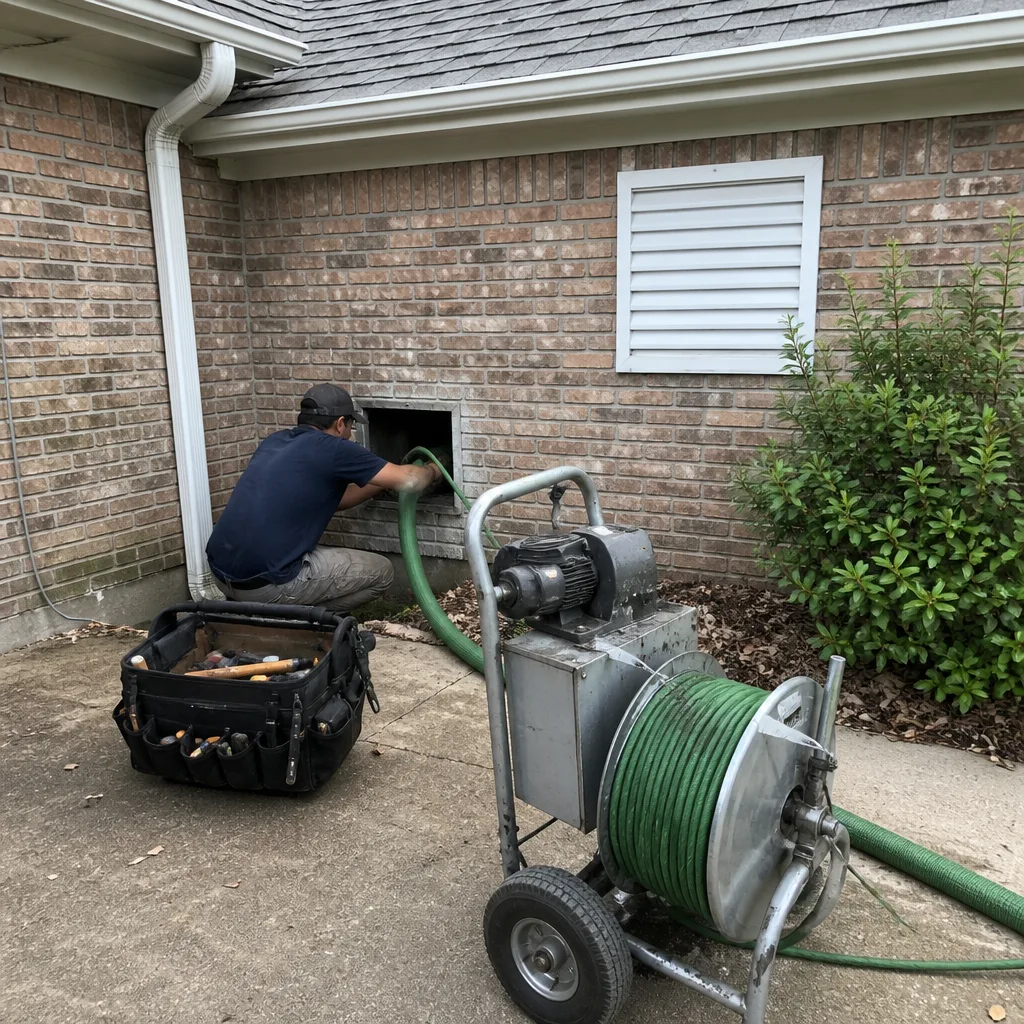
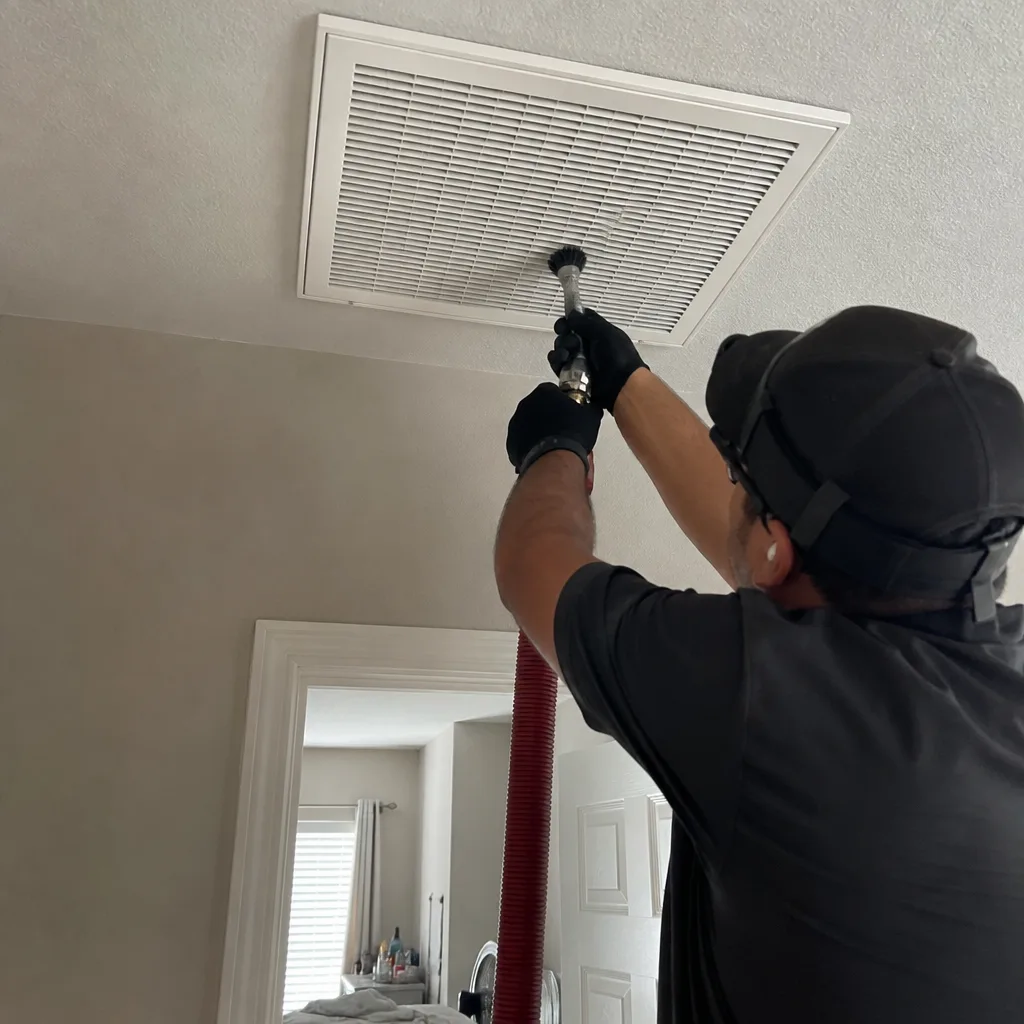
If a professional does perform duct work, request documentation afterward. A legitimate company will provide before-and-after photos, a written description of the work performed, and a written warranty that specifies coverage duration and what happens if the work fails. At Hollis Air Duct Houston, every job receives a written price before work begins and is covered by our 365-Day Done Right Promise. That means if the work fails within a year, we come back and make it right at no charge, including a free second visit. That’s the standard we run on, and it’s written on every job.
Common Mistakes to Avoid
Even homeowners who stay on top of filter changes and notice airflow problems make mistakes that either create new issues or mask existing ones. Here are the most common ones we see in Houston homes.
- Installing a MERV 13 filter in a 1-inch slot. The filter’s airflow resistance strains the blower motor and can freeze the coil, especially in Houston’s continuous summer runtime. Use MERV 8 or 11 in standard slots and upgrade to a 4-inch media cabinet for higher MERV ratings.
- Using flexible dryer duct on a bathroom exhaust fan. It sags, fills with condensation, and restricts airflow. Houston’s humidity makes this mistake more damaging here than in dry climates.
- Sealing registers closed in unused rooms. The system was designed for a specific airflow balance. Closing too many registers increases static pressure, which causes duct leaks, coil icing, and blower stress. It also forces conditioned air through gaps in the closed register’s fit.
- Neglecting the drain line. Houston’s warm, humid conditions grow algae in condensate lines at a rate that surprises homeowners from drier regions. A line that runs clear in January can clog by June. Flush the line quarterly during cooling season.
- Spraying household cleaner into the return grille. This pushes moisture and chemical residue into the ductwork and can create biological growth conditions. Clean the grille face only, and if the ducts themselves need cleaning, use a professional with the right containment equipment.
- Piling insulation directly on top of flex duct in the attic. Compression reduces the duct’s insulating value, and additional weight increases sagging. Keep insulation at the attic floor level and leave duct runs clear.
When to Call a Professional
Your monthly and seasonal checklist will catch most problems early, but some situations require professional attention. Call a professional if you find mold growth on any duct surface or surrounding materials, if you see moisture staining that reappears after you dry it, if multiple rooms suddenly have weak airflow, if you hear rodent activity in the ductwork, or if you’ve documented a progressive decline in airflow or dust accumulation that cleaning registers and changing filters doesn’t fix. Hollis Air Duct Houston offers free estimates in Houston, and every job gets a written price before work starts. We also handle duct sealing in Houston and dryer vent cleaning in Houston if your inspection reveals related issues. Call (713) 936-5800 and we’ll walk your system, document what we find, and give you a written quote on the spot.
See the difference
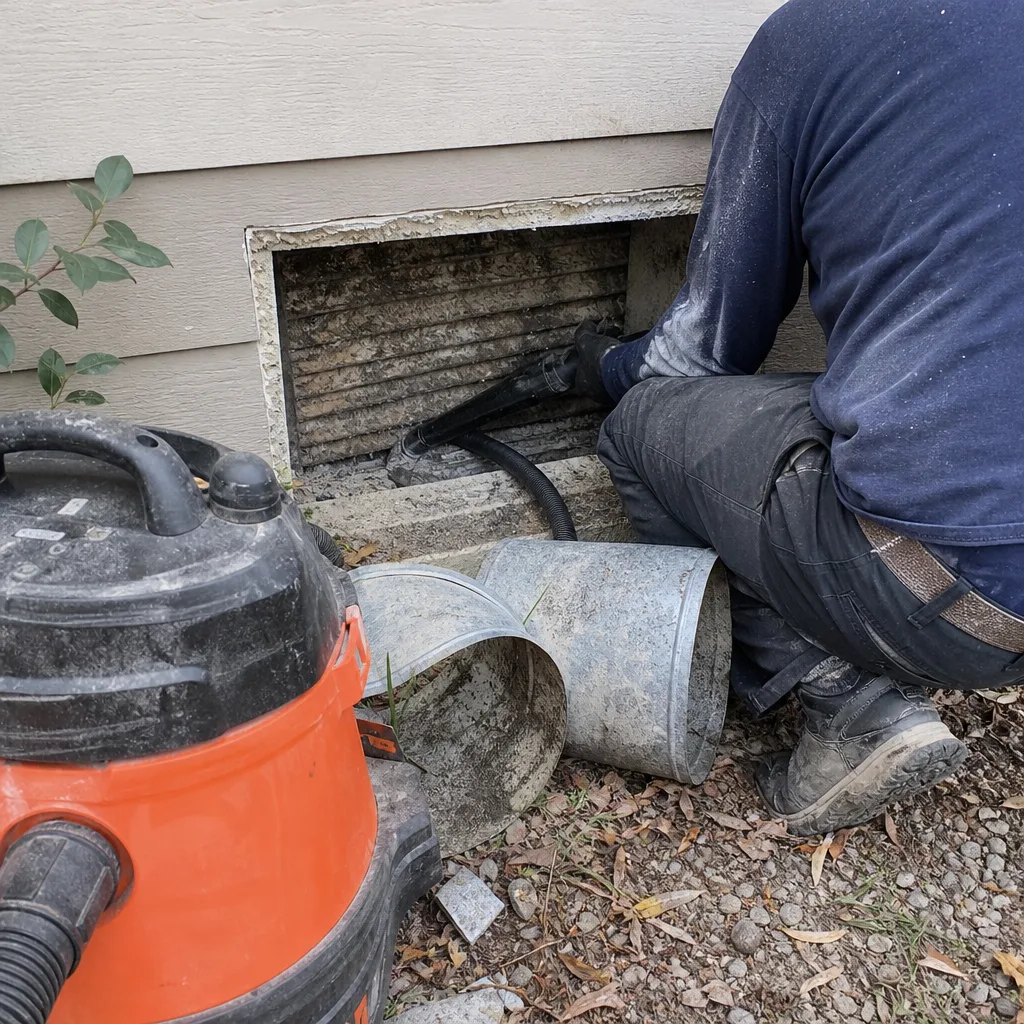 Before
 After
After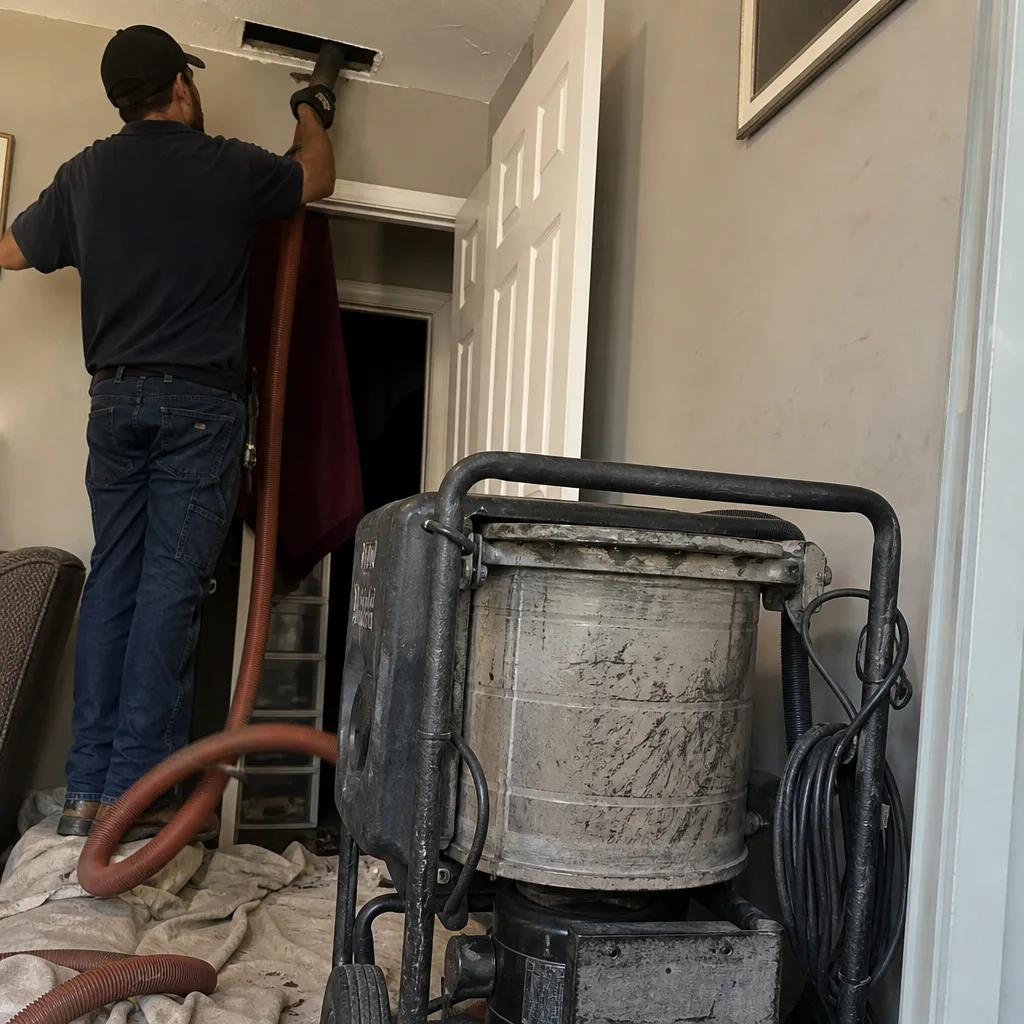 Before
 After
After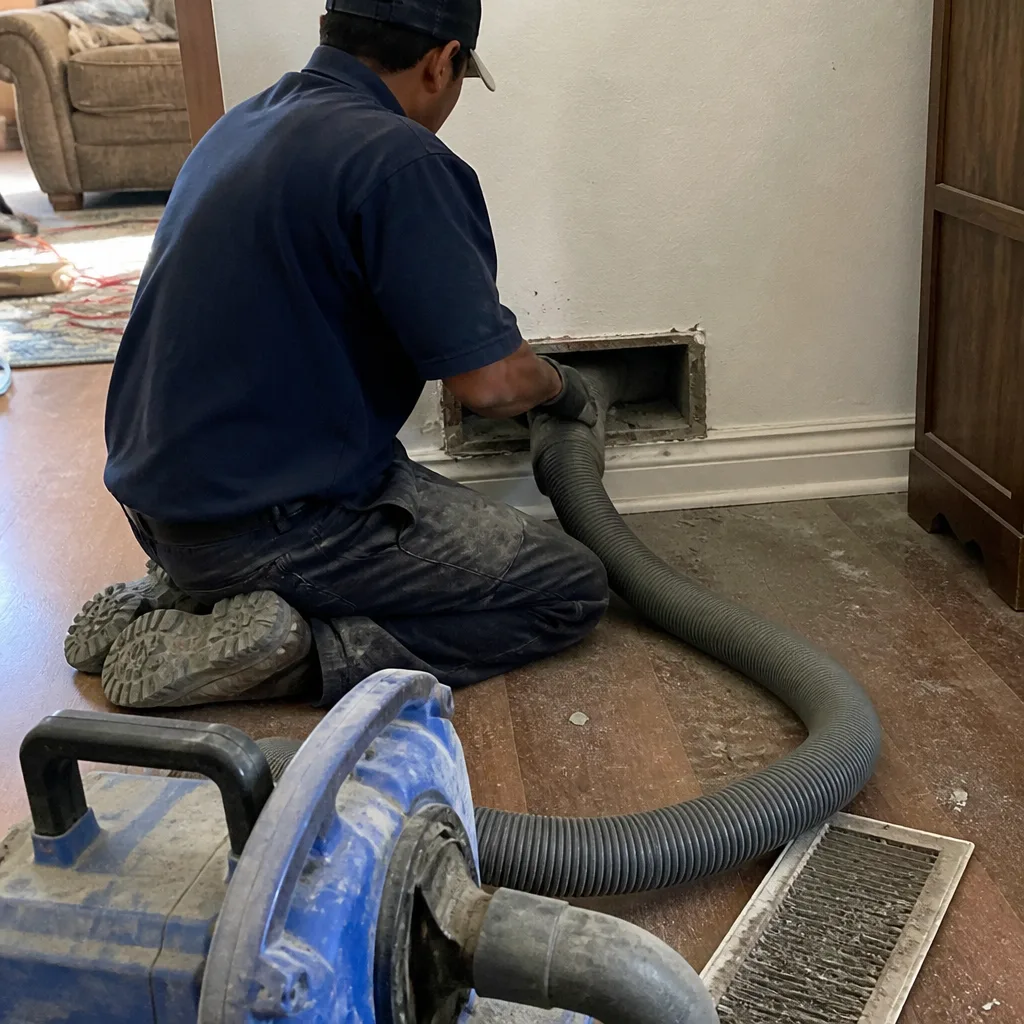 Before
 After
AfterFrequently Asked Questions
Houston homes should have ducts professionally cleaned every 3 to 5 years, depending on household factors like pets, smokers, recent renovations, and whether you live in a high-dust area near construction. Homes with documented moisture problems or visible mold growth need cleaning sooner, and the underlying moisture issue must be fixed first or the cleaning won’t hold. Before scheduling any work, review Air Duct Cleaning Permits, Codes & Inspections in TX: What You Need to Know to understand regulatory requirements. For an exact recommendation based on your system’s condition, call (713) 936-5800 and we’ll assess what you’re working with.
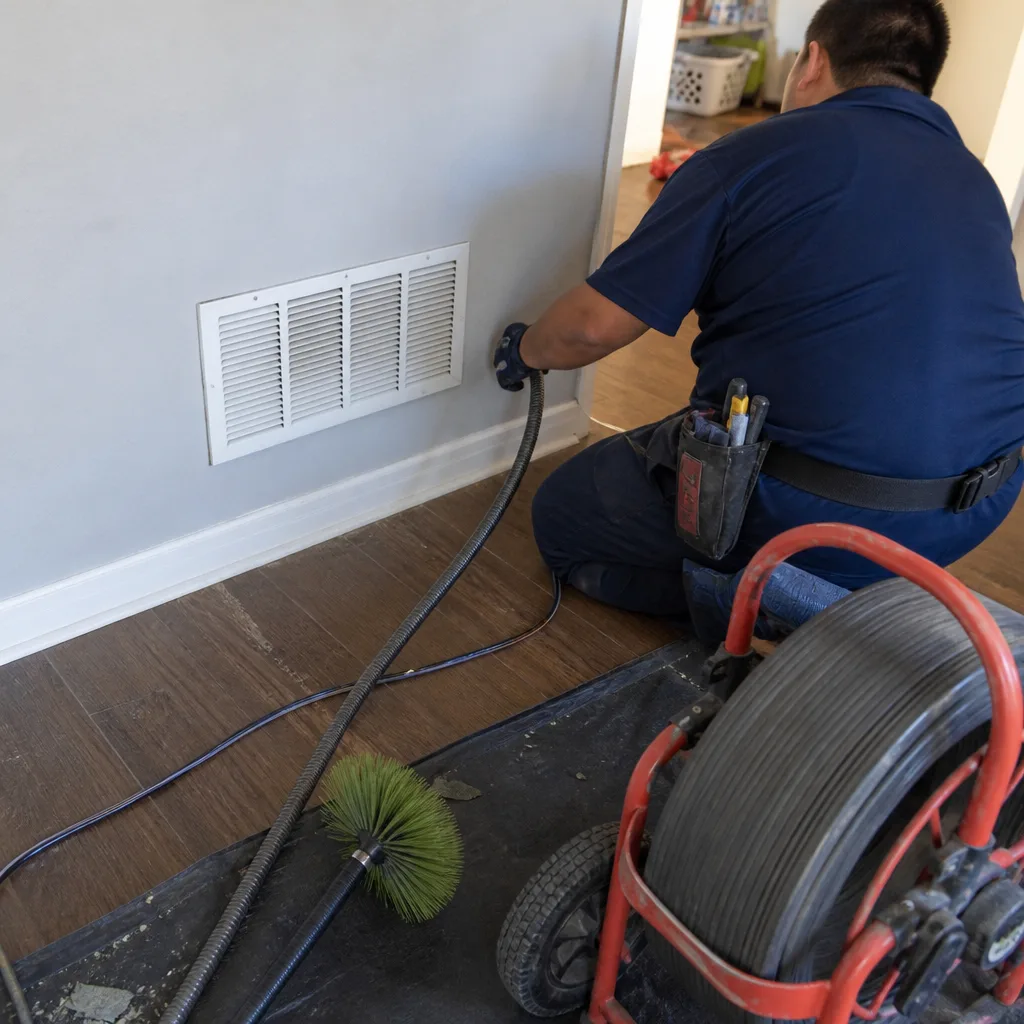
The difference is the method and the time spent. A low-cost duct cleaning often uses a vacuum-only approach that doesn’t actually dislodge the debris caked onto duct walls. A proper cleaning uses negative-air containment and mechanical agitation, typically with a rotary brush system like the Rotobrush equipment we run, to break material loose and pull it through HEPA filtration rather than blowing it into the house. If a price seems dramatically lower than the Houston market rate, ask what method they use and whether they provide before-and-after photos. Hollis Air Duct Houston gives you a written price before work starts, and that price doesn’t change at the door.
After a major storm, the question is whether water got into the duct system, not whether wind “blew something in.” Exposed ducts are inside the attic and are protected from direct wind and rain. The real risk is roof damage that lets water into the attic, which then drips onto or seeps into the ductwork. If you had roof damage, check for water staining on attic decking and around duct runs before assuming the ducts are contaminated. If water entered the attic, an inspection is warranted before mold gets established.
You can clean the register faces and the visible return grille, but a shop vac cannot reach the majority of the duct system. The runs are too long, too narrow, and too deep inside the structure. A shop vac with no HEPA filtration also exhausts fine dust back into the living space, potentially making the problem worse. Professional duct cleaning uses negative-air machines from brands like Nikro to keep dust contained during the work. For anything beyond surface-level cleaning, professional equipment is the right tool.
The 365-Day Done Right Promise covers the work Hollis Air Duct Houston performs for a full year after the job date. If the work fails within that year, we come back and make it right at no charge, and you get a free second visit. It’s written on the job paperwork, not verbal warranty language. If you have a question about what’s covered on your specific job, we’ll answer it before the work starts, in writing.
Ask for before-and-after photos of the inside of the ductwork. A reputable company will provide them without hesitation, typically taken with a camera scope at the same locations before and after the work. You should also see a measurable difference in dust at the registers within the first week, and the air in the house should feel cleaner, not dustier, immediately after. If a contractor won’t show you photos, that’s a red flag. At Hollis Air Duct Houston, documentation comes standard, and our 365-Day Done Right Promise backs the work in writing.
The Bottom Line
Your Houston duct system works harder and in harsher conditions than most of the country. The routine that protects it is simple but specific: monthly filter checks during cooling season, twice-yearly visual inspections of registers and accessible attic duct runs, seasonal awareness of Houston’s allergen and moisture cycles, and documentation of what you see so you can distinguish a real problem from a contractor’s pitch. Catch moisture before it becomes mold. Catch separation before it becomes a full disconnect. Catch filter bypass before it loads your blower and coil with unfiltered Houston air. And when you need professional help, choose a company that puts the price in writing before the work starts and stands behind the job for a full year. That’s the discipline the work deserves.
Written by Roy Castellanos, Owner at Hollis Air Duct Houston, serving Houston since 2004.