
Last updated October 15, 2026
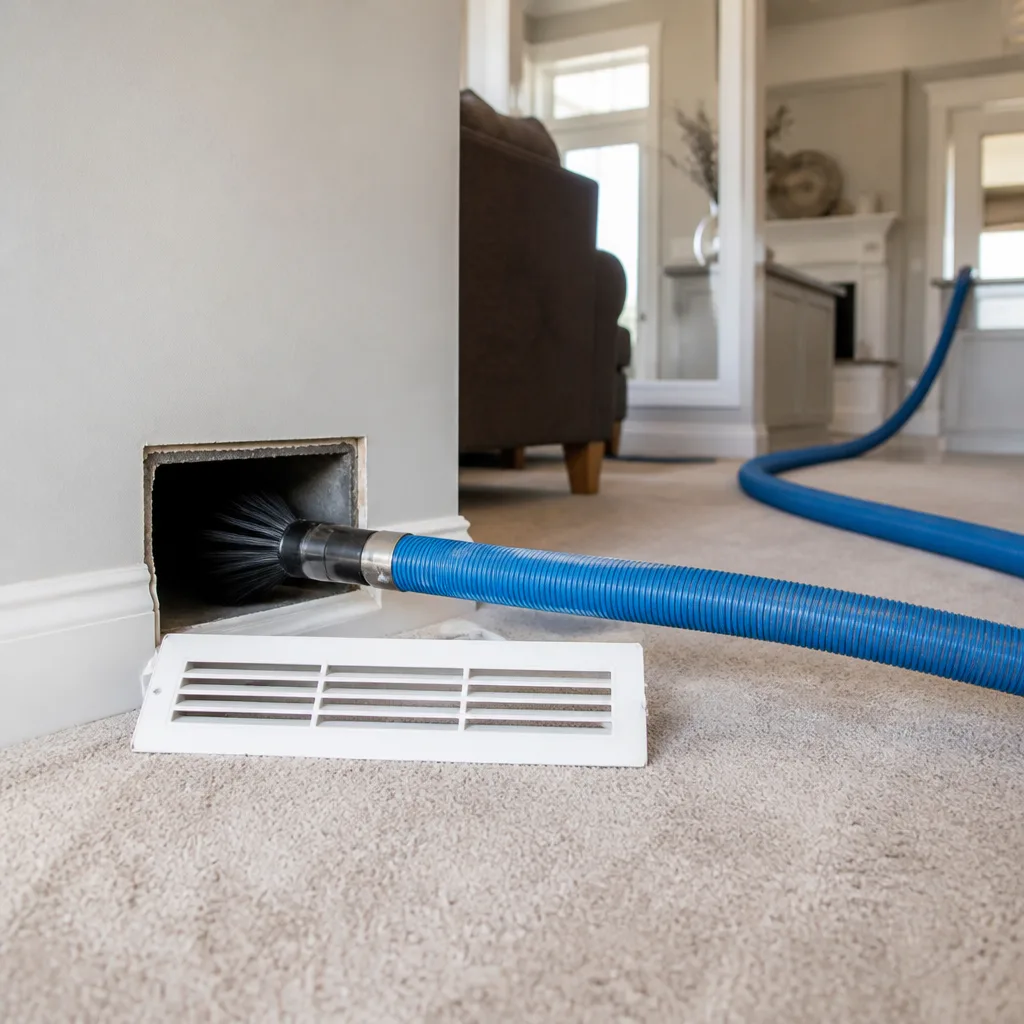 Whole-home duct cleaning
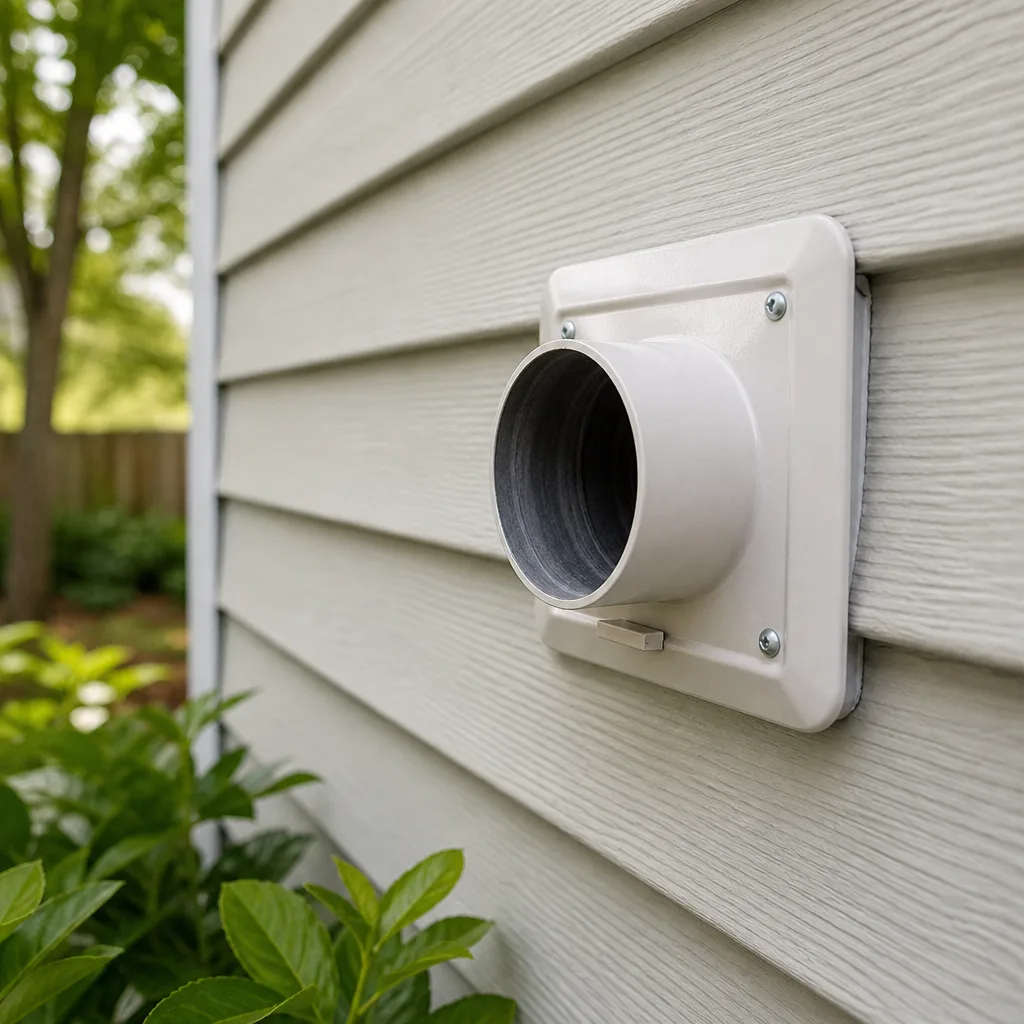 Dryer vent cleaning
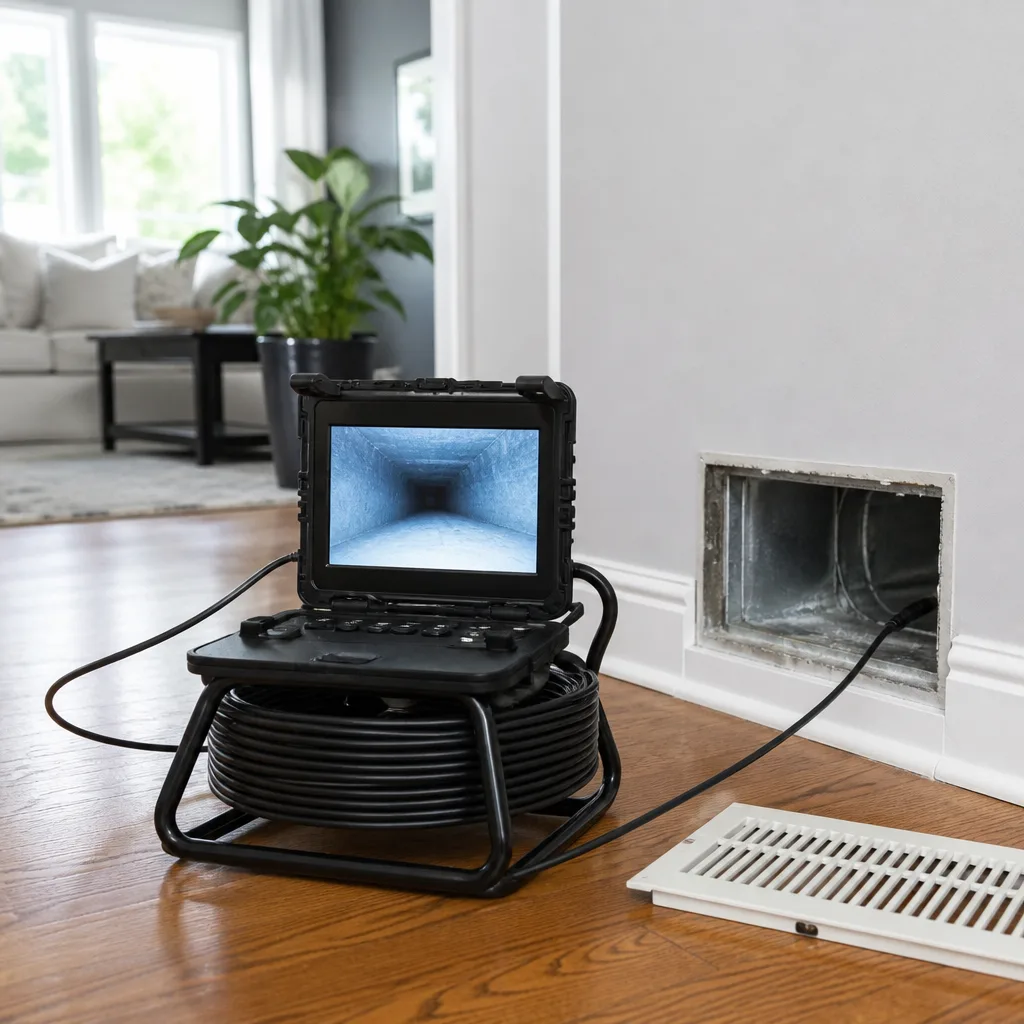 Camera inspection
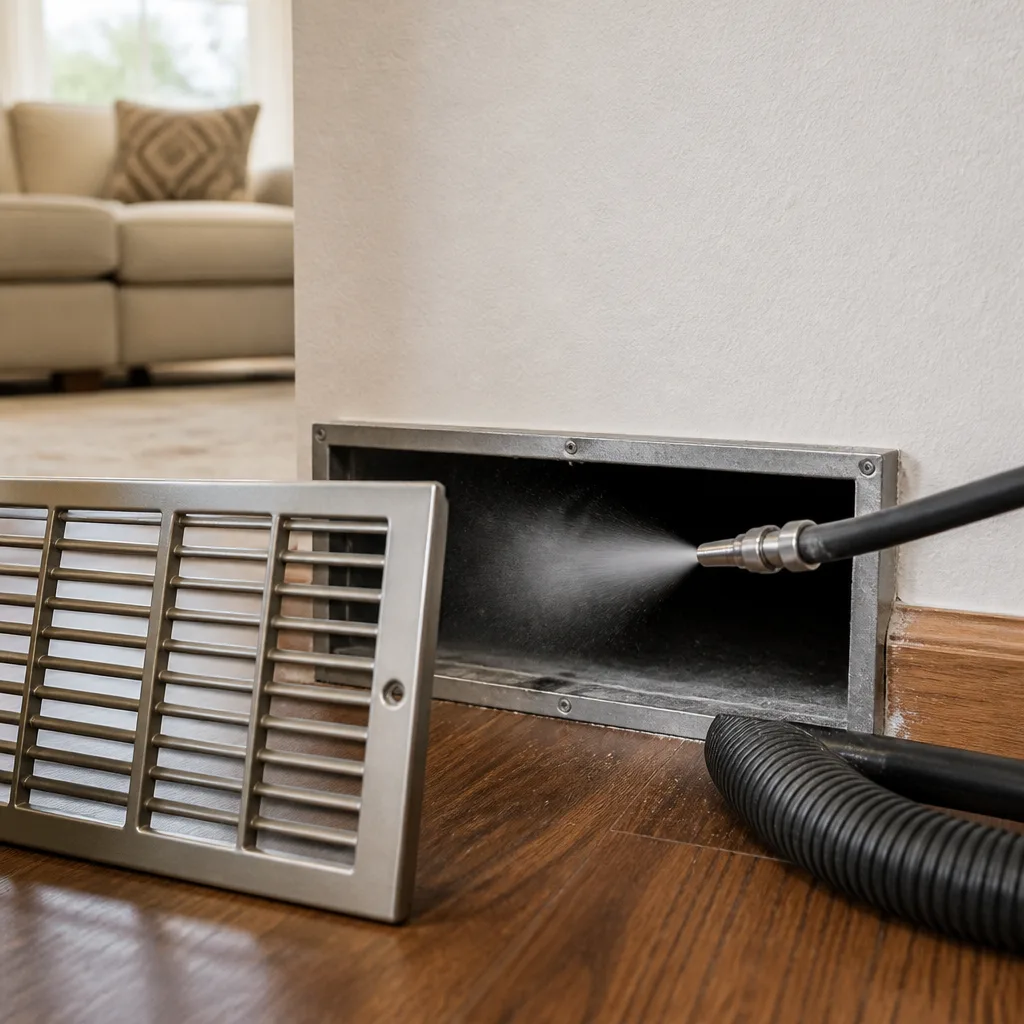 Sanitizing & deodorizing
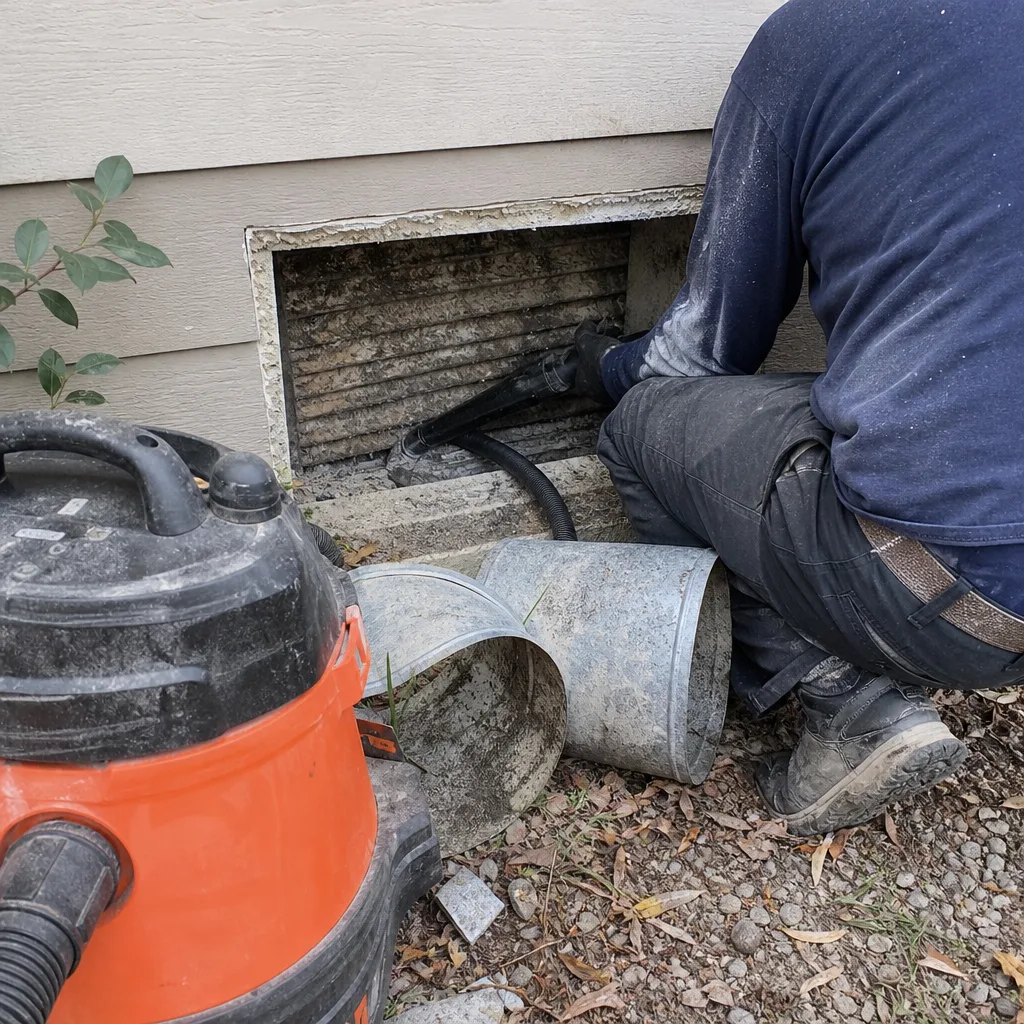
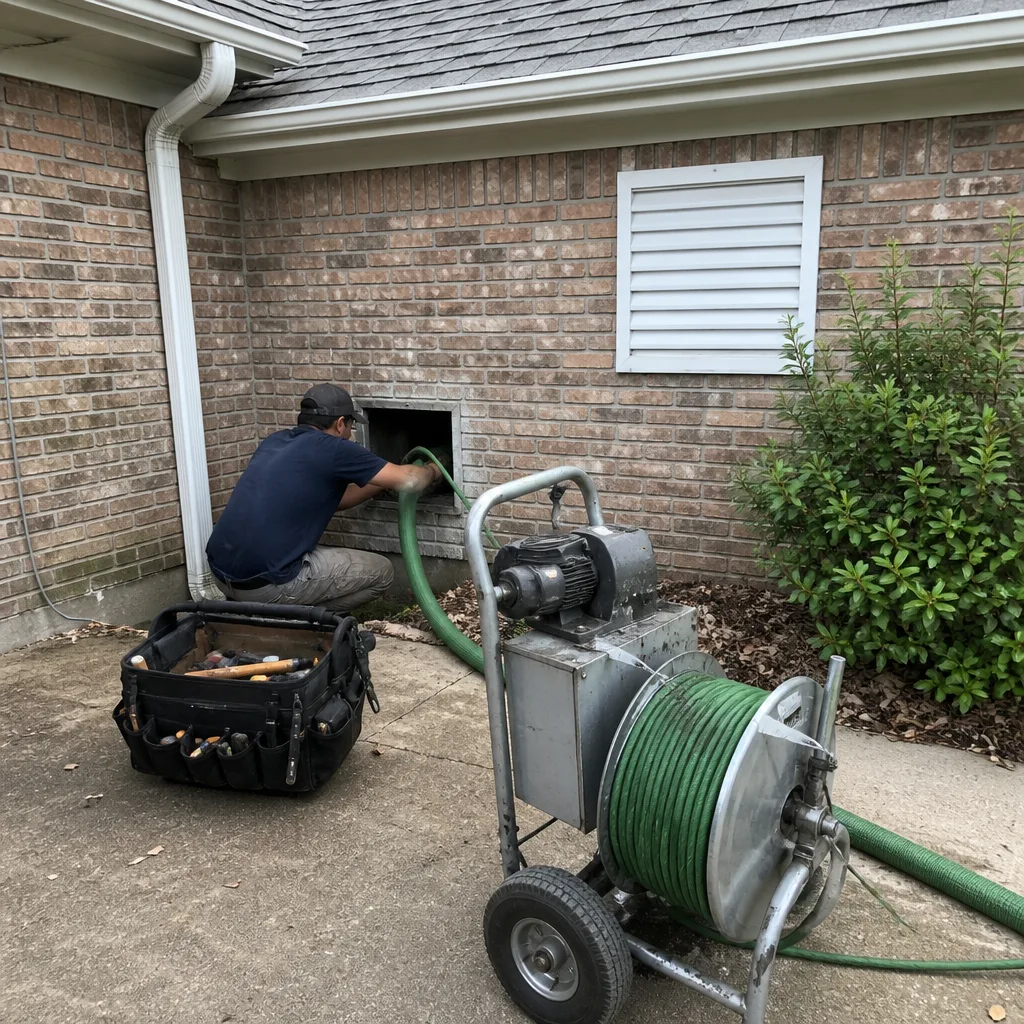
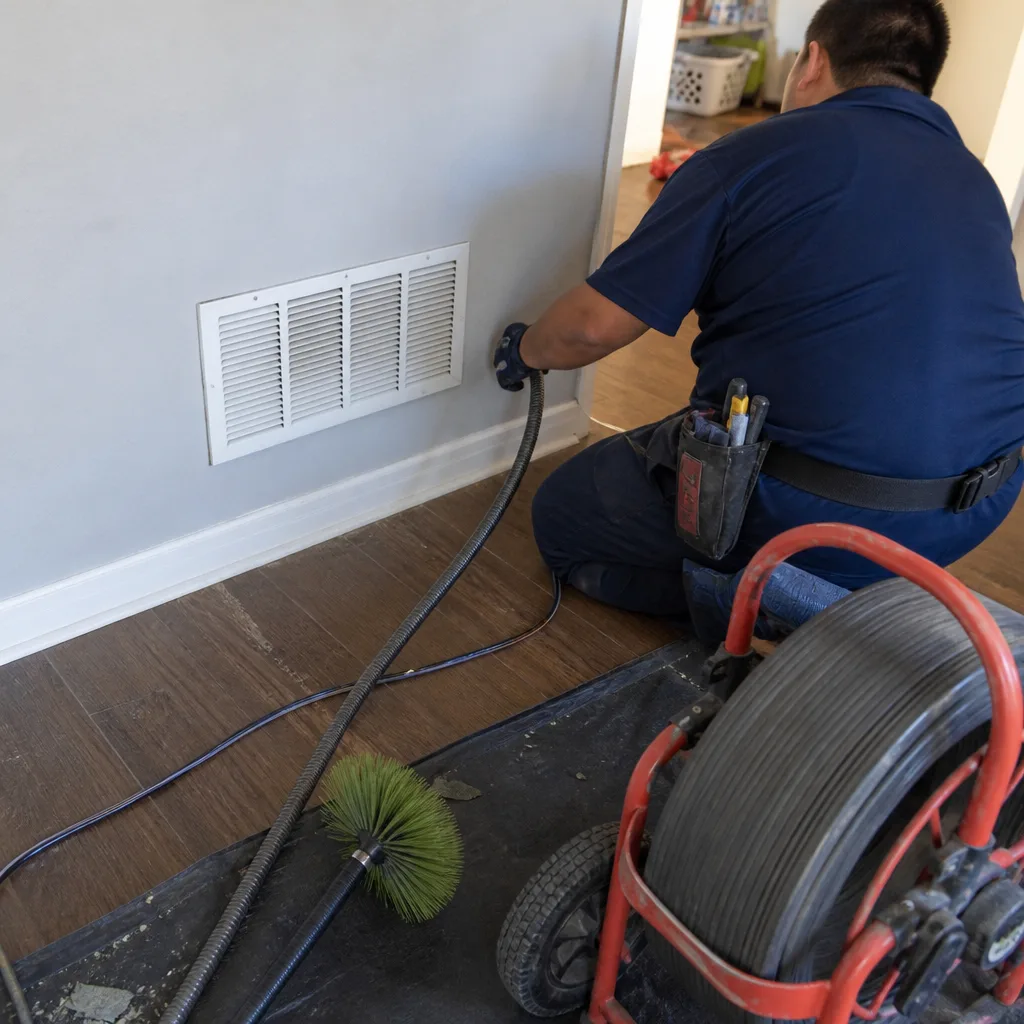
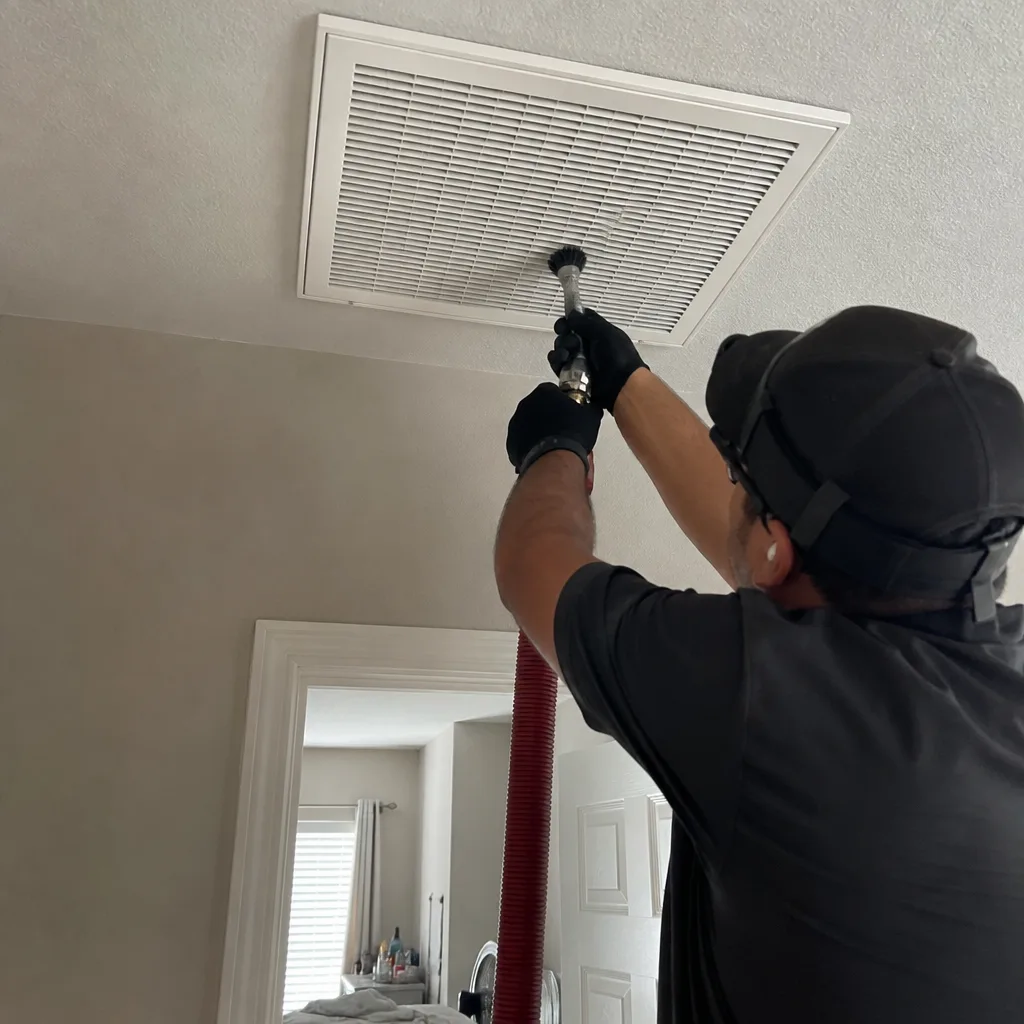
Whole-system duct and dryer vent check with before-and-after photos - you see exactly what came out of your vents
That "$99 whole-house special" is a bait ad - the real number appears once they are in your hallway, or the "clean" is a shop-vac at the register. We photograph the inside of your ducts before and after instead.
## Air Duct Cleaning Permits, Codes & Inspections in TX: What You Need to Know
Most homeowners never think about permits until a problem lands in their lap. Here’s the problem with air duct work in Texas: the cleaning itself needs no permit, but the moment a technician finds something wrong inside your ducts – a disconnected section, rusted-through sheet metal, mold along the plenum – the next step might be regulated work. And a contractor who offers to handle it without paperwork is creating a liability that belongs to you, not them. This guide draws the exact line between cleaning and regulated work, walks through Texas Department of Licensing and Regulation (TDLR) rules, Houston building code specifics, and what unpermitted duct work does to a home sale in the Houston market. If you own a home in Houston with forced-air HVAC, this is the boundary you need to know before anyone touches your ductwork.
Quick Answer
Air duct cleaning – removing dust, debris, and loose particulate from existing ductwork using negative-air or rotary brush methods – does not require a permit anywhere in Texas. However, duct repair, duct replacement, HVAC system modification, and any mold remediation on duct surfaces are regulated activities that may require city permits and TDLR licensing. The line is simple: cleaning is unregulated, fixing or altering is regulated. If a Houston duct cleaner finds problems during a cleaning and offers to fix them on the spot without permits, stop the job and ask questions.
Styles & brands we work with
Table of Contents
- What Separates Duct Cleaning from Regulated Work
- TDLR Mold Licensing and Why It Matters for Duct Work
- Houston City Code vs. Texas State Requirements
- How Unpermitted Duct Work Hurts Home Sales and Insurance
- How to Request Proper Documentation from a Contractor
- What Permits and Licensed Work Actually Cost in Houston
- Homeowner Rights and Red Flags During a Duct Inspection
- Common Mistakes to Avoid
- When to Call a Professional
- Frequently Asked Questions
- The Bottom Line
What Separates Duct Cleaning from Regulated Work
The legal boundary in Texas is cleaner than most people expect. Air duct cleaning – the process of removing accumulated dust, pet dander, construction debris, and loose particulate from the interior surfaces of existing ductwork – is classified as maintenance, not construction or alteration. Maintenance work does not require a building permit under Texas state law or Houston city ordinance.
Here is the exact distinction:
- Duct cleaning (no permit required): Negative-air extraction, rotary brush agitation, compressed air cleaning, and HEPA filtration of existing ducts. The ducts stay exactly where they are, the system’s configuration does not change, and no building surfaces are structurally altered.
- Duct repair (permit may be required): Replacing a section of damaged duct, sealing a disconnected joint with mastic, patching a rusted-through return plenum. If the repair restores the system to its original condition, Houston generally treats it as maintenance. If the repair alters the air distribution design, it crosses into regulated territory.
- Duct replacement (permit required in Houston): Removing and replacing entire duct runs, resizing ducts, or reconfiguring the supply and return layout. This is an HVAC modification and the City of Houston requires a mechanical permit through the Houston Permitting Center.
- Mold remediation (TDLR license required): Any assessment or removal of mold from duct surfaces, plenums, coils, or the air handler is regulated by the Texas Department of Licensing and Regulation. It does not matter how small the affected area is. If mold is present and a contractor removes it, they must hold a TDLR mold remediation license.
- HVAC system addition or alteration (permit required): Installing a new air handler, adding a return, zoning the system, or replacing the furnace or condenser. These jobs always require a mechanical permit in Houston.
In our experience across Houston – from Braeswood Place to Kingwood to Katy – homeowners rarely know this boundary until something goes wrong. A technician spots a cracked section of duct during a routine cleaning and says, “I can patch that while I’m in the attic.” If the patch alters airflow or the technician opens a wall to reach it, that “small fix” may now require a permit. The homeowner did not ask for regulated work, but the liability attaches to the property anyway. That is the exact situation this guide is designed to prevent.
A practical rule: if the job involves cutting, removing, reconfiguring, or adding any physical component of the HVAC system, ask about permits before the work starts. If the answer is “you don’t need one for something this small,” verify that against the City of Houston permitting office rather than taking the contractor’s word.
TDLR Mold Licensing and Why It Matters for Duct Work
The Texas Department of Licensing and Regulation has governed mold assessment and remediation since 2005. For air duct work, this matters in one specific scenario: a cleaning technician finds mold while inspecting your ducts and offers to take care of it.
Here is what the law actually says:
- Mold assessment – examining a property to determine whether mold is present – requires a TDLR Mold Assessment Technician or Mold Assessment Consultant license.
- Mold remediation – the actual removal, cleaning, sanitizing, or demolition of mold-contaminated materials – requires a TDLR Mold Remediation Worker or Mold Remediation Contractor license.
- Both licenses cannot be held by the same company. TDLR expressly prohibits a single company from performing both the assessment and the remediation on the same property. This prevents the obvious conflict of interest where a company “finds” mold and then charges to remove it.
- Minimum work standards apply. TDLR requires specific containment protocols, personal protective equipment, clearance testing, and documentation for every remediation project. Skipping any step is a violation and the homeowner can file a complaint with TDLR.
Why this matters for Houston homeowners specifically: Houston’s climate creates ideal conditions for mold growth inside ductwork. High humidity, long cooling seasons, and condensation on duct surfaces mean mold is far more common here than in cities like Denver or Phoenix. The frequency of mold in Houston ducts means unscrupulous companies have built entire business models around “discovering” mold during a routine cleaning and up-selling remediation.
The red flag is specific: a duct cleaning company that offers to remediate mold on the same day, during the same visit, without bringing in a separate assessment company, is violating TDLR’s conflict-of-interest rule. The assessment and remediation must be performed by separate, independently licensed companies. If a contractor tells you otherwise, they are either unaware of the law (concerning) or choosing to ignore it (worse).
You can verify any TDLR license in less than two minutes at the TDLR website under their license search tool. Ask for the license number, look it up while the technician is still in your home, and confirm the license type matches the work being proposed. A licensed duct cleaner is not licensed to remediate mold unless they hold a separate TDLR remediation credential – and even then, they cannot both assess and remediate on the same project.
One more Houston-specific point: some homeowners try to handle small mold patches themselves using bleach or hardware-store products. TDLR does not regulate do-it-yourself work on your own home, but cutting out mold-contaminated duct insulation, scrubbing plenums with chemicals, or disturbing mold inside an air handler without containment can spread spores through the entire system. In Houston’s humid air, a small DIY mold job often becomes a whole-system problem within a year. If mold is in your ducts, get a TDLR assessment first and let the assessor tell you whether remediation is warranted.
Houston City Code vs. Texas State Requirements
Texas does not issue state-level building permits for residential HVAC work. Permitting authority sits with individual municipalities. In Houston, that authority is the Houston Permitting Center, which enforces Chapter 10 of the City of Houston Code of Ordinances and the International Mechanical Code (IMC) as adopted locally.
Here is what Houston requires for HVAC and duct work:
- Mechanical permit: Required for duct replacement, system replacement, configuration changes, and any new installation. A contractor pulls the permit, schedules rough and final inspections, and the work must pass before the permit closes.
- Licensed HVAC contractor: The State of Texas licenses air conditioning and refrigeration contractors through TDLR. Houston adds its own registration requirement. Any contractor pulling a mechanical permit inside city limits must hold both the TDLR contractor license and the applicable Houston registration.
- Electrical permit: Often required alongside a mechanical permit if the HVAC work involves new or modified electrical circuits – furnace replacement, heat pump installation, adding a condensate pump circuit, and similar scope.
- Inspection timing: Houston requires a rough inspection before walls or duct chase enclosures are closed, and a final inspection after the system is operational. A permit that remains open for months is a red flag: the work may be complete but never inspected.
Where Houston and Texas overlap:
- TDLR licensing for HVAC contractors applies statewide, including Houston. The contractor’s TDLR number should appear on the permit application.
- TDLR mold rules apply statewide and are not superseded by Houston ordinances. Houston does not have a separate mold permit; TDLR licensing is the governing authority.
- Energy code requirements (duct leakage testing, minimum insulation values, proper sealing with mastic or UL 181-rated tape) apply to duct replacement and new installation. A Houston permit inspection checks duct sealing and insulation against the Texas Energy Code.
A nuance that surprises many Houston homeowners: duct sealing with mastic – applying the adhesive paste to duct joints and seams to stop air leaks – sits in a gray area between maintenance and modification. Sealing accessible seams during a cleaning is generally treated as maintenance and does not require a permit. Sealing ducts that require opening walls, cutting access panels, or working inside a closed chase may cross into modification. At Hollis Air Duct Houston, when we perform Duct Sealing in Houston, we write down exactly what was sealed, where, and with what material – so if a home inspection later asks about unpermitted work, there is documentation available.
How Unpermitted Duct Work Hurts Home Sales and Insurance
This is the section that matters most to Houston homeowners planning to sell within the next five to ten years. Unpermitted work has a way of surfacing at the worst possible moment.
During a home sale, a thorough home inspector will check the HVAC permit history. In Houston, permit records are publicly searchable through the Houston Permitting Center database. It takes a buyer’s inspector about five minutes to pull the permit history on an address and compare it against visible work. Here is what happens when the records do not match:
- Work without a permit becomes a negotiation point. The buyer’s agent asks for a price reduction, a repair credit, or a retroactive permit. Retroactive permits are not always possible – some work cannot be inspected after walls are closed, which means the city may require the work to be torn out and redone under an active permit.
- Lenders may delay or kill the deal. FHA and VA loan appraisers have specific requirements about HVAC system condition and permit compliance. If unpermitted duct replacement shows up in a home inspection, the appraisal can come back with conditions that must be resolved before closing.
- Insurance claims become complicated. If a duct failure causes water damage, mold, or a fire, the insurance adjuster will ask when the duct work was done and who did it. Unpermitted work gives the insurer grounds to deny the claim or reduce the payout. The homeowner is left arguing that a permit was not needed for work that, in hindsight, probably should have had one.
- The cost multiplies. A duct replacement that would have cost $1,200 to $1,800 with a permit in Houston can become a $4,000 to $6,000 problem after the fact: the old work comes out, the new work goes in with permit and inspection, and the homeowner pays for both.
Houston’s housing market is active enough that these situations occur constantly. A seller in Spring Branch lists the house. The buyer’s inspector notices new flex duct in the attic that does not match any permit on record. The buyer asks for a credit. The seller discovers the company they hired five years ago never pulled the permit they said they would. The fix costs more than the original job. This is a preventable problem, and the prevention is simple: ask for the permit number before the work begins, and verify it online.
One more insurance point that few homeowners know: most Texas homeowner policies contain a provision about “continuous workmanship” – meaning the insurer expects that any modification to the home’s systems was performed by a licensed contractor where a license is required. An unlicensed contractor performing duct replacement that later causes a claim becomes an exclusion event. The homeowner did not need to know the contractor was unlicensed; the policy exclusion applies anyway.
How to Request Proper Documentation from a Contractor
Before any work begins on your duct system, there is a short list of documents you have the right to request. Contractors who push back on any of these items are telling you something important.
- The permit application. If the work requires a Houston mechanical permit, the contractor should show you the application, the permit number, or a confirmation from the Houston Permitting Center. The permit should be issued before the work starts, not in progress.
- The TDLR HVAC license number. Every licensed air conditioning and refrigeration contractor in Texas has a TDLR number. Ask for it. Verify it on the TDLR website while the contractor is still present. The license should be active and match the company name on the contract.
- The TDLR mold license, if mold is involved. If anyone – duct cleaner, HVAC contractor, handyman – has told you there is mold in your ducts, the only legal path is a separate mold assessment by a licensed assessor, followed by remediation from a different licensed remediation company. Ask for both license numbers and verify both.
- A written scope of work. Texas does not require written contracts for all home improvement work, but a contractor who will not write down what they will do, with what materials, for what price, is not a contractor you want inside your attic. The Houston heat makes attic work dangerous; written scope protects you if the job is left incomplete.
- Proof of insurance. General liability insurance is not a legal requirement for all contractor categories, but any company working in your home should have it. Ask for a certificate of insurance naming your address as the job site. In Houston, where the attic temperature regularly exceeds 130°F between June and September, the risk of heat-related accident is real, and you want the contractor’s insurance to cover it, not yours.
- The final inspection report. When the work is done and the permit is closed, the Houston Permitting Center issues a final inspection record. Ask for a copy. Keep it. If you ever sell the house, this document answers every question a buyer’s inspector will ask.
If the answer is “we don’t need a permit for this,” here is a simple test: call the Houston Permitting Center yourself. The phone call takes ten minutes. Describe the scope of work and ask whether a permit is required. If the city says yes and the contractor said no, you have your answer. The contractor either does not know the code or does not want the inspection. Neither is acceptable.
What Permits and Licensed Work Actually Cost in Houston
Permit costs in Houston are modest compared to the cost of the work they authorize. Knowing the numbers helps you spot a contractor who is padding the bill with fake fees.
Here is a realistic picture of Houston permit and inspection costs for typical residential duct and HVAC work:
- Mechanical permit for duct replacement: $75 to $150 for a typical single-family home, depending on the value of the work. Houston’s permit fees scale with the project valuation. A full-system duct replacement in a 2,500-square-foot home typically falls in this range.
- Electrical permit (if required alongside mechanical): $50 to $110 for the scope of work involved in a furnace or heat pump replacement.
- Combined HVAC change-out with permits: A licensed Houston HVAC contractor typically charges $4,500 to $8,000 for a single-system furnace and condenser replacement including permits and inspections. This is a whole-system number, not a per-vent or per-duct price.
- TDLR mold assessment (standalone): $300 to $600 for a typical Houston single-family home, depending on the number of samples collected and the size of the system being assessed.
- TDLR mold remediation on duct surfaces: $1,500 to $4,000 for a contained remediation of mold in duct work, depending on the extent of the contamination and whether duct sections must be replaced. This range reflects Houston market pricing for licensed remediation with clearance testing.
Compare those numbers to unpermitted work: a handyman may quote $2,500 for the same duct replacement a licensed contractor quotes at $1,800 with permits. The unpermitted job seems cheaper until the home inspection hits, the insurance company questions the work, or the job fails and the handyman’s phone no longer rings. In Houston, the permitted job is usually the less expensive job over a five-year horizon.
A note on air duct cleaning itself: because cleaning is not regulated work, no permit or license is required for the cleaning service itself. That said, price variance in the Houston air duct cleaning market is extreme. Some companies advertise $49 whole-house cleaning and then add per-vent charges on-site until the bill reaches $800 or more. A straightforward Houston duct cleaning for an average single-family home – full system, supply and return, using negative-air extraction – typically costs $350 to $650 when written as a single flat price before the work starts. Hollis Air Duct Houston writes the price down before any work begins, and it does not move at the door. That is how the Garrison Standard works: Air Duct Cleaning in Houston with a written price, a written scope, and a real guarantee.
Homeowner Rights and Red Flags During a Duct Inspection
Every Houston homeowner has specific rights when a contractor performs duct work, and knowing them changes the dynamic at the front door.
Your legal rights include:
- The right to a written contract for work exceeding a set value. Texas law has grown stricter about written contracts for home improvement. If the job is more than a basic cleaning, ask for it in writing. The Garrison Standard at Hollis Air Duct Houston requires a written price before any work starts, without exception.
- The right to verify licenses and insurance. The TDLR license search is public. The Houston Permitting Center record search is public. Use both.
- The right to refuse add-on work. No contractor has the right to perform work you did not approve. If a technician “discovers” a problem during cleaning and pressures you into an immediate repair, you can say no and get a second opinion.
- The right to a safe work site. Houston attic temperatures are dangerous between May and October. A contractor should plan attic work for cooler hours, bring proper ventilation, and never send a lone worker into a hot attic. You have the right to ask about their heat safety practice.
- The right to file a complaint. TDLR accepts consumer complaints against licensed contractors. The Houston Permitting Center accepts complaints about unpermitted work. Both complaint processes are simple and online.
Red flags that signal trouble before the job starts:
- “We don’t pull permits for this small job.” If the job requires a permit and the contractor resists pulling it, the contractor is telling you they do not want city inspection of their work.
- “We can handle the mold while we are here.” Mold remediation requires a TDLR license and, if the company is also doing the assessment, it is an automatic conflict of interest. Walk away.
- “The permit is included in the price, I will get it later.” The permit must be issued before the work starts. “Later” means the work will be done unpermitted and retroactive permitting will be attempted afterward. It often fails.
- “We will give you a discount if you pay today.” Legitimate Houston contractors do not use same-day discount pressure. A written price is stable; a discount tied to immediate payment is a pressure tactic.
- No company name on the vehicle or the technician arrives without identification. Hollis Air Duct Houston technicians are background-checked and uniformed. You know who is walking into your home before they arrive. A technician with no identification and an unmarked van is not someone you want inside your house.
Common Mistakes to Avoid
- Assuming “licensed” means licensed for everything. A TDLR air conditioning license authorizes HVAC work. It does not authorize mold remediation, plumbing, or electrical work. Check the license type against the work being proposed.
- Letting a cleaner “patch” ducts without asking about permits. The patch may look fine at first. When it fails – and Houston humidity does accelerate duct failures – the unpermitted work surfaces during the insurance claim or home inspection and the original company is long gone.
- Believing that duct cleaning removes mold. Duct cleaning removes dust and debris. It does not remove mold. If a company tells you their cleaning process handles mold, they are either conflating cleaning with remediation or they are violating TDLR rules. Mold removal from ducts requires a TDLR remediation license and a specific protocol, including containment and clearance testing.
- Not keeping documentation. The best defense against a problematic home sale is a file folder with every permit, inspection report, and written scope of work. Houston home buyers are increasingly asking for this documentation up front – and sellers who have it close faster.
- Hiring the lowest-bid contractor without checking permit history. The Houston Permitting Center maintains a searchable record of permits by contractor name. A contractor with no permit history is either new, which is fine, or deliberately avoiding permits, which is not. The record answers the question without a single phone call.
- Treating DIY duct repair as “just maintenance.” Duct tape, which is not rated for duct systems despite the name, is the most common DIY repair we see in Houston attics. The adhesive dries out, the backing peels, and the air leak returns within a season. Use UL 181-rated metal tape or mastic, not hardware-store duct tape. Better yet, let a licensed contractor do the repair and document it.
- Ignoring mold discounts from duct cleaners. A Houston duct cleaning company offering a same-day mold remediation package at a “discounted” price is running a known scheme: create the problem, sell the solution, skip the license. The discount is your signal to get a second, independent assessment.
When to Call a Professional
Some situations should never be a DIY project, and Houston’s combination of heat, humidity, and attic-constrained ductwork makes the threshold lower than homeowners expect. Call a licensed, documented professional when you see disconnected ducts in the attic, visible mold on duct surfaces or the air handler, rusted-through sheet metal, crushed flex duct from attic foot traffic, or when your energy bills have jumped without explanation. Also call after a flood event – duct work that has been submerged or exposed to standing water needs professional evaluation, not a shop vac. And if a home inspection flags unpermitted duct work during a sale, call a licensed contractor to bid the retroactive fix and handle the permit. Hollis Air Duct Houston offers free estimates in Houston – call (713) 936-5800. We write the price down before any work starts, and the number does not change.
Frequently Asked Questions
No, air duct cleaning does not require a building permit anywhere in Texas because it is classified as maintenance, not construction or modification. Duct cleaning removes dust and debris from existing ductwork without altering the system’s configuration. However, if the cleaning reveals damage that requires duct repair or replacement, those activities may require a Houston mechanical permit. Call Hollis Air Duct Houston home at (713) 936-5800 if you are not sure whether the work you need crosses the line.
Texas does not require a specific state license for air duct cleaning itself. The trade is not regulated by TDLR as a standalone service. However, related activities are regulated: HVAC modification requires a TDLR air conditioning and refrigeration contractor license, and mold remediation requires a TDLR mold remediation license. A company offering both cleaning and remediation should be able to show a separate TDLR credential for the remediation work. Hollis Air Duct Houston performs Air Duct Cleaning in Houston as an unregulated maintenance service, and we write down exactly what we will do before any work begins.
Duct cleaning removes accumulated debris from existing ducts and requires no permit. Duct replacement removes and replaces entire duct runs, which changes the air distribution system and requires a Houston mechanical permit with inspections. The practical marker is whether the job removes, cuts, or reconfigures any duct component – if yes, a permit is likely required. A Houston home inspector will check the permit history when you sell, so keep the paperwork.
A straightforward whole-system air duct cleaning for an average Houston single-family home costs $350 to $650 when written as a flat price before the work starts. Be cautious of prices far below that range – very low teaser prices in the Houston market often become far larger invoices once the crew is inside the house, through per-vent add-ons and “discovered” problems. A legitimate written price covers the system as a whole and does not change at the door. Call (713) 936-5800 for an exact quote – estimates are free.
The Houston air duct cleaning market has a reputation problem built on bait pricing: a low headline number designed to get a van in your driveway, followed by mandatory add-ons that multiply the final bill. For context, see our Air Duct Cleaning Warning Signs: A Houston Homeowner’s Reference Guide. The cheaper quote assumes the upsell will close the gap. A straightforward company writes the whole-system price up front and stands by it. Before you book, ask whether the quoted price includes the full scope – supply and return ducts, plenums, and the air handler – or whether those are extra. The answer tells you everything.
Ask for before-and-after photos taken inside your ducts. A technician with professional-grade equipment – the kind we use, built by Rotobrush and Nikro – can capture clear images of the duct surfaces before and after the cleaning. You should see the dust layer disappear, not just take the technician’s word. Hollis Air Duct Houston documents every job with photos, and the 365-Day Done Right Promise backs the work in writing for a full year. Visit our more guides & resources for additional home maintenance tips. Call (713) 936-5800 to ask about our documentation process.
For most Houston homes, every 3 to 5 years is a reasonable interval, assuming no unusual conditions. Homes with pets, recent construction, or Houston’s characteristic humidity problems may need more frequent attention. If it has been longer than five years, or if you see dust accumulating on vent covers shortly after cleaning your house, it is worth having the system inspected. The evaluation should be straightforward: look inside the ducts, show you what is there, and recommend cleaning only if the buildup is visible. For a deeper dive, read The Complete Guide to Air Duct Cleaning in Houston.
The Bottom Line
Air duct cleaning in Texas sits on the legal maintenance side of the permit line – no building permit, no state license, no city inspection. But the moment someone starts fixing, replacing, or remediating what they find inside your ducts, the legal ground shifts. A Houston homeowner who understands the boundary walks into every contractor conversation with eyes open: asking for permit numbers before work begins, verifying TDLR licenses before trusting mold claims, and keeping documentation for the day the home inspector comes through. That is the standard we believe every Houston home deserves – and the standard Hollis Air Duct Houston works to every day.
Written by Roy Castellanos, Owner at Hollis Air Duct Houston, serving Houston since 2004.
See the difference
 Before
 After
After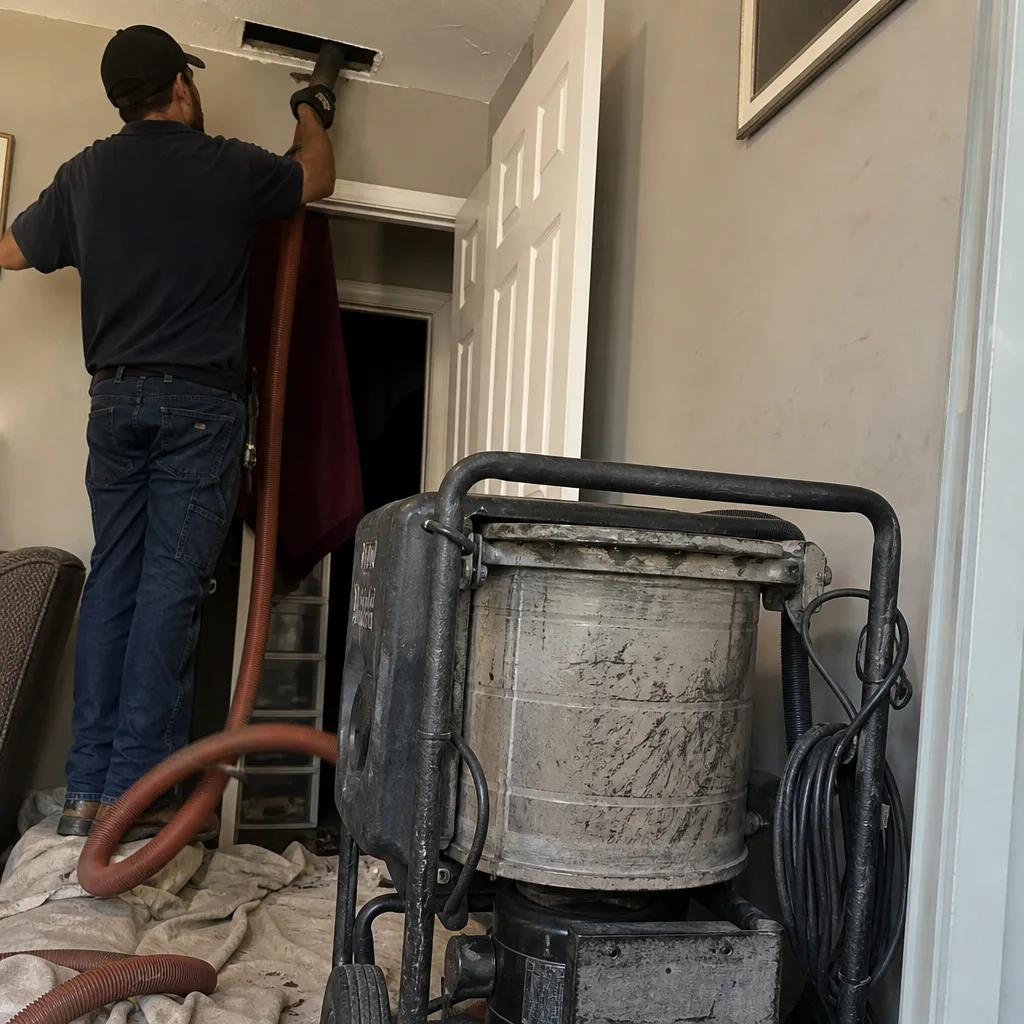 Before
 After
After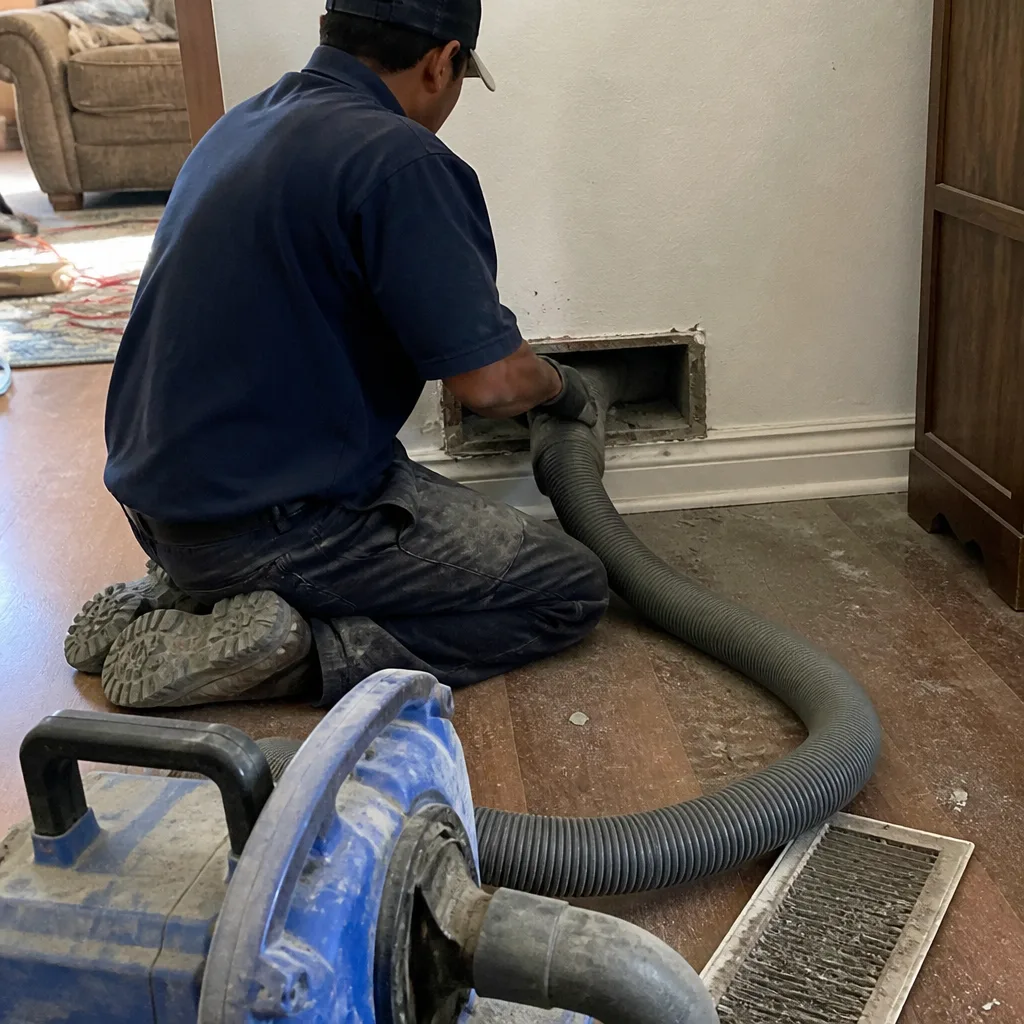 Before
 After
After