
Last updated October 15, 2026
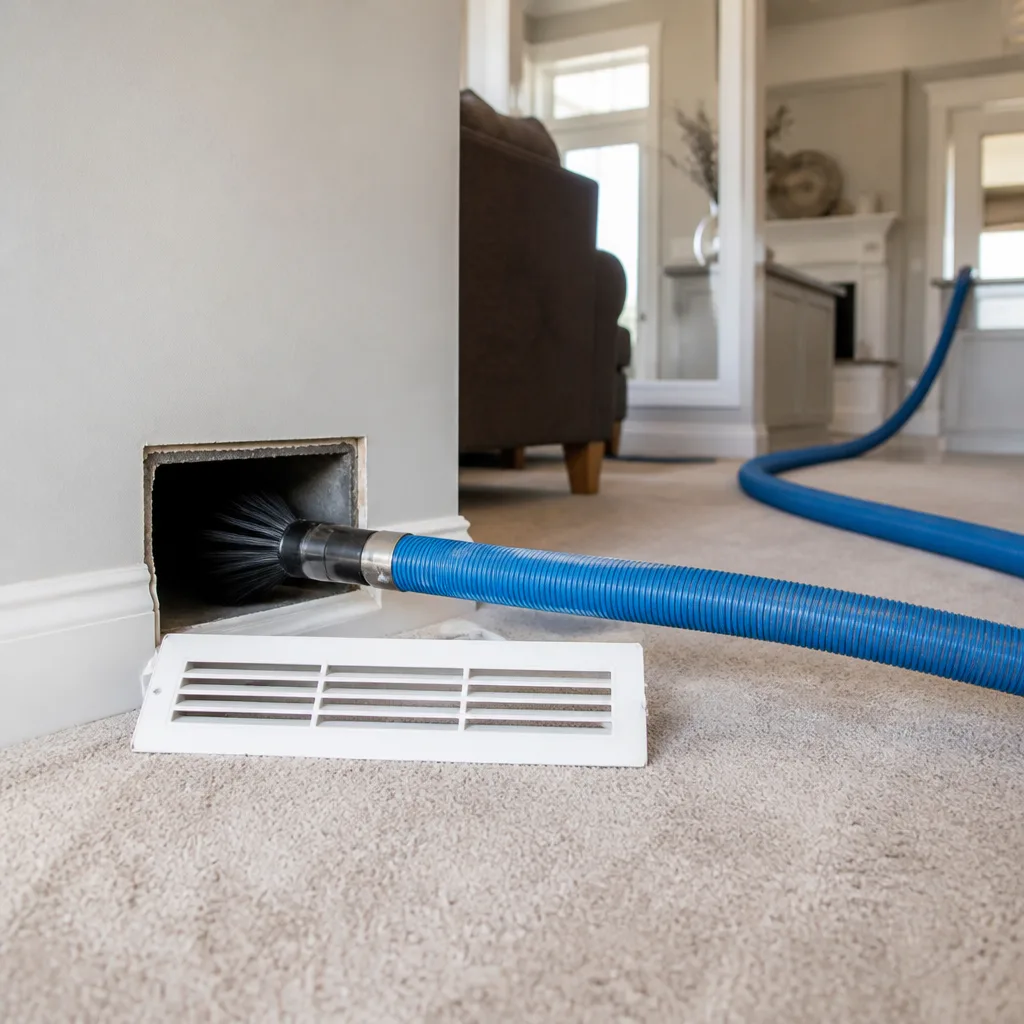 Whole-home duct cleaning
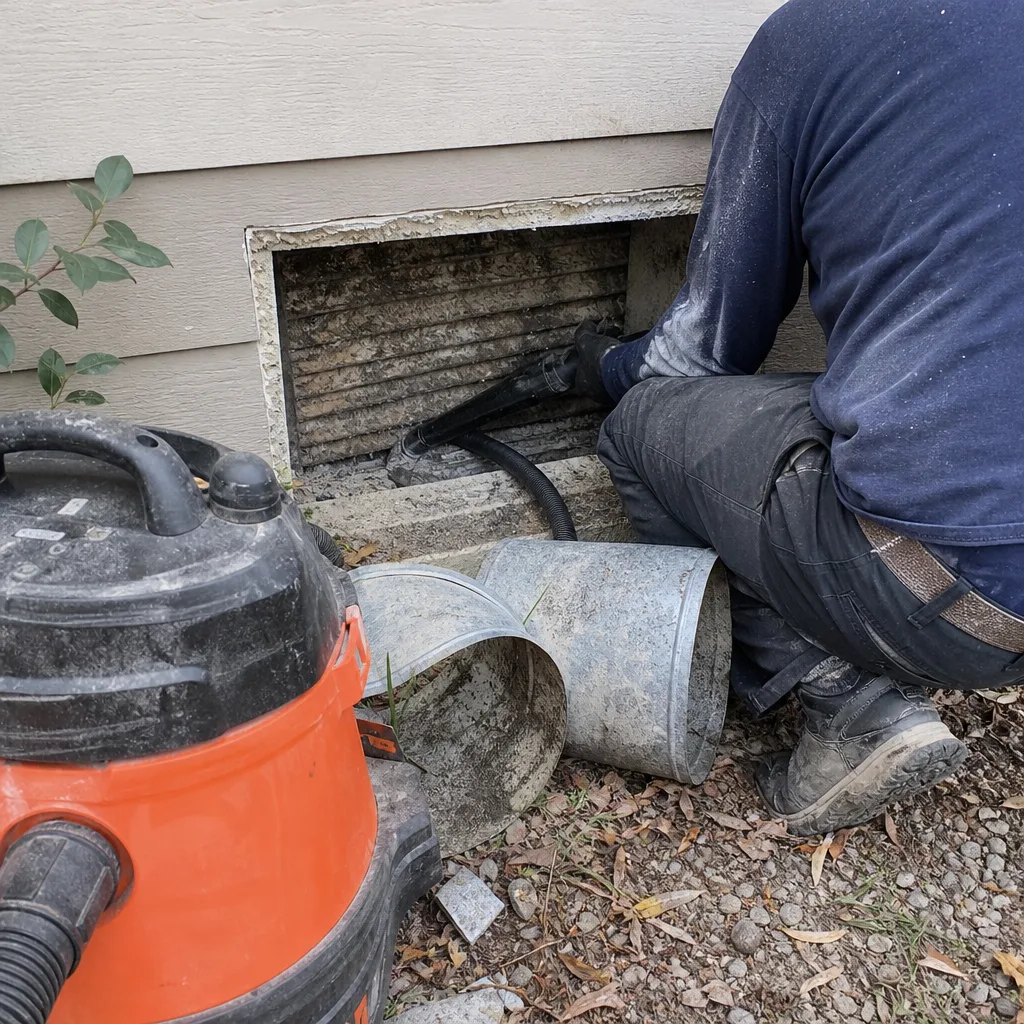
 Dryer vent cleaning
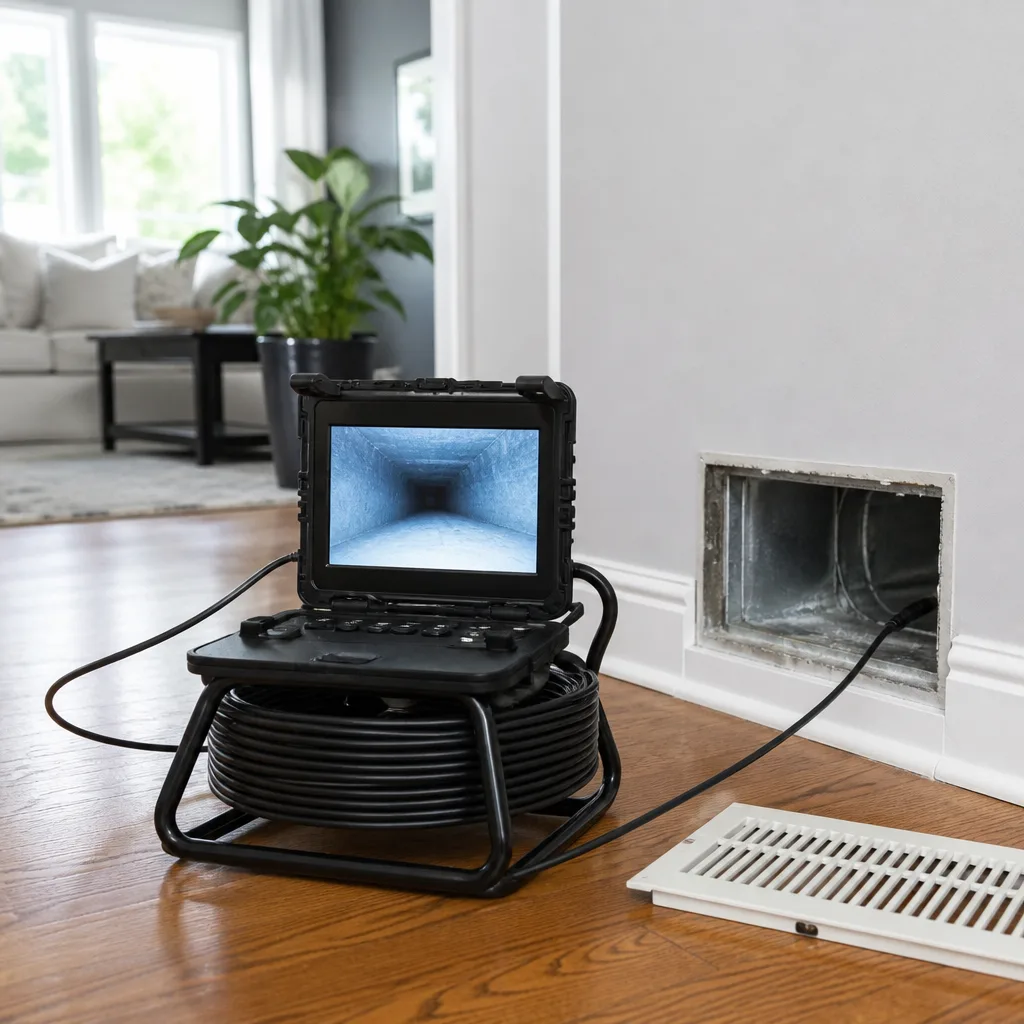 Camera inspection
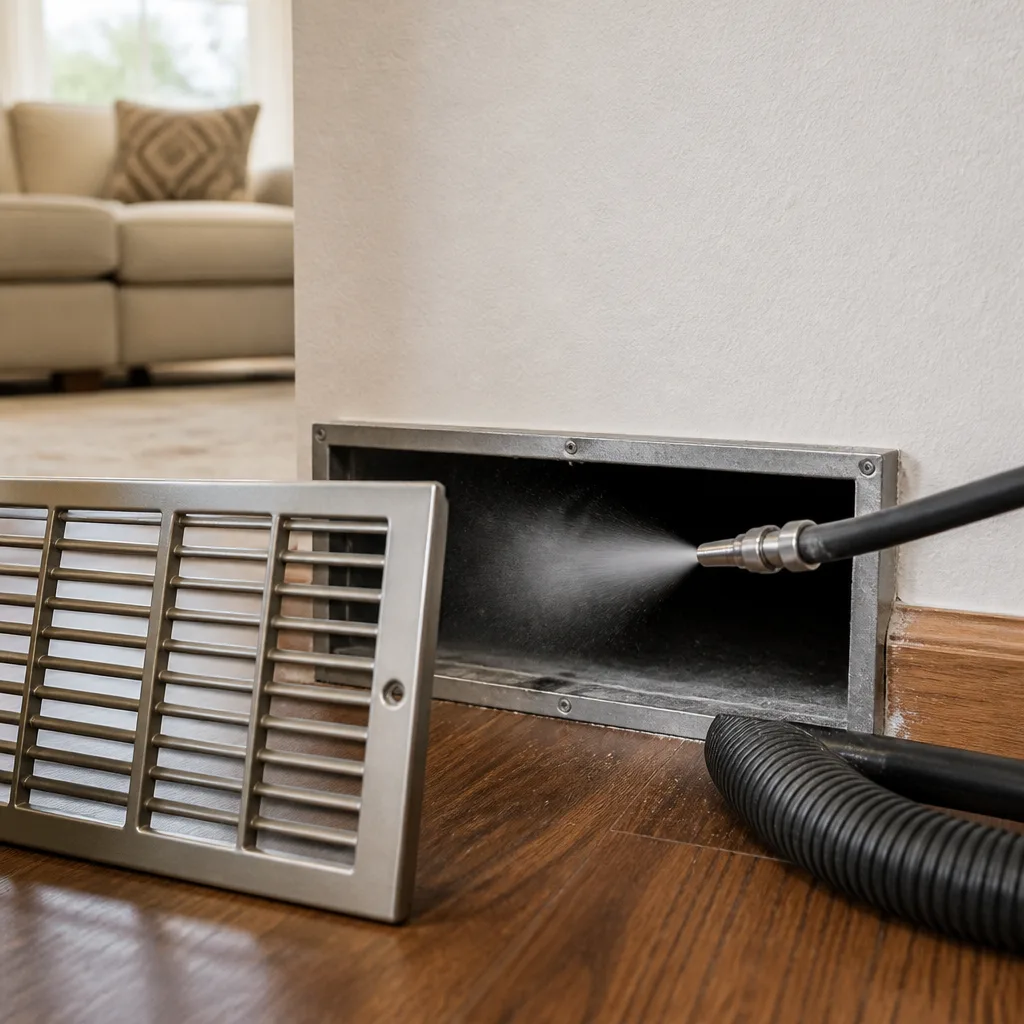 Sanitizing & deodorizing
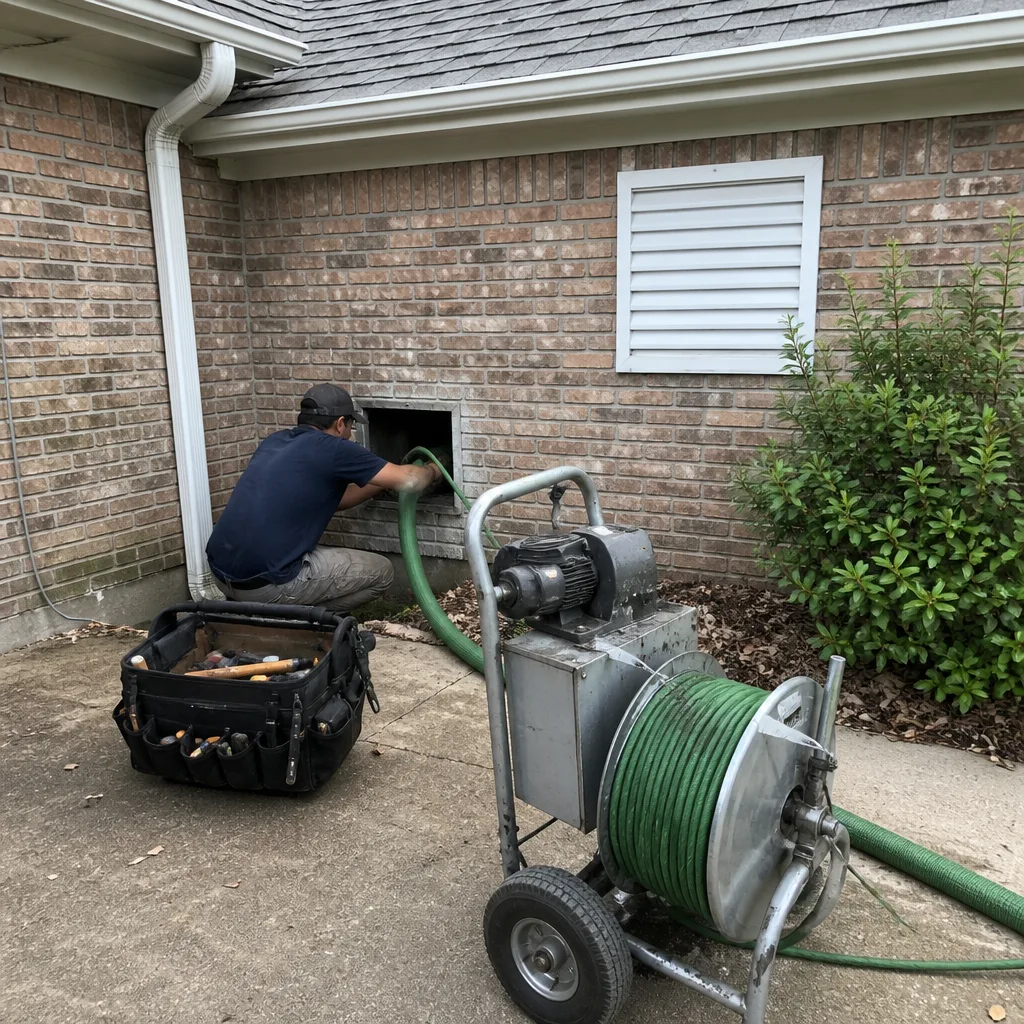
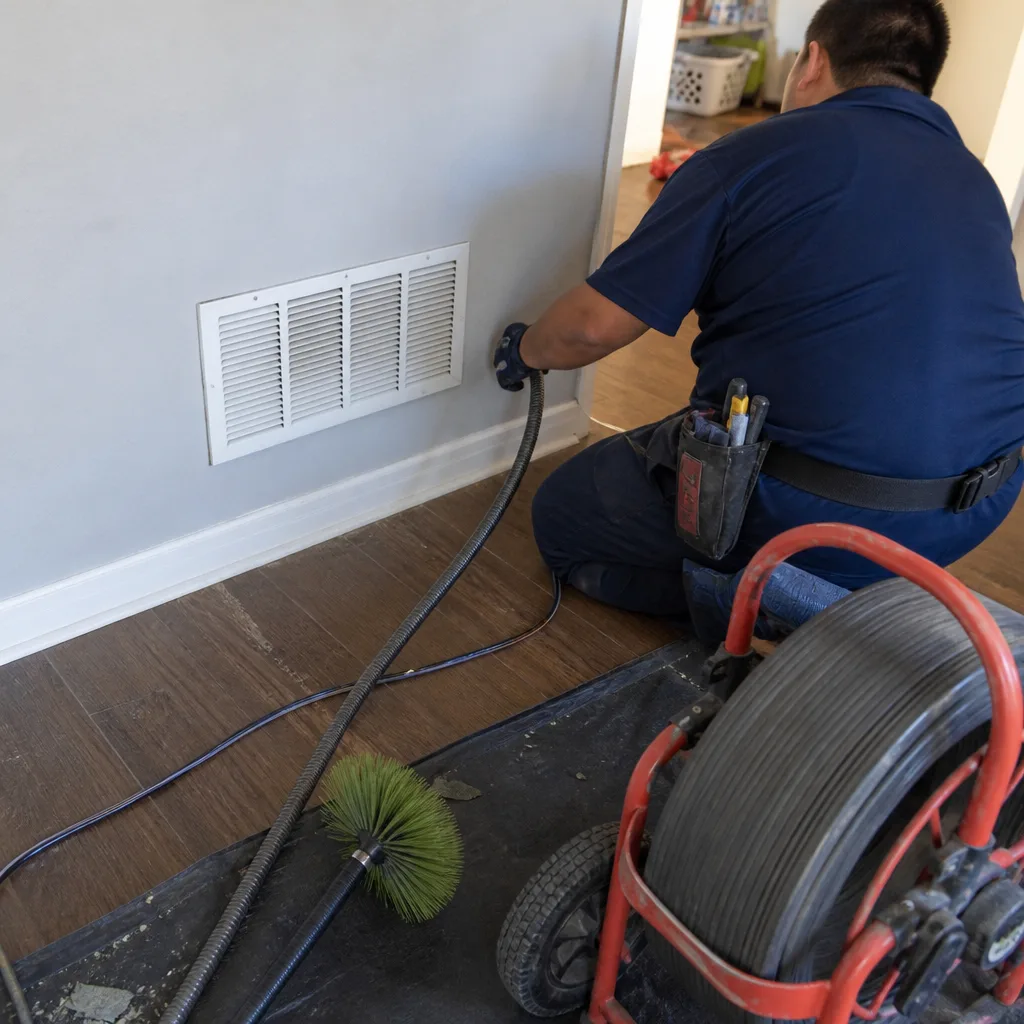
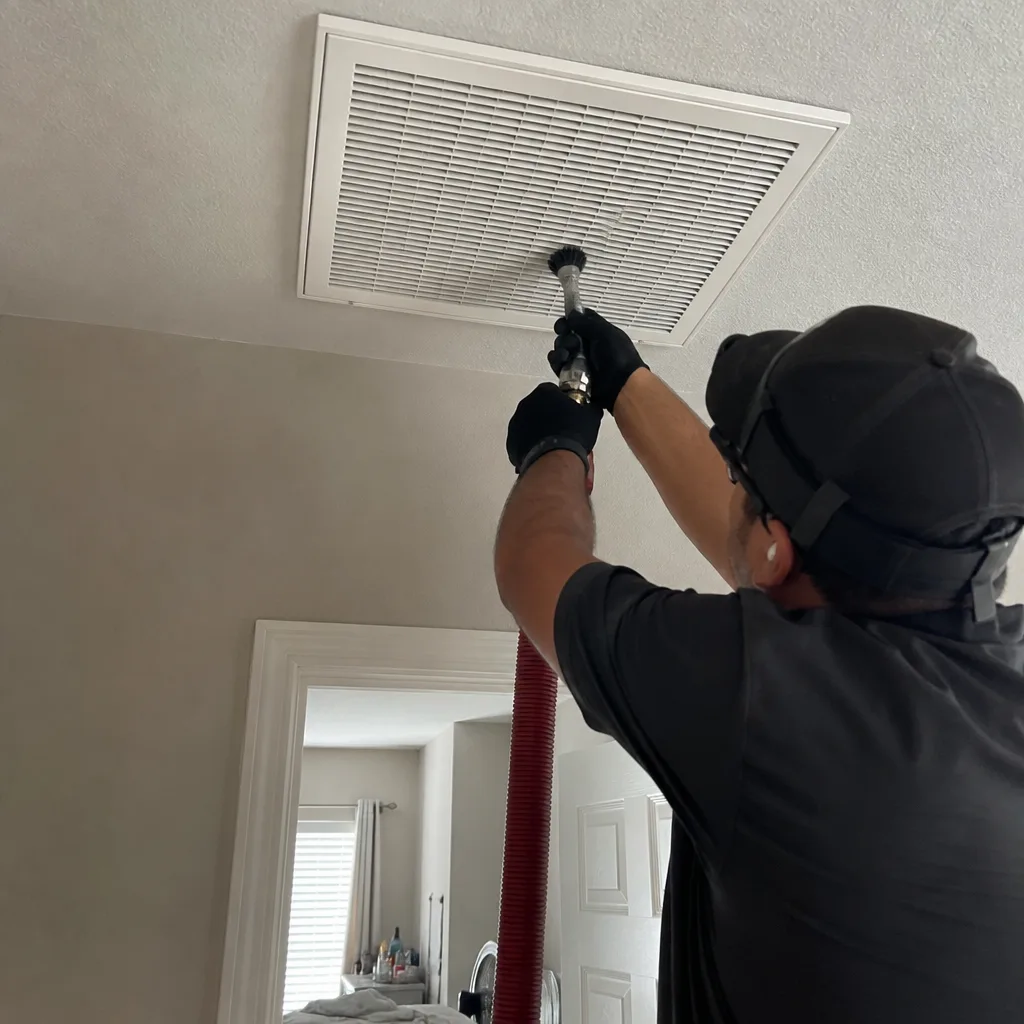
Whole-system duct and dryer vent check with before-and-after photos - you see exactly what came out of your vents
That "$99 whole-house special" is a bait ad - the real number appears once they are in your hallway, or the "clean" is a shop-vac at the register. We photograph the inside of your ducts before and after instead.
Air Duct Cleaning Warning Signs: A Houston Homeowner’s Reference Guide
Most duct problems in Houston announce themselves months before they become expensive repairs, but the warning signs are remarkably easy to misread. Homeowners write them off as seasonal allergies, an aging AC unit, or just the way an older house behaves in Gulf Coast humidity. The result is the same in every case: contamination, leakage, or airflow restriction keeps compounding while the underlying cause goes untouched. This guide translates the seven warning signs we hear about most often at Hollis Air Duct Houston home into plain explanations of what is actually happening inside your duct system, and when a cleaning will fix it versus when the problem runs deeper.
Quick Answer
The most reliable warning signs that your Houston home needs air duct cleaning are visible dust buildup at supply registers, musty odors that fade when the AC runs, rooms that never reach the thermostat temperature, and allergy symptoms that improve when you leave the house. In Houston’s humidity, microbial growth on duct surfaces becomes detectable by smell faster than in drier climates, which means the threshold for action is lower here. If you notice two or more of these signs together, the ducts are usually the common denominator.
Styles & brands we work with
Table of Contents
- Visible Dust at Registers and on Vents
- Musty Odors That Come and Go with the AC Cycle
- Uneven Room Temperatures and Rooms That Never Cool Down
- Rising Energy Bills Without a Change in Usage
- Allergy Symptoms That Improve When You Leave Home
- When Cleaning Is the Fix vs. When the Problem Runs Deeper
- How to Document Warning Signs Before You Call a Contractor
- Warning Signs a Contractor Is Upselling Instead of Diagnosing
Visible Dust at Registers and on Vents
Take a flashlight and look at the inside of a supply register, the metal grille where conditioned air enters a room. If you see a gray or brown film caked on the louvers, that material has been circulating through your duct system for a while. This is not the same as ordinary household dust that settles on furniture. Register dust accumulates on surfaces that have air actively blowing across them, which means it originated inside the ductwork and is being distributed every time the system runs. In Houston, where homes run air conditioning eight to ten months a year, the transport cycle is nearly constant.
A second place to check is the return side. Return grilles pull air from your living space back into the system, and they act like a filter screen. Heavy buildup there means airborne particulates are moving through the ducts with enough volume to leave visible deposits. It also means the air filter, if one is installed, is either undersized, the wrong MERV rating for the blower, or has been left in place too long.
Here is the practical translation: if you wipe a register clean and the same gray film returns within four to six weeks during cooling season, the source is inside the duct system, not on your bookshelves. Air duct cleaning in Houston addresses this by removing accumulated debris from the full duct run using negative-air extraction, not by spraying chemicals that settle it back down.
Musty Odors That Come and Go with the AC Cycle
A musty smell that disappears 20 minutes after the AC kicks on is not your imagination and is not the drain pan. It is almost always the first indication of microbial growth on duct liner surfaces, and it typically means the contamination has been present long enough to reach detectable concentrations in room air. The pattern is the giveaway: the odor is strongest when the system first starts, fades as airflow dilutes it, and returns the next time the system cycles on after sitting idle.
Why does this matter more in Houston than in, say, Denver? Because mold and mildew need sustained moisture, and Houston’s ambient relative humidity sits above 60 percent for most of the year. Air conditioning cools and dehumidifies, but the duct surfaces on the supply side stay cool while the air around them is humid. Condensation forms in micro layers on liner insulation. Given enough time at that moisture level, microbial colonies establish themselves. In a dry climate, the same contamination might take years to become detectable. In Houston, it can happen inside a single wet season.
One important distinction: a musty odor that is present only when the system runs points to the ducts. A musty odor that is constant, whether the system runs or not, points to a structural moisture issue like a slab leak, a bathroom venting problem, or a roof penetration. If you can smell it with the system off, call a general contractor or a leak detection specialist before calling a duct cleaner. If the smell is tied to the AC cycle, the ducts are the likely reservoir. Our technicians use negative-air machines from Nikro and Abatement Technologies on this type of contamination job, and the equipment choice matters because it pulls contaminated air out of the home during cleaning rather than blowing it into the living space.
Uneven Room Temperatures and Rooms That Never Cool Down
Houston houses with central air are designed around a balance: the blower pushes a calculated volume of air to each room, and return paths pull it back. When one bedroom is consistently 5 to 7 degrees warmer than the thermostat reading in the hall, the cause is almost always on the supply side. It may be airflow restriction from debris buildup inside the ducts, or it may be a disconnection, a crushed flex run, or an undersized return.
The way to tell the difference is simple. Go to the warm room and hold your hand at the register while the system runs. If airflow feels weak compared to other rooms, debris buildup or a collapsed section is restricting it. If airflow feels strong but the air is the same temperature as the rest of the house, the room has a heat gain problem: poor attic insulation, single-pane windows, or a western exposure that the system was never sized for. Cleaning removes the first cause. It does not fix the second.
A common Houston pattern we see in neighborhoods like Spring Branch, Meyerland, and older sections of Pasadena is flex duct that has been pinched or crushed by attic storage. Homeowners store boxes on top of the flexible insulated runs, and the weight reduces the interior diameter. The symptom is identical to a dirty duct: weak airflow to one or two rooms. But no cleaning will fix a crushed duct. The run has to be replaced or rerouted. This is why we tell every customer the same thing before scheduling: if airflow is weak, the technician’s first job is to locate the restriction and identify its cause, not to simply run a brush through the system and hope.
Rising Energy Bills Without a Change in Usage
If your kilowatt-hours per month during July and August have climbed year over year with no change in square footage, occupancy, or thermostat settings, reduced airflow is one of the first things to investigate. When debris coats the interior walls of ductwork, the effective diameter of the air passage shrinks. The blower motor works harder to push the same volume of air. Simultaneously, the evaporator coil runs colder because heat transfer across it drops when airflow drops. The system runs longer cycles to hit the same set point. The result is higher consumption for the same comfort.
There is a numbers threshold worth knowing. The National Air Duct Cleaners Association has published guidance for years that visible dust on duct surfaces and reduced airflow are the two most actionable indicators for cleaning. From our own service history across Houston, a before-and-after static pressure reading on a system with heavy debris buildup frequently shows a measurable drop after a full cleaning with a Rotobrush rotary brush system followed by negative-air extraction. That drop means the blower is no longer fighting the restriction.
Here is the honest caveat: dirty ducts are rarely the sole cause of a 30 percent jump in a single month’s bill. If you see a spike that fast, look first at refrigerant charge, a failing capacitor, or a dirty condenser coil outside. Duct restriction is a slow burn: a gradual climb over two or three seasons. If your bill history shows that pattern, the ducts belong on the diagnostic list along with the equipment.
Allergy Symptoms That Improve When You Leave Home
The body keeps a blunt and useful record. If you or a family member consistently wakes up congested, sneezes through weekends at home, and notices symptoms ease within hours of leaving the house for work or school, the indoor environment is the variable. Allergens do not have to originate in the ducts to be distributed by them, but when ducts are dirty, they act as both reservoir and circulator for particulates including dust mite waste, pet dander, pollen tracked in from Houston’s live oaks and pines, and mold spores from the microbial growth described earlier in this guide.
Here is what a cleaning can and cannot do. A thorough duct cleaning removes accumulated particulate matter from the interior surfaces of the supply and return system. That reduces the reservoir. It does not change what enters the house through open doors, what sheds from pets, or what the HVAC filter’s MERV rating can capture from the air stream. If allergy symptoms are the primary motivator, the most effective sequence is: have the ducts cleaned, upgrade the filter to the highest MERV the system can handle without choking airflow (a Honeywell media filter cabinet or an Aprilaire unit, for example, with MERV 11-13 media), and then maintain a regular change schedule. Skip the cleaning and the filter simply loads faster; do the cleaning without improving filtration and the ducts re-contaminate within a few years.
One warning sign worth taking seriously: if allergy symptoms spike shortly after a remodeling project, the ducts have likely accumulated drywall dust and construction debris. That material is fine enough to stay suspended in air for long periods and coarse enough to embed in every surface of the duct interior. A post-renovation cleaning is one of the highest return uses of the service in Houston, where home additions and kitchen remodels are constant.
When Cleaning Is the Fix vs. When the Problem Runs Deeper
Not every warning sign resolves with a cleaning. Some signs indicate problems that cleaning alone will not fix, and it is worth knowing the difference before you spend the money. Here is a symptom to cause table that translates what you observe into what is actually happening, and whether a cleaning addresses it.
- Gray film at registers that returns quickly after wiping – debris circulating from inside the ducts. A full cleaning with negative-air extraction addresses this.
- Musty odor tied to the AC cycle – microbial growth on duct liner or evaporator coil surfaces. A cleaning with proper source removal and antimicrobial treatment addresses the ducts; the coil may need separate cleaning.
- One room consistently warmer, weak airflow – possible restriction, crushed flex run, or disconnected duct. A cleaning may fix restriction; a crushed or disconnected run requires repair or replacement.
- Rooms equal temperature but high humidity throughout – the issue is likely equipment: an oversized unit short cycling, a failing blower, or improper dehumidification. Duct cleaning will not correct this.
- Dust and debris visible inside the return plenum – upstream filtration failure or a return leak pulling attic air into the system. Cleaning removes the debris; the leak must be sealed separately.
- Hissing or whistling from the ducts – air escaping through holes or gaps. This is a duct sealing in Houston issue, not a cleaning issue. Mastic or Aeroseal-style sealing is the fix.
- Unexplained rise in cooling costs over multiple seasons – reduced airflow from buildup, leakage, or both. Cleaning plus leak testing addresses the full picture.
The practical rule: cleaning removes what is inside the ducts. It does not repair what is wrong with the ducts themselves. A competent technician looks at the whole system and tells you which category your problem falls into before touching anything.
Watch for signs of duct liner deterioration in homes built in Houston before about 1990. The internal insulation on older metal ducts can break down, releasing fiberglass particles through the registers. If you see small glass-like fibers collecting on vents in an older home, the liner has failed and the duct sections need replacement or relining. No cleaning process restores degraded liner.
How to Document Warning Signs Before You Call a Contractor
When you call an air duct company and say “the air smells bad” or “my allergies are worse,” the person on the phone can only take notes and schedule a visit. When you call with a documented list of observations, timestamps, and photos, the conversation shifts from anecdote to diagnosis. Here is a simple documentation process that takes less than 20 minutes and changes the quality of the intake call entirely.
- Photograph the registers. Use your phone flashlight and take clear photos of the inside of two or three supply registers and one return grille. Do not clean them first. These photos establish a baseline of visible accumulation.
- Log the odor pattern. Over three days, note when you notice the musty smell: on system startup, during the run cycle, or constantly even when the system is off. Note whether it is stronger in certain rooms. This pattern is diagnostic.
- Measure the temperature spread. Use a $15 infrared thermometer from any hardware store and record the temperature at the register in your warmest room versus the register in the room closest to the thermostat. A spread of more than 5 degrees is worth reporting.
- Check the filter. Remove the filter and photograph it. Note the MERV rating printed on the side if visible, and the date it was last changed. Write this down before you call.
- Note the last cleaning date, if any. If the home is new to you and you don’t know, say so. If you know the ducts have never been cleaned in the time you have owned the home, that is relevant.
- Record your energy usage context. Pull up your bill history and note whether kWh usage has climbed over the same months year over year. Mention this on the call only if it shows a clear pattern, not a single-month spike.
This documentation does two things. It helps the company you call give you a straight answer about whether their service matches your problem, and it protects you from contractors who diagnose based on generalities because they know you have no evidence of your own. The more precisely you describe the symptom, the harder it is to be upsold into a service you don’t need.
Warning Signs a Contractor Is Upselling Instead of Diagnosing
The air duct cleaning trade has a documented reputation problem, and Houston has more than its share of operators working from laminated coupons and ladder racks. The bait-and-switch pattern is well known: a low teaser price for a basic cleaning, then a technician finds “mold” with an uncalibrated moisture meter and suddenly the bill is four times the quote. Here are the questions that expose the difference between diagnosis and upsell.
- Ask what the quoted price includes, line by line. A legitimate company can list each component: cleaning all supply and return ducts, the main trunk line, the return plenum, the blower compartment, and the coil if included. A vague answer means the price is a moving target.
- Ask whether the price is written and fixed before work starts. If the answer is anything other than “yes, it is written and does not change unless you approve additional work in writing,” you are talking to the wrong company.
- Ask how they verify the work was done. A company that uses a negative-air machine from Nikro or Abatement Technologies can show you the extraction setup and the debris pulled from your system. A company that runs a shop vac from a big box store cannot. Before-and-after photos of the interior of your ducts are standard practice for legitimate operators.
- Ask what happens if the problem returns. If the answer is a shrug, you are buying a one-time service with no accountability. At Hollis Air Duct Houston, this is where the 365-Day Done Right Promise applies: if the work fails within a year, we return and make it right at no charge, including a free second visit. That commitment exists in writing on every job.
- Ask about the equipment by name. A professional operator can tell you whether they run Rotobrush, Nikro, or comparable professional-grade systems, and why. A trunk-slammer changes the subject to price.
One more test: ask the technician to show you the contamination they are claiming to find. A legitimate technician will walk you to the register, show you the debris on a gloved hand or a white cloth, and let you see it for yourself. A scam operator keeps the “mold” hidden in a photo on a tablet and immediately switches to scare language about health. Trust what you can see, and walk away from anyone who insists you take their word for something they won’t show you in person.
Houston-Specific Factors That Change the Picture
Everything in this guide applies anywhere, but Houston’s climate and housing stock impose conditions that change how warning signs should be read. The dominant factor is humidity. The Gulf Coast keeps indoor relative humidity high enough that microbial growth on duct surfaces reaches detectable thresholds faster here than in drier regions. A musty odor that might be dismissed as a minor issue in Phoenix is a legitimate action item in Houston, because the underlying moisture cycle never stops.
The second factor is runtime. Houston air conditioners log more operating hours per year than systems almost anywhere else in the country. More runtime means more air moving through the ducts, which means faster debris accumulation and more opportunities for moisture cycling. A duct system in Houston that has not been cleaned in a decade has processed an enormous volume of air. The same chronological age in a northern climate represents less total airflow.
The third factor is housing age and construction style. Much of Houston’s suburban housing stock from the 1970s through the 1990s used flexible duct runs in attics, where they are exposed to extreme attic temperatures in summer. Heat accelerates material breakdown. Add in the occasional displaced run from storage or a pest intrusion, and you have a built environment where duct problems compound more readily than in basements or conditioned crawlspaces.
These factors do not mean every Houston home needs annual duct cleaning. They mean the warning signs described in this guide deserve a faster response here than they would in another city. If you see the symptoms, do not wait a season to address them.
What a Proper Cleaning Actually Involves
It helps to understand what the service is before you pay for it, so here is a plain-English description of the standard process. A legitimate Houston air duct cleaning uses source removal methodology. That means the goal is not to spray something into the ducts; it is to physically remove the accumulated debris. The most common approach is negative-air extraction combined with mechanical agitation.
A powerful vacuum unit, typically from Nikro or Abatement Technologies, connects to the duct system and pulls the entire system under negative pressure. While the vacuum runs, a rotary brush system from Rotobrush runs through the duct interiors, loosening debris from the surfaces. The loosened material is drawn downstream into the vacuum and out of the house, not blown into your living space. The process is repeated on both supply and return sides, and a thorough job includes cleaning the main trunk line, branch runs, return plenum, and the blower compartment. Some jobs also include air washing the evaporator coil if it is accessible and has visible buildup.
The equipment matters for one simple reason: consumer-grade equipment cannot maintain the negative pressure required to extract debris from the full duct run. Professional-grade machines move thousands of cubic feet per minute and capture debris in HEPA-filtered collection systems. The brands we run are commercial tools, not hardware-store gear, and that distinction shows up in the result.
How Often Does a Houston Home Really Need the Ducts Cleaned?
The honest answer is that there is no fixed interval that applies to every home. The National Air Duct Cleaners Association recommends having the system inspected periodically and cleaned when the warning signs appear. From our service history in Houston, most homes benefit from a full cleaning every three to five years, but there are conditions that shorten the interval. Homes with multiple pets, recent renovations, a family member with significant allergies, or residents who smoke indoors produce the kind of particulate load that loads the ducts faster.
New construction is its own case. If the builders ran the HVAC system during the framing and drywall phases, construction dust is inside the ducts from day one. A cleaning shortly after move-in is a common request in places like Cypress, Katy, and Pearland, where large-scale residential development has been constant for two decades. If you bought a newly built home and noticed dust on every surface within weeks of moving in, the ducts are a likely source.
See the difference
 Before
 After
After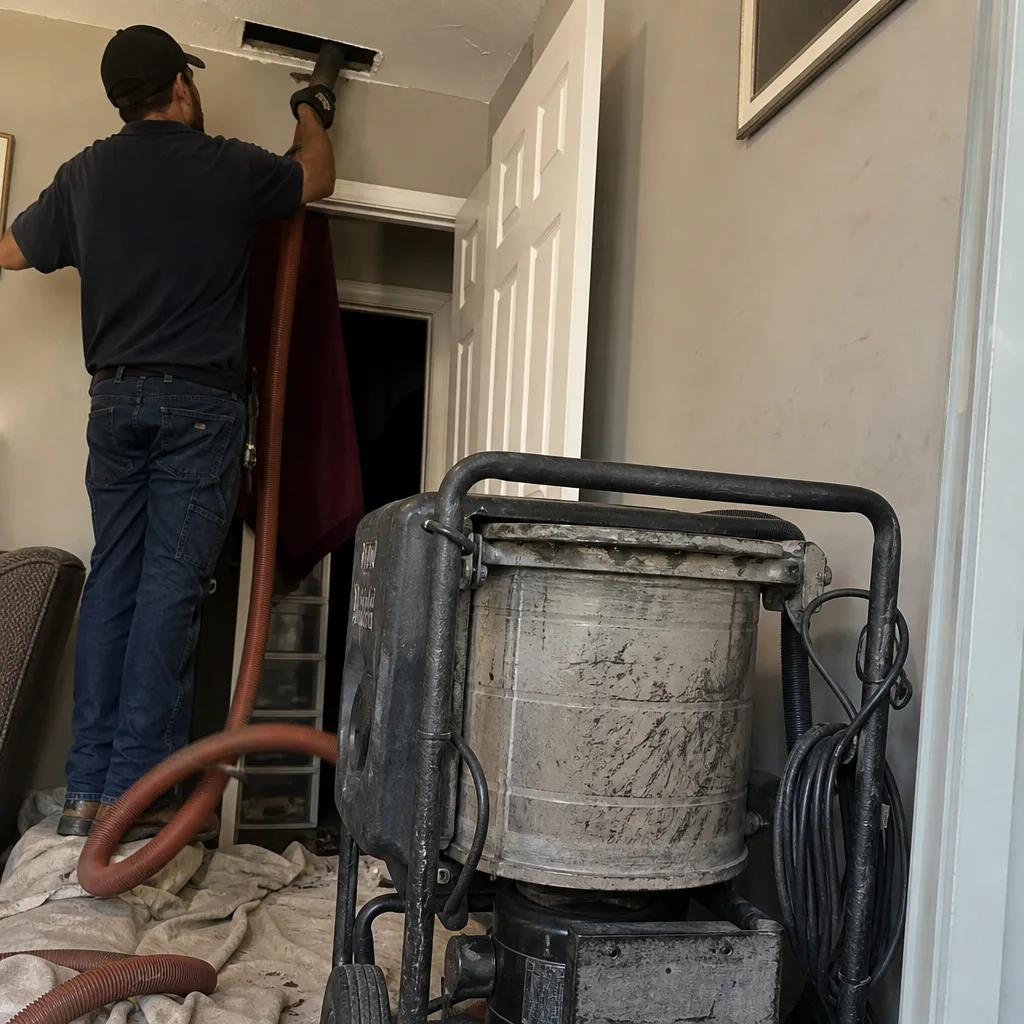 Before
 After
After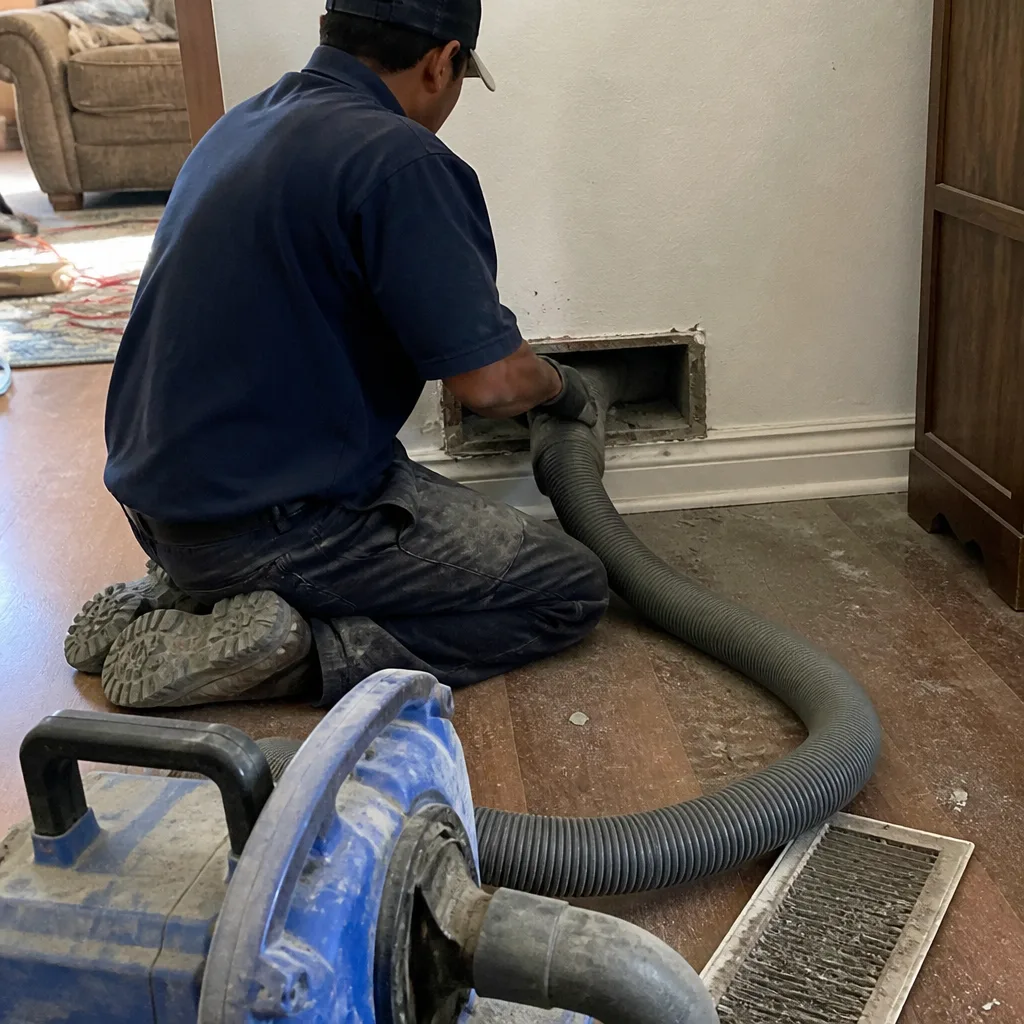 Before
 After
AfterCommon Mistakes to Avoid
- Wiping registers clean before documenting the problem. The buildup is your evidence. Photograph it before you clean it. A clean register makes diagnosis harder for the technician and gives a less scrupulous operator room to claim there is no problem.
- Assuming the AC drain pan is the source of a musty smell. The AC cycle pattern described earlier is easy to verify. If the smell peaks at startup and fades during the run, the geometry points to duct surfaces, not the drain pan. Chasing the drain pan delays the real fix.
- Treating every temperature difference as a duct problem. Some rooms are hot because the duct is restricted; some are hot because the room itself gains heat faster than the system can remove it. Know which one you have before paying for a cleaning that may not change anything.
- Accepting a quote over the phone without a written, line-item price. A real price survives contact with the job site because it is written down. A verbal quote that changes at the door was never a quote; it was a foot in the door.
- Skipping the filter conversation. The best duct cleaning in Houston will not stay effective behind a collapsed filter or a MERV 1 filter that stops nothing. Filtration from Honeywell, Aprilaire, or Guardsman upgrades the result meaningfully, and a good technician brings it up without making it an upcharge ultimatum.
- Believing a cheap coupon price is the final price. The classic Houston duct cleaning ad is a $59 or $79 whole-house special. The final invoice is almost never anywhere near that number. A legitimate comprehensive cleaning on a standard Houston home typically runs several hundred dollars. If the advertised price would not cover the technician’s fuel, the model is built on inflating it later.
- Waiting until the problem is undeniable. By the time the musty smell is constant or the dust is thick enough to draw on the register, the system has been circulating contaminated air for months or longer. The threshold for calling should be the first clear sign, not the worst one.
When to Call a Professional
Call when you have documented at least two of the warning signs in this guide and can describe them specifically. Call when you see visible accumulation at registers that returns quickly after cleaning. Call when the musty odor is tied to the AC cycle and has persisted through a filter change. Call when energy use has climbed across two or more seasons with no lifestyle change. And call when allergy symptoms track with time spent in the house. Hollis Air Duct Houston offers free estimates across Houston, and our standard is straightforward: a written price before any work starts, covered by the 365-Day Done Right Promise in writing. Call (713) 936-5800 to schedule an evaluation.
If you suspect the problem is a crushed flex run, a disconnected duct, or significant air leakage rather than debris accumulation, mention that on the call. We carry the equipment to test and document airflow, and if cleaning is not the right fix, we will tell you that flat out. We also handle dryer vent cleaning in Houston separately, because dryer exhaust systems have their own warning signs and safety considerations.
Frequently Asked Questions
A legitimate whole-system air duct cleaning in Houston typically runs between $350 and $650 for an average single-family home with one HVAC system, with larger homes or multiple systems running higher. The variables are the number of systems, the accessibility of the ductwork, and whether the job includes coil cleaning or antimicrobial treatment. The price you are quoted should be written down and should not move at the door. If you are seeing ads for $79 whole-house specials, the final price will almost always be several times that once the technician is inside. Call (713) 936-5800 for a written quote based on your specific home.
Cheap quotes in Houston almost always come from operators running a bait-and-switch model: the advertised price covers a superficial job, and the technician manufactures add-ons once he is standing in your hallway. The giveaway is the absence of a written, line-item price and the refusal to explain what equipment they run. A legitimate company costs more because the price reflects the actual time, personnel, and professional-grade equipment required to clean the full duct run with source removal. The lower price is not a bargain; it is a loss leader for an upsell.
You should be able to see the evidence. A legitimate company using negative-air extraction will show you the debris pulled from your system, and they will offer before-and-after photos of the interior of your ducts taken with an inspection camera. If a technician cannot or will not show you either, you cannot verify the work. This is precisely why photos and a written scope are part of the standard at Hollis Air Duct Houston. The output is visible, not asserted.
Duct cleaning addresses the HVAC system: the supply and return ducts, the main trunk line, the plenums, and sometimes the blower compartment and coil. Dryer vent cleaning addresses the exhaust duct that carries hot, lint-laden air from your clothes dryer to the exterior of the house. They are separate systems with separate problems, and a company that conflates them is not being straight with you. For the dryer side, see our dryer vent cleaning in Houston service page.
Yes, and the sequence matters. Cleaning first removes debris that would otherwise be trapped under sealant. Sealing then closes the leaks that let attic air and dust enter the system. In Houston, where attics reach punishing temperatures for months each year, sealing leaky ducts can reduce the amount of hot, humid attic air pulled into the system. See our duct sealing in Houston page for details on how the process works and what it should cost.
Most Houston homes benefit from a full cleaning every three to five years, but the real answer depends on observable conditions, not a calendar. Homes with multiple pets, recent remodeling, or residents with significant allergies often need more frequent service. The right approach is to document the warning signs in this guide and act when they appear, not to wait for a set interval or to respond to a coupon in the mail.
The Bottom Line
The warning signs described in this guide are early, visible, and consistent. Dust at registers that returns quickly, a musty odor that tracks with the AC cycle, rooms that never reach the thermostat temperature, energy bills that creep upward across seasons, and allergy symptoms that ease when you leave the house all point to the same underlying system. The fix is not always a cleaning; sometimes it is a repair, a sealing job, or an equipment correction. But the first step is always the same: observe the signs, document them, and call someone who will give you a written price and stand behind the work. That is the standard we hold ourselves to at Hollis Air Duct Houston, and it is the standard you should hold any contractor to.
Written by Roy Castellanos, Owner at Hollis Air Duct Houston, serving Houston since 2004.