
Last updated October 15, 2026
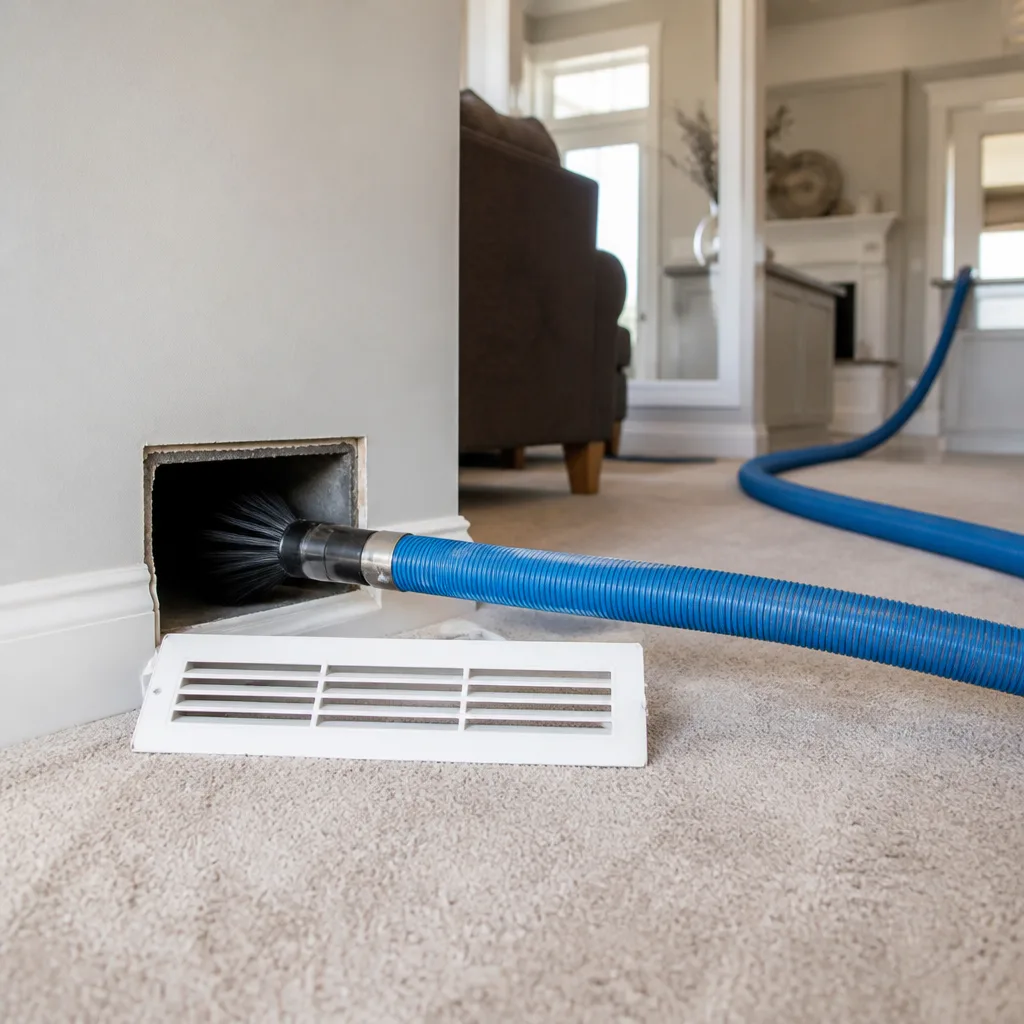 Whole-home duct cleaning
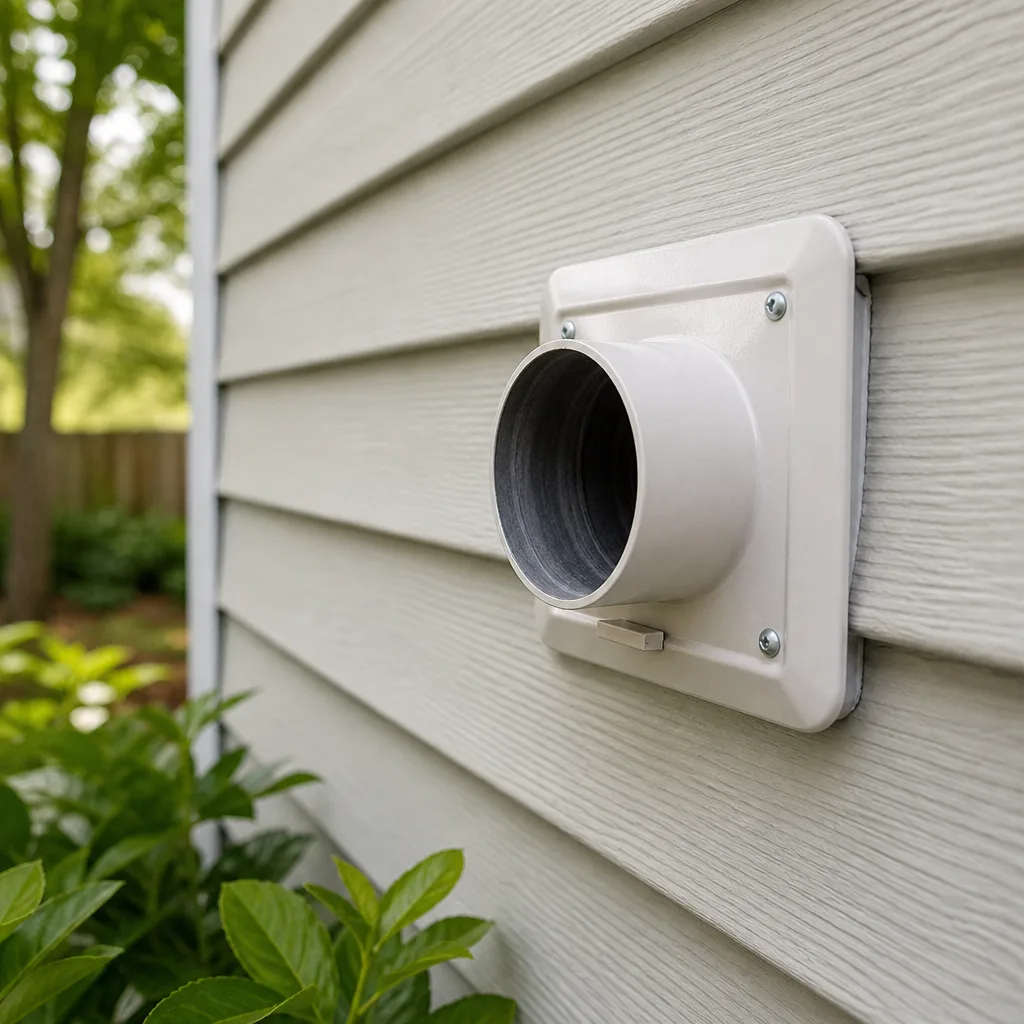 Dryer vent cleaning
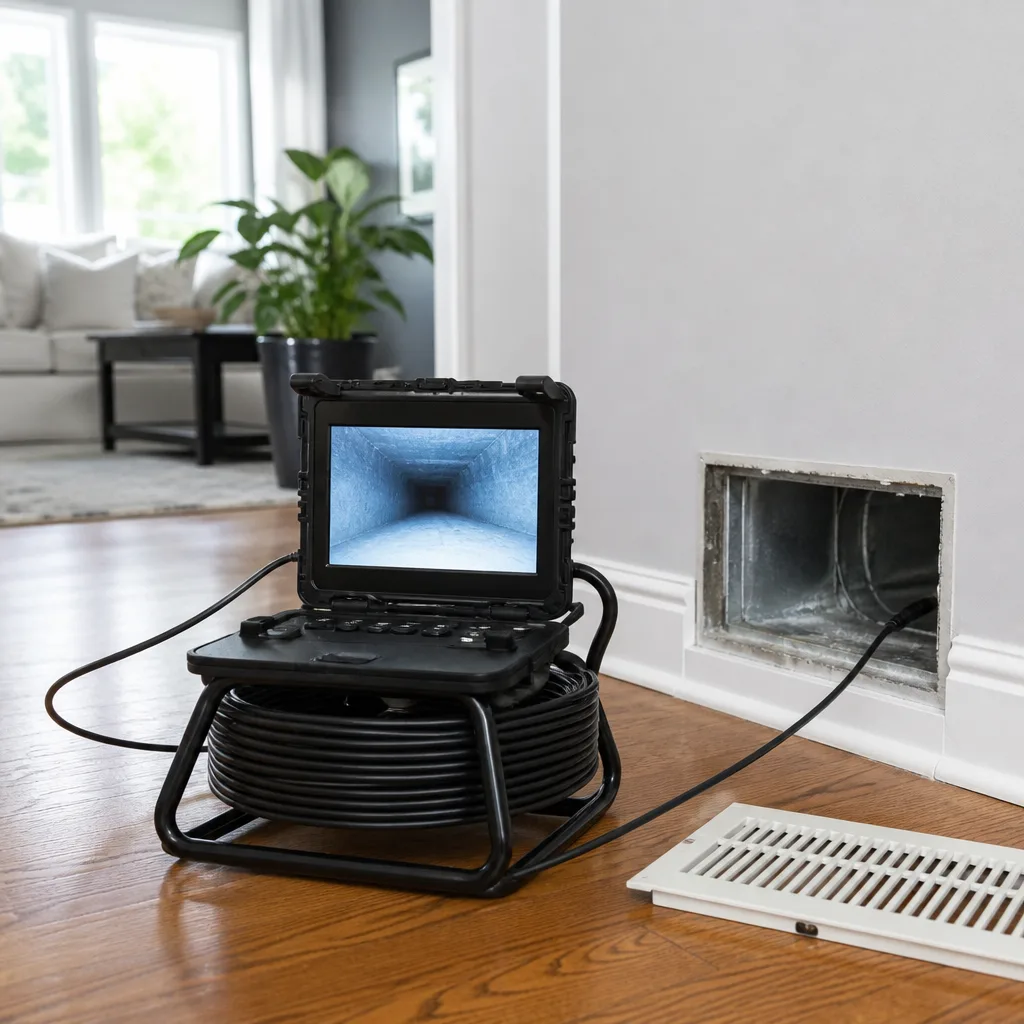 Camera inspection
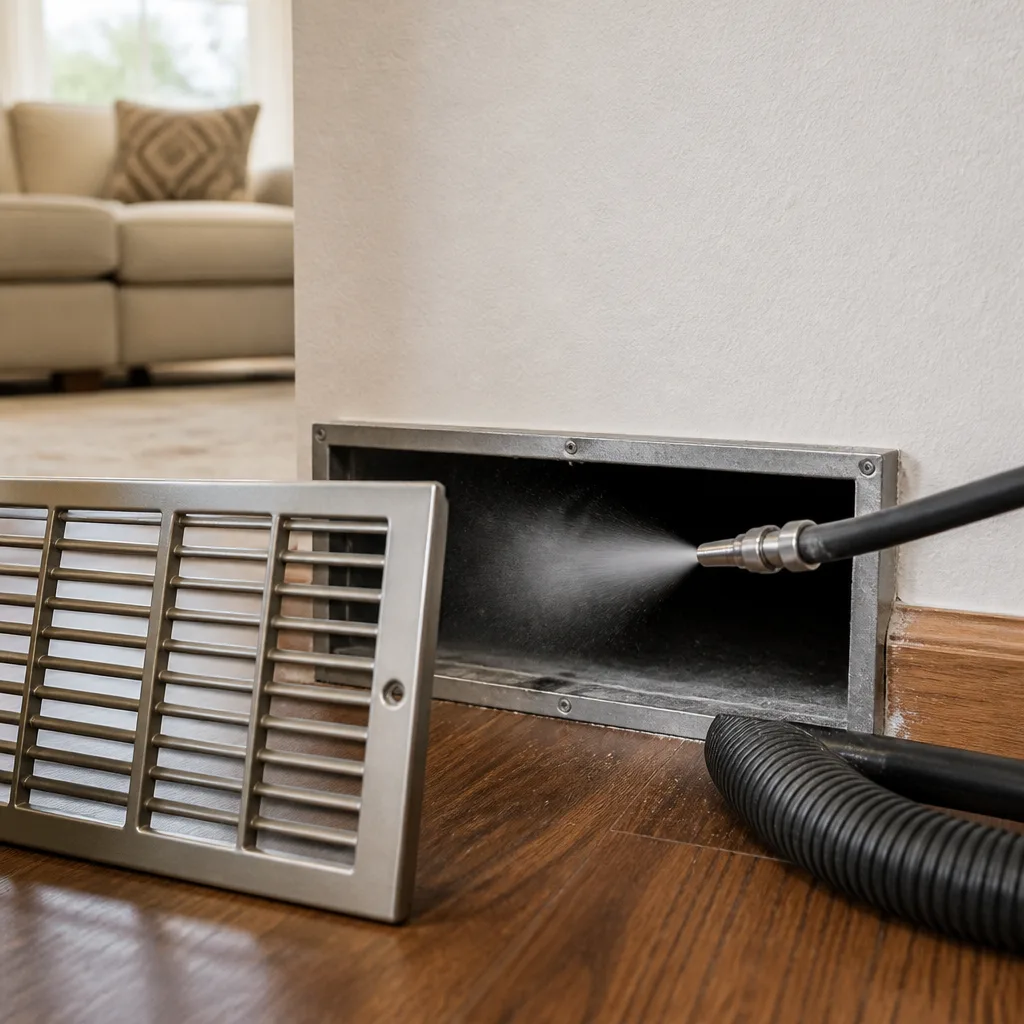 Sanitizing & deodorizing
Whole-system duct and dryer vent check with before-and-after photos - you see exactly what came out of your vents
That "$99 whole-house special" is a bait ad - the real number appears once they are in your hallway, or the "clean" is a shop-vac at the register. We photograph the inside of your ducts before and after instead.
DIY vs Professional Air Duct Cleaning: The Houston Homeowner’s Decision Guide
A homeowner with a shop vac and a dryer vent brush can clean the first 12 to 18 inches of each supply register. That sounds like progress until you do the math: in a typical Houston home, that reachable area accounts for roughly 8% of total duct surface area. The other 92% – the main trunks, return plenums, the air handler cabinet – sits beyond the reach of any consumer vacuum. This guide gives Houston homeowners an honest accounting of what DIY can and cannot accomplish, what professional equipment actually does, and how to tell the difference between a real cleaning and a contact-vacuum job wearing a uniform.
Quick Answer
Air duct cleaning in Houston can be attempted DIY to remove visible dust from register faces and the first foot or so of accessible ductwork, but it cannot clean the 90%+ of your system that sits beyond reach – main trunk lines, return plenums, and the air handler. Professional cleaning uses truck-mounted or portable negative-air machines generating 2,000+ CFM of suction with HEPA filtration on collection, paired with mechanical agitation tools, to pull debris from the entire system rather than dislodging it deeper. For a typical 2,000-square-foot Houston home, expect a professional cleaning to run $350 to $600, and the real question is whether the quote you’re holding includes equipment that can actually do the job.
Styles & brands we work with
Table of Contents
- What DIY Duct Cleaning Can Actually Accomplish
- The Equipment Gap: Why CFM and HEPA Filtration Matter
- When DIY Is Actually the Right Answer
- The Hidden Cost of a DIY Attempt That Goes Wrong
- What Professional Air Duct Cleaning Costs in Houston
- How to Evaluate Whether a ‘Professional’ Quote Is Actually Professional
- The Houston Factor: Humidity, Dust, and Why Ducts Get Dirty Here
- Common Mistakes to Avoid
What DIY Duct Cleaning Can Actually Accomplish
Before we tell you what DIY cannot do, let’s be fair about what it can. A homeowner with basic tools – a shop vac, a flashlight, a screwdriver, and some patience – can accomplish three legitimate tasks on a Houston duct system.
Register face cleaning. Pop off a supply register, wipe down the face and the visible interior lip with a damp cloth, vacuum what you can reach, and snap it back in. This removes the gray film that builds up on register faces in Houston’s humid, dusty air. It is real cleaning. It is also cosmetic – it addresses the surface you see, not the duct interior behind it.
Accessible flex duct visual inspection. In many Houston attics, flex duct runs are visible and can be checked for obvious problems: disconnected runs, kinks, crushed sections, tears in the outer jacket. You can spot a duct that has separated from a register boot or a run sagging under its own weight in attic heat. This inspection has genuine value, especially after a storm or a roofing job.
Filter housing wipe-down. Pull the filter, wipe the housing, replace with a clean filter. This is routine maintenance every Houston homeowner should do monthly during peak cooling season, and it requires zero specialized equipment.
What these three tasks share: they all stop at the first 12 to 18 inches of any duct run. The trunk lines that snake through your attic – carrying conditioned air from the air handler to every room – remain untouched. The return plenum, where dust accumulates because it is under negative pressure whenever the system runs, is completely inaccessible without specialized tools. In our experience cleaning ducts across Houston for over 20 years, the return side is typically the dirtiest part of the system. It is also the part DIY cannot reach.
If you want to understand what we do differently on a full Air Duct Cleaning in Houston job, it starts with this distinction: we clean the entire system, not just the surfaces you can see from a ladder.
The Equipment Gap: Why CFM and HEPA Filtration Matter
The DIY versus professional question is not really about skill. It is about equipment. Here are the specifications that separate a compliant professional cleaning from a contact-vacuum job, and why each one matters in plain terms.
Airflow volume (CFM). A consumer shop vac moves somewhere between 100 and 200 cubic feet per minute of air. That is enough to pick up sawdust from a garage floor. It is not enough to overcome the static pressure of a 30-foot duct run. Professional negative-air machines – the kind we run on Houston jobs – move 2,000 CFM or more. That airflow creates enough velocity inside the duct to lift debris off the duct walls and carry it toward the collection point. The difference is not marginal. It is an order of magnitude.
HEPA filtration on collection. A shop vac with a standard filter exhausts fine particulate back into the room through its discharge port. So a DIY cleaning that agitates dust inside a duct can actually increase airborne particulate in the living space. Professional setups run HEPA filters on the collection side, which means what comes out of the duct goes into containment, not back into your breathing air. This is why professional crews also run negative-air containment during cleaning – the room being cleaned is held under negative pressure so nothing escapes.
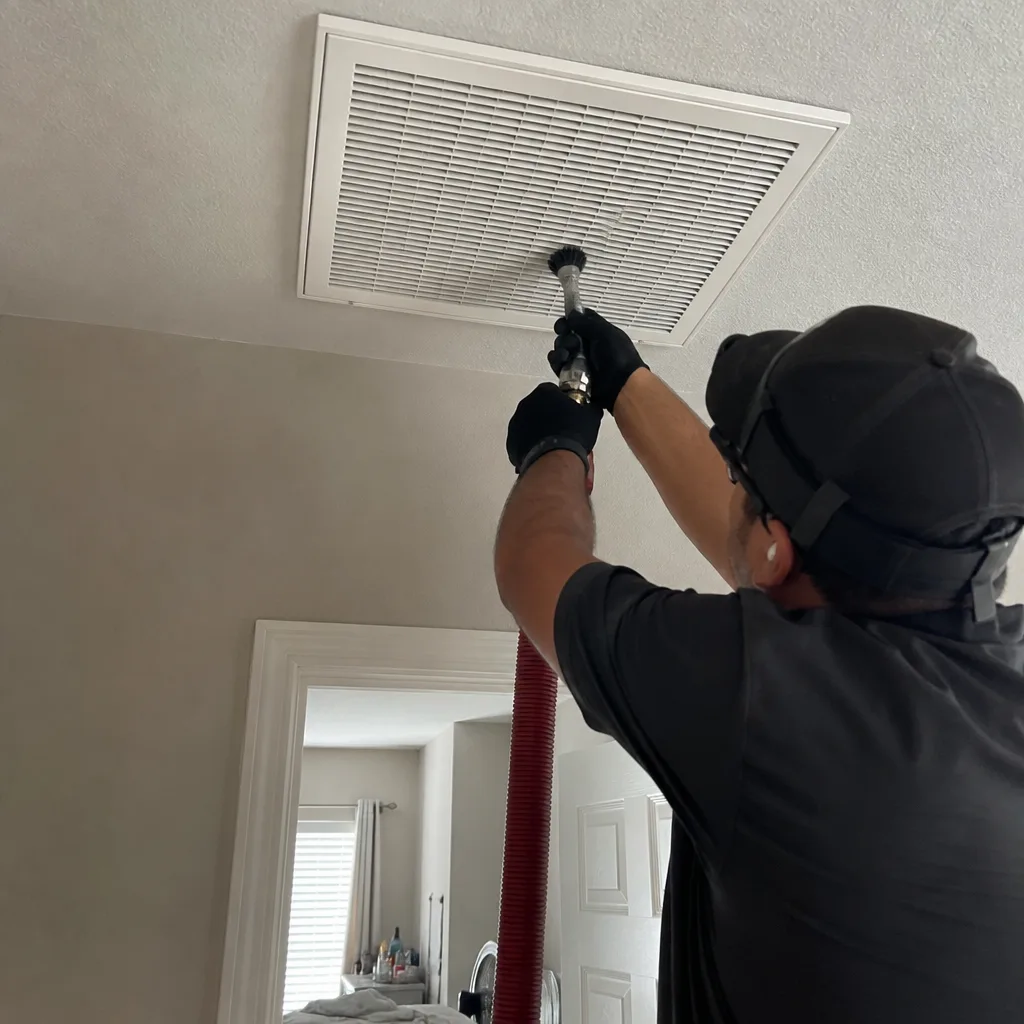
Agitation method. Debris adhered to duct walls will not come loose from airflow alone. You need mechanical agitation – rotary brushes, compressed-air whips, or skipper balls – to dislodge it so airflow can carry it away. Consumer tools simply do not have an agitation method that works inside a trunk line. The equipment used by Hollis Air Duct Houston includes Rotobrush rotary brush systems and Nikro negative-air machines, which pair mechanical agitation with high-CFM collection. These are not toy versions of professional tools; they are the same class of equipment commercial crews use on office buildings and medical facilities.
The upshot: DIY equipment moves air too slowly, cannot filter what it does move, and has no way to agitate adhered debris inside a duct. That triple limitation is why results differ, and it is not a matter of effort or technique.
When DIY Is Actually the Right Answer
We are not going to tell you that DIY is always a mistake, because that is not true. There are Houston homes where a DIY approach makes complete sense. Here is how to know if yours is one of them.
Your system was professionally cleaned within the last two years. If the duct interior was mechanically cleaned recently, the accumulation since then is light. Register face cleaning and filter replacement may be all the attention the system needs until its next full cleaning. You are maintaining, not remediating.
Your registers show light dust, not visible buildup. A thin dust film on the register face in a Houston home is normal – it is the price of living in a city where the air conditioner runs 3,000 hours a year. Light dust on the register does not equal dirty ducts. If you pull a register and the duct interior looks clean as far as you can see with a flashlight, you probably do not have a contamination problem.
You are on a tight budget and have no contamination indicators. No water damage, no mold odor, no rodent signs, no visible dust streaming from registers when the system kicks on. In that scenario, the $40 you spend on a shop vac filter and some microfiber cloths will buy you a cosmetic improvement. It will not clean your ducts, but it will keep the register faces presentable until you can budget for a full cleaning.
You want to do preventive work on accessible components. Checking flex duct connections in the attic, sealing a gap where a register boot meets the drywall, replacing the filter housing gasket – these are legitimate homeowner maintenance tasks that extend the life of a system between professional cleanings.
If any of this sounds like your situation, DIY may be the right call. But if your goal is actually cleaning the inside of your duct system – the surfaces you cannot see – understand that the $40 in hardware-store gear will not accomplish that. For guidance on finding qualified help, see our resource on How to Hire a Air Duct Cleaning Contractor in Houston: A Step-by-Step Guide. And in some cases, as the next section explains, it can make things worse.
The Hidden Cost of a DIY Attempt That Goes Wrong
Here is the scenario we have seen play out in Houston homes more times than we care to count. A homeowner decides to tackle duct cleaning themselves. They open a few registers, vacuum what they can reach, maybe attach a brush to a drill and run it into a supply duct. It feels productive. But what they have actually done is dislodge debris that was harmlessly adhered to the duct walls and push it deeper into the system.
Here is what happens next. The dislodged debris travels with airflow toward the air handler. Some of it gets caught by the filter – if the filter is clean and properly seated, which it sometimes is not. The rest of it lands on the evaporator coil. A coil coated in dust and hair loses heat transfer efficiency. The system runs longer to hit the thermostat set point. Electricity bills creep up. Meanwhile, the dust on the coil absorbs moisture from Houston’s humid air and becomes a substrate for biological growth.
At that point, the homeowner is no longer looking at a duct cleaning. They are looking at evaporator coil cleaning and possibly mold remediation – work that costs more than the professional duct cleaning would have cost in the first place. A typical evaporator coil cleaning in Houston runs $200 to $450. Mold remediation on a contaminated coil or duct section starts at $600 and goes up from there.
The pattern is consistent: a DIY attempt that runs $60 in tools and a Saturday afternoon creates a service call that costs $500 to $1,200 to properly resolve. This is not a scare story – it is the physics of airflow. When you agitate debris without high-CFM collection to capture it, you are redistributing debris, not removing it.
If you notice musty odors from the vents after a DIY attempt, or if airflow seems weaker than before, the debris has likely moved downstream. At that point, Duct Sealing in Houston and a full professional cleaning are the only real solutions.
What Professional Air Duct Cleaning Costs in Houston
Houston pricing for professional air duct cleaning runs in a predictable range, and you should be suspicious of quotes that fall far outside it in either direction.
Typical Houston Duct Cleaning Pricing
- Whole-house cleaning (single system, up to 10 vents): $350 to $500
- Whole-house cleaning (single system, 11 to 15 vents): $450 to $600
- Whole-house cleaning (two systems or 16+ vents): $550 to $800
- Add-on dryer vent cleaning: $75 to $150 when bundled with duct cleaning
- Add-on duct sealing (per access point): $50 to $125 depending on accessibility
These ranges reflect the Houston market in 2026 for a compliant cleaning: negative-air machine, mechanical agitation on trunk lines, HEPA collection, and all registers and returns accessed. A quote below $250 for a whole house almost always means one of two things: a portable consumer-grade vacuum with a rotating brush attachment, or a loss-leader price designed to create upsell pressure once the technician is inside. Both are versions of the same problem – the price you see is not connected to the result you want.
We write the price before we get started. It covers the full system cleaning, line-by-line. If we find something during the job – a disconnected duct, a crushed flex run, coil contamination from a prior attempt – we show you, we explain what it costs to fix, and we get your go-ahead before we touch it. No price moves at the door. That is not a slogan; it is how The Garrison Standard operates at Hollis Air Duct Houston.
How to Evaluate Whether a ‘Professional’ Quote Is Actually Professional
Not every company that calls itself professional is running professional equipment. Here are the questions to ask before you book, and the answers that separate a real operation from a portable vacuum in a pickup truck.
Questions to Ask Any Houston Duct Cleaning Company
- “What is the CFM rating of the machine you will use on my system?” A compliant answer is 1,500 CFM or higher, and the person on the phone should be able to tell you without hesitation. If they do not know what CFM means, that is an answer in itself.
- “Is the collection side HEPA filtered?” If the answer is no, or if they explain that the machine exhausts back into the attic or the room, you are paying for redistribution, not collection.
- “Is the vacuum unit truck-mounted or portable?” Truck-mounted units are the gold standard because they generate high CFM and vent outside the structure. Portable units can be compliant if they are commercial-grade negative-air machines (2,000+ CFM, HEPA filtered), but a portable unit that plugs into a wall outlet is a different animal. Ask for the brand and model.
- “What agitation method do you use on main trunk lines?” Listen for rotary brush, compressed-air whip, or skipper ball. If the answer is “we use a vacuum with a brush attachment,” that is a contact cleaning – it reaches what the hose can touch and nothing more.
- “Do you include the return plenum and the air handler cabinet in the quote?” Some Houston companies quote the supply side only. The return side is where the most debris accumulates, and it must be included in a compliant cleaning.
Hollis Air Duct Houston will answer all five questions with specifics – equipment brand, CFM rating, and agitation method – before you schedule, because those are the terms on which any legitimate cleaner should be evaluated. If a company hedges on any of these, call the next name on your list. For reference, our Hollis Air Duct Houston home page lists our equipment and standard inclusions in plain terms.
The Houston Factor: Humidity, Dust, and Why Ducts Get Dirty Here
Houston is a uniquely demanding environment for duct systems, and it helps to understand why before you decide what level of cleaning your home needs.
Runtime. A Houston air conditioner runs 2,500 to 3,500 hours per year, depending on the home and the year. Compare that to a northern climate, where an AC might run 500 hours. Every hour of runtime pulls air through the return, through the filter, across the coil, and out through the supply runs. More runtime means more total air volume moved, which means more particulate deposited per square foot of duct surface. Houston systems simply accumulate debris faster than systems anywhere else in the country besides the Gulf Coast corridor.
Humidity. Houston’s average relative humidity runs 70 to 90 percent in the summer months. Dust that would stay dry and loose in a desert climate becomes slightly adhesive in Houston’s humidity, bonding to duct walls and refusing to release without mechanical agitation. This is another reason DIY contact cleaning falls short here – the debris is stuck harder than it would be in a dry climate.
Construction dust. Houston’s suburban expansion means a lot of homes are near active construction, and the fine particulate from concrete work and framing travels on the wind. Homes in rapidly developing areas – Katy, Cypress, Pearland, The Woodlands – often show heavier construction dust loads in their duct systems than older, stable neighborhoods.
Pollinators and seasonal spikes. Live oak pollen in the spring and ragweed in the fall both find their way into duct systems. A system that carries that seasonal load into the summer, when humidity spikes, tends to hold onto it.
All of this points in one direction: Houston homes need professional-grade duct cleaning more often than the national average, and they respond worse to DIY attempts because the debris profile is stickier and more deeply adhered. Our Seasonal Air Duct Cleaning Care for Houston: Year-Round Homeowner’s Guide breaks down when to schedule service based on local conditions.
Common Mistakes to Avoid
- Assuming a shop vac reaches the trunk line. It does not. A consumer vacuum cannot overcome the static pressure of a 30-foot duct run. You are cleaning the first foot and a half of accessible register duct, which is about 8% of surface area in a typical Houston home.
- Using a leaf blower to ‘blow out’ the ducts. This is the worst DIY approach we see in Houston. A leaf blower pressurizes the system and forces debris deeper into the trunk and toward the air handler. It does not remove anything; it relocates the problem to the most expensive component in the system.
- Trusting a $99 whole-house cleaning. At that price, the company is running a portable consumer vacuum with a brush attachment, and the technician’s incentive is to upsell you on the truck. The price is bait. The real invoice comes later.
- Signing a duct cleaning quote that excludes the return side. The return plenum is where debris accumulates fastest, because it is under negative pressure whenever the system runs. Any quote that skips it is not a cleaning – it is a partial wipe-down.
- Skipping the filter replacement after cleaning. A dirty filter reintroduces particulate to a just-cleaned system immediately. Replace the filter the same day the cleaning is done.
- Ignoring dryer vents because they are ‘separate.’ Clogged dryer vents are the leading cause of dryer fires and a major source of indoor humidity in Houston homes. If you are cleaning your ducts, have the Dryer Vent Cleaning in Houston done the same day.
See the difference
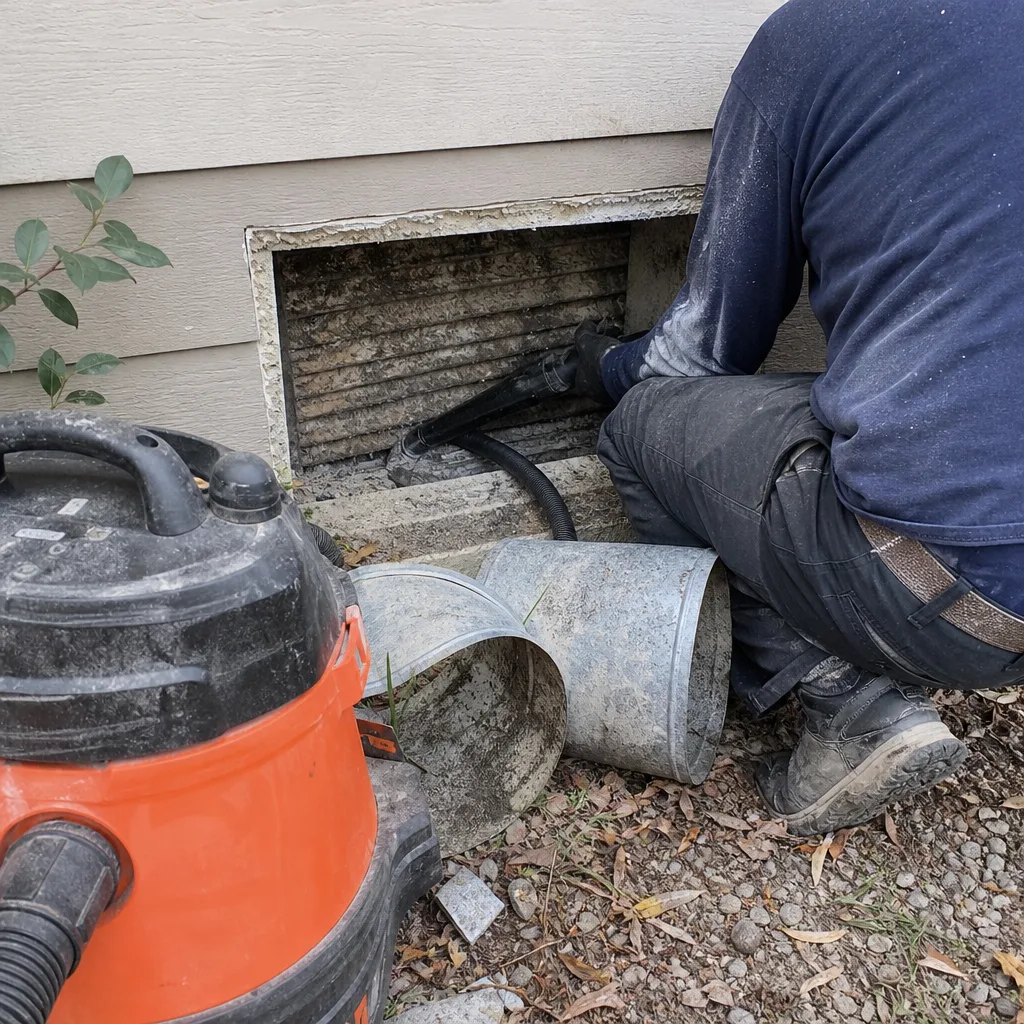 Before
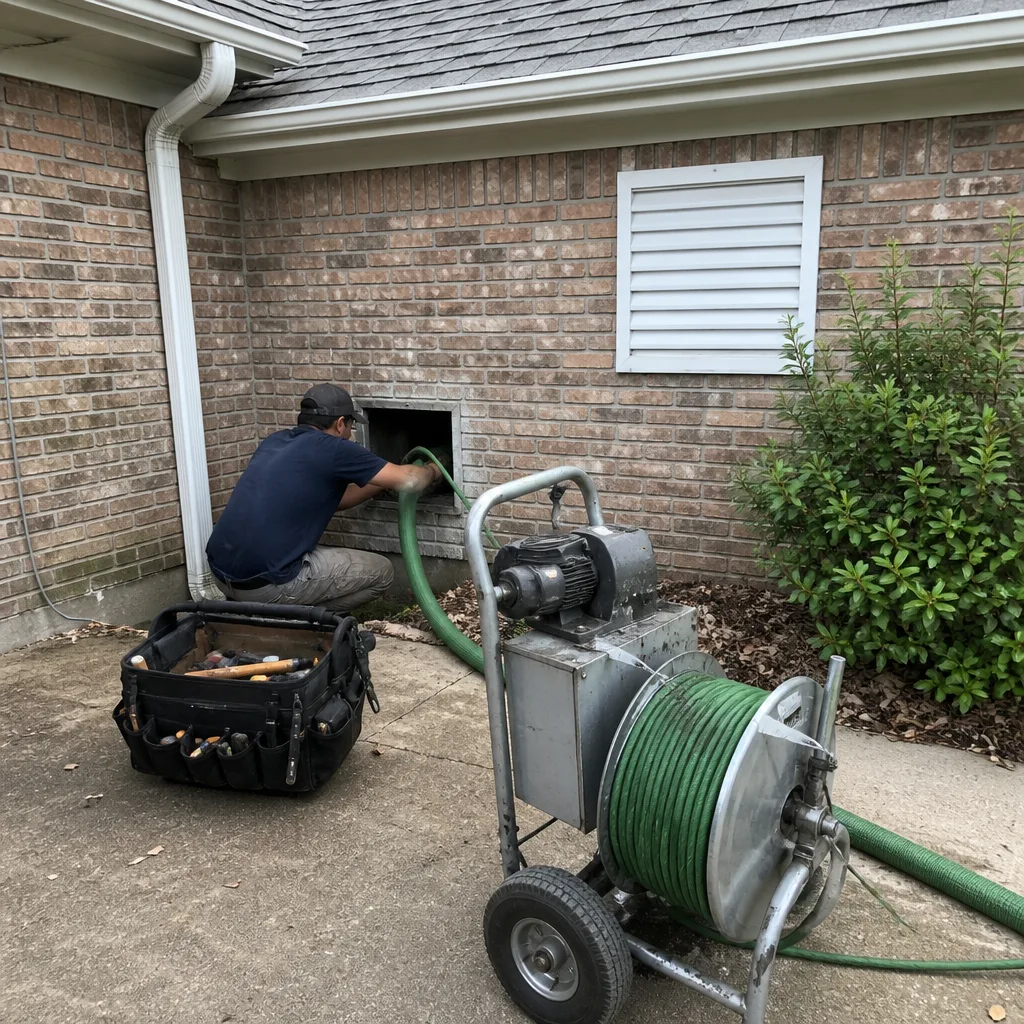 After
After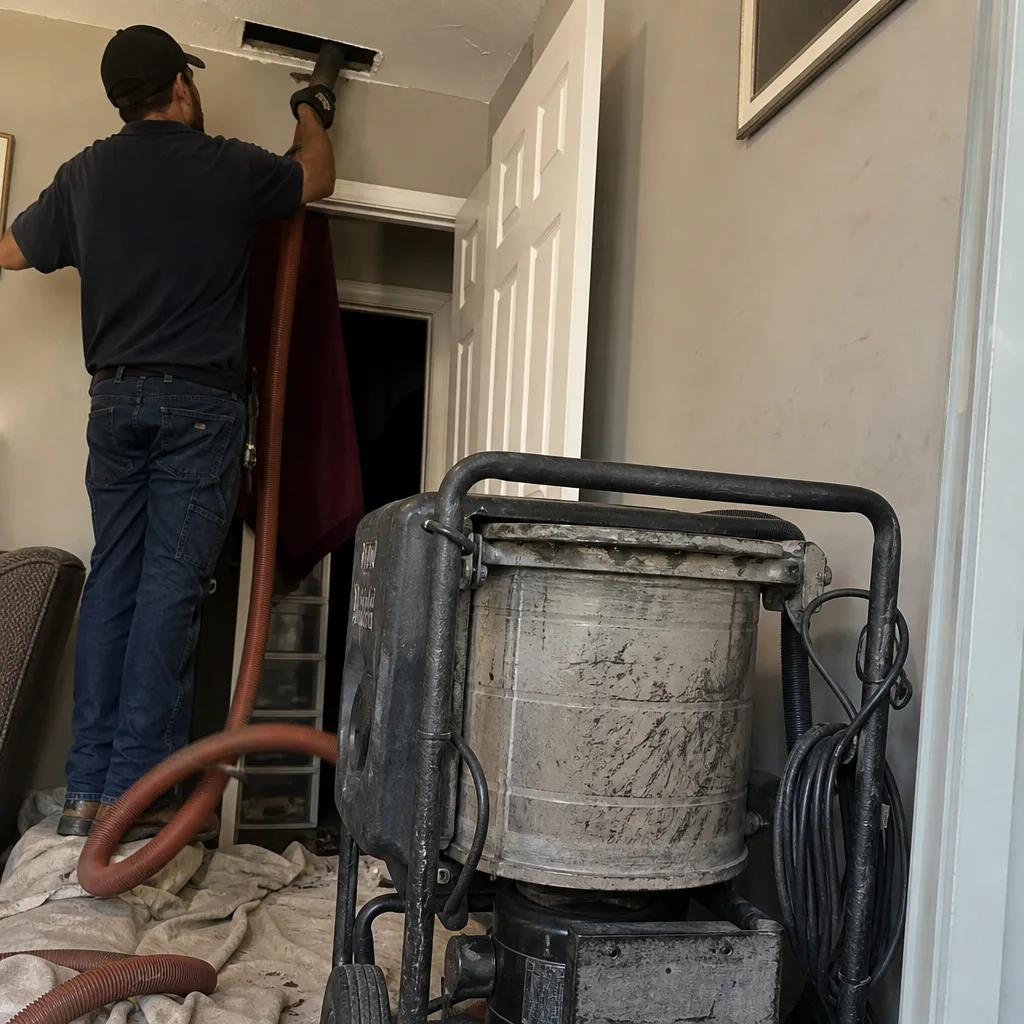 Before
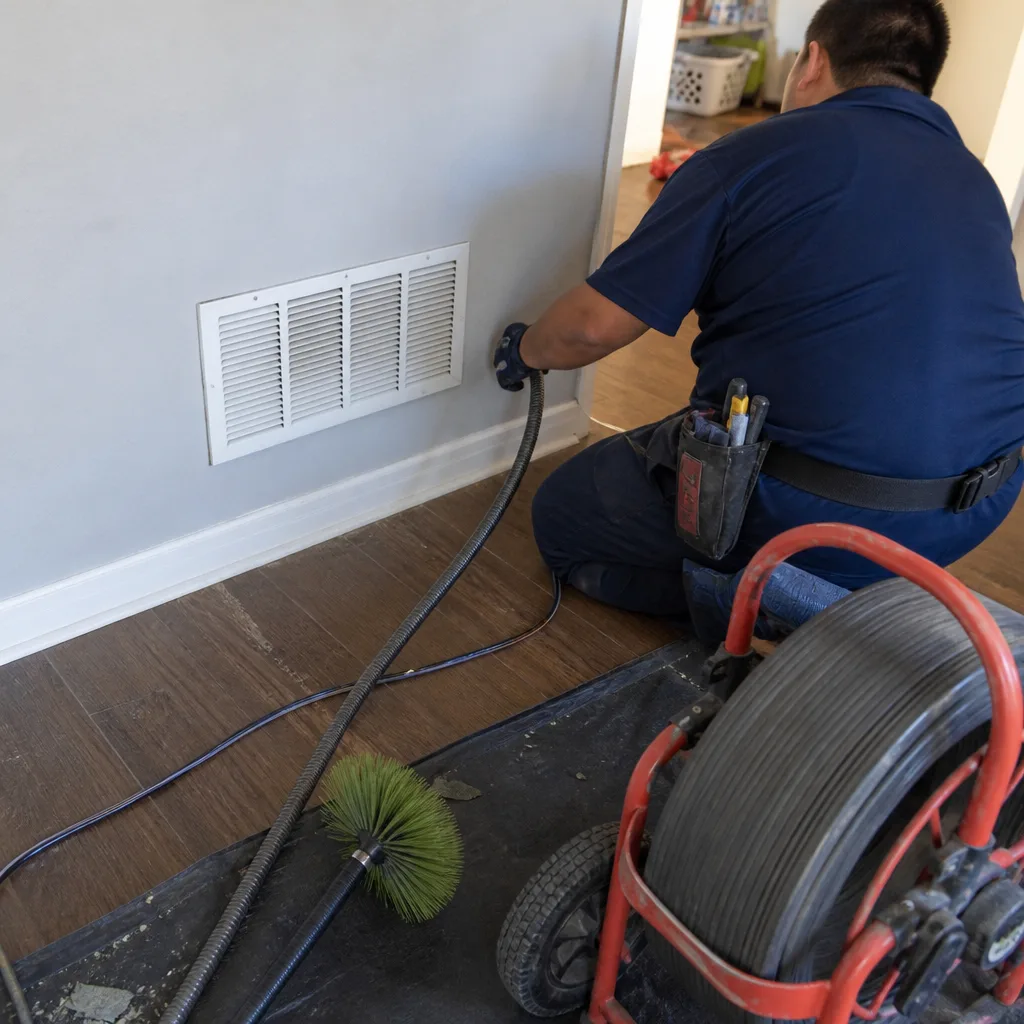 After
After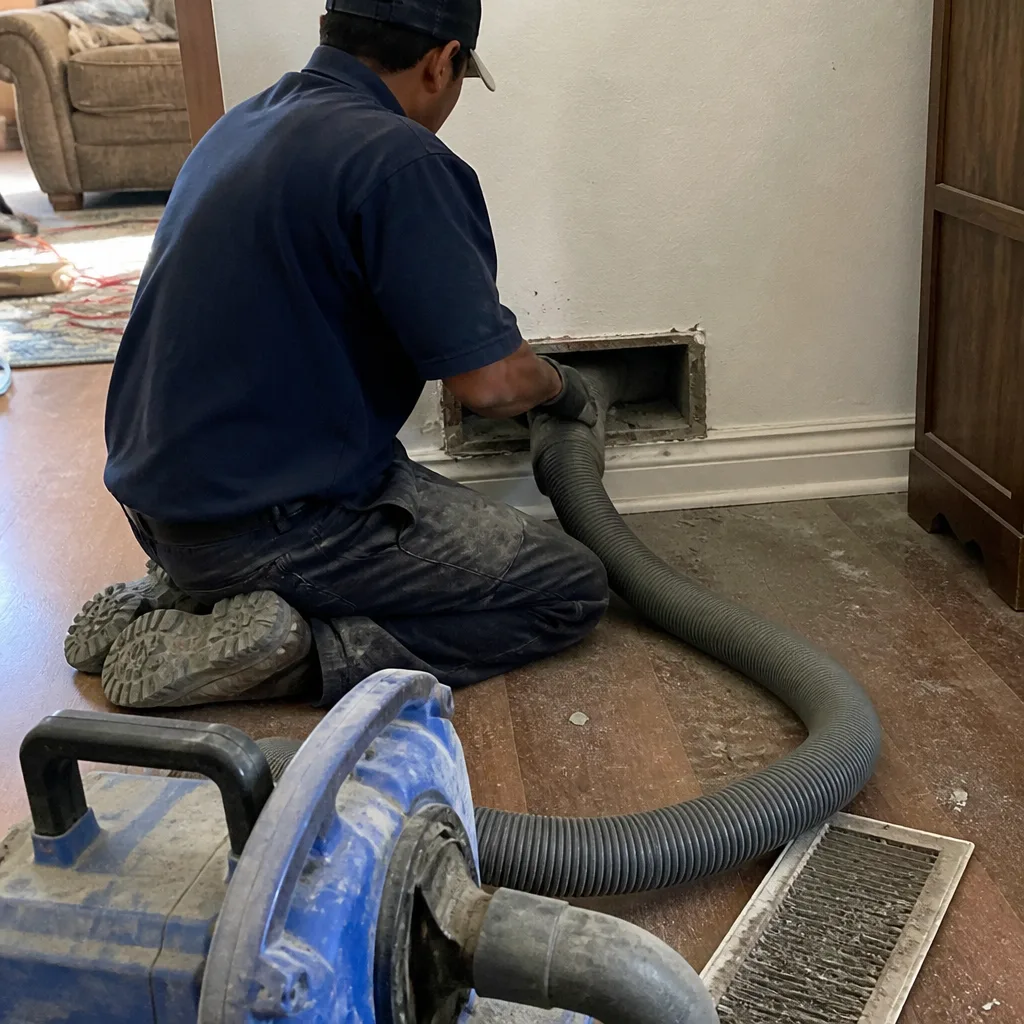 Before
 After
AfterWhen to Call a Professional
A few scenarios leave no real decision to make. If you have visible dust streaming from registers when the system starts, call a professional. If you smell must or mildew from the vents, especially after a rain event or a prior DIY attempt, call a professional. If you have had water intrusion in the attic, a leak around the air handler, or a rodent problem in the ductwork, call a professional. If you have never had the system cleaned and the home is more than ten years old in Houston’s climate, call a professional. And if a prior DIY attempt left airflow weaker or odors stronger, call a professional before the coil contamination compounds.
Hollis Air Duct Houston offers free estimates throughout the Houston metro – call (713) 936-5800 and we will walk you through what your system actually needs, what it costs in writing, and what the 365-Day Done Right Promise covers.
Frequently Asked Questions
Air duct cleaning in Houston typically costs $350 to $600 for a single-system home with 10 to 15 vents, including supply and return sides, mechanical agitation on trunk lines, and HEPA-filtered collection.
DIY duct cleaning is worth it for register face cleaning and accessible-duct visual inspection, but for cleaning the duct interior – the other 92% of the system – it cannot match the 2,000+ CFM negative-air machines and mechanical agitation that professional cleaning uses. Explore more guides & resources on maintaining your Houston home’s air system.
Cheaper quotes almost always mean consumer-grade portable equipment, no HEPA collection, no mechanical agitation on trunk lines, or a loss-leader price designed to create upsell pressure once the technician is inside – and the final invoice often exceeds the cost of a legitimate professional cleaning.
Ask for before-and-after photos of the interior of your ductwork, specifically the trunk line and return plenum – a legitimate professional crew will document the cleaning and show you the before-and-after condition of surfaces you cannot see yourself.
In Houston’s climate, with AC systems running 2,500 to 3,500 hours per year, most homes need professional duct cleaning every 3 to 5 years – more often if there are pets, construction nearby, water intrusion, or prior DIY attempts that redistributed debris.
Yes – a dirty duct system recirculates pollen, mold spores, dust mite debris, and construction particulate through the living space every time the AC runs, and Houston’s live oak and ragweed seasons amplify the problem.
If you have more questions about what your Houston home needs, call (713) 936-5800 for a straight answer and a free estimate.
The Bottom Line
The DIY versus professional duct cleaning decision comes down to a simple equipment reality. A consumer vacuum cleans the first 12 to 18 inches of each register – about 8% of the system. Professional equipment with 2,000+ CFM, HEPA collection, and mechanical agitation cleans the entire system, including the return plenum and trunk lines where Houston’s humidity-laden air deposits the most debris. For light register dust on a recently cleaned system, DIY maintenance is fine. For an actual cleaning of the duct interior, only professional-grade equipment works. If you want to know what your system actually needs, call (713) 936-5800 for a free, written estimate from Hollis Air Duct Houston – equipment specified, price in writing, guaranteed in writing for a full year.
Written by Roy Castellanos, Owner at Hollis Air Duct Houston, serving Houston since 2004.