
Last updated October 15, 2026
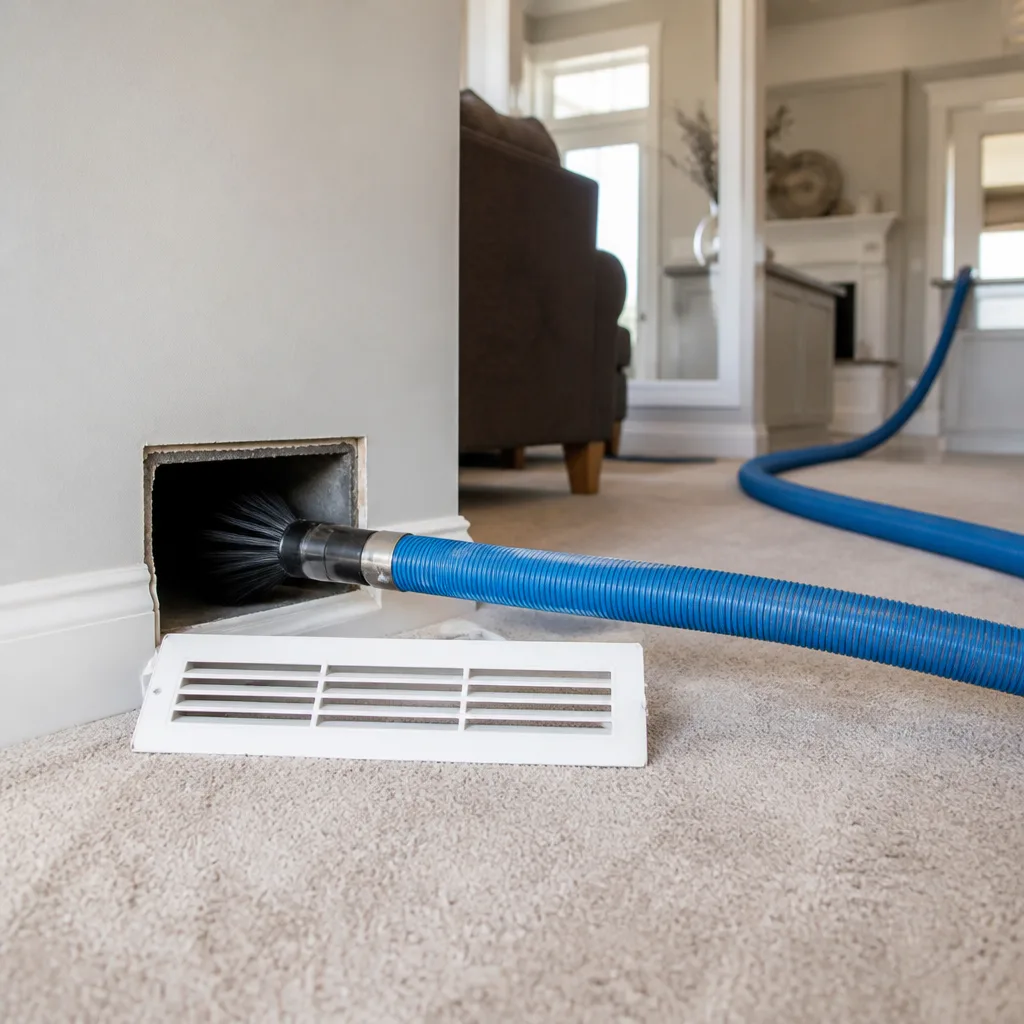 Whole-home duct cleaning
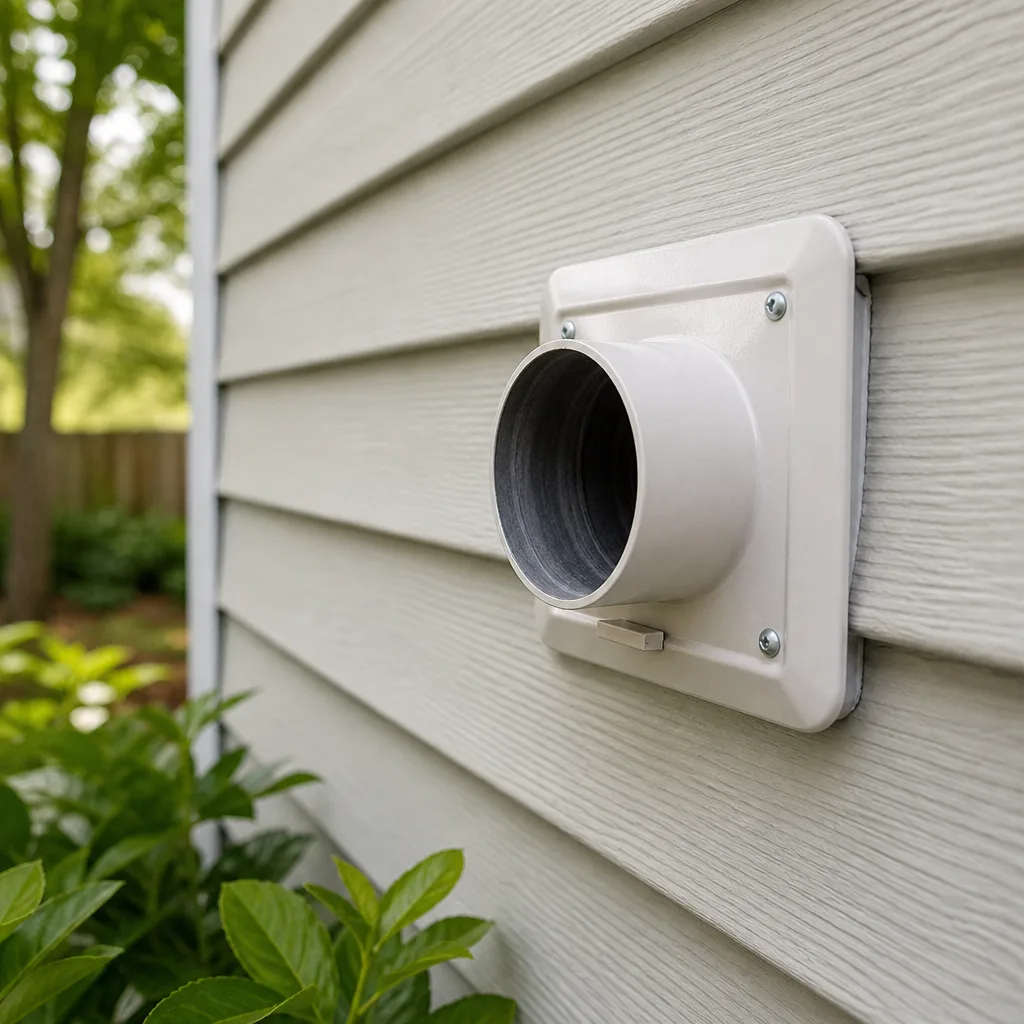 Dryer vent cleaning
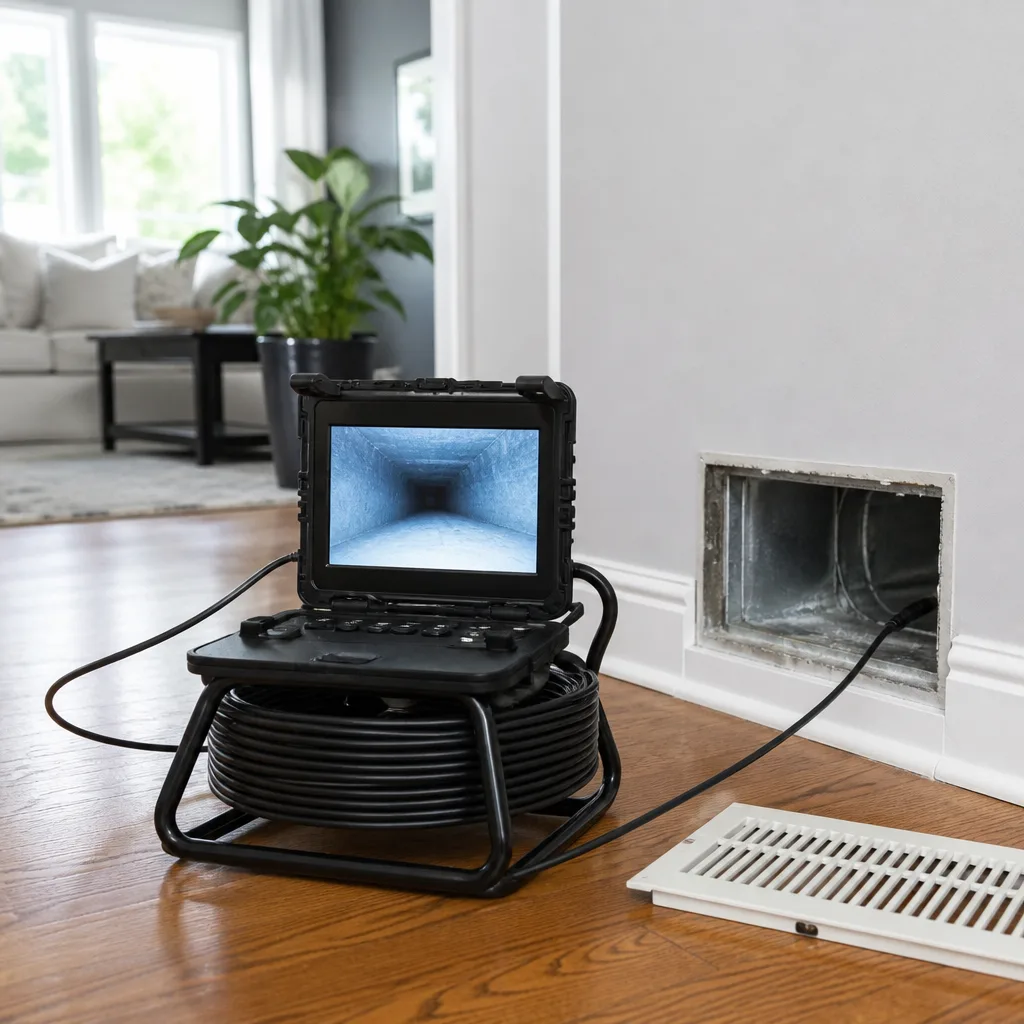 Camera inspection
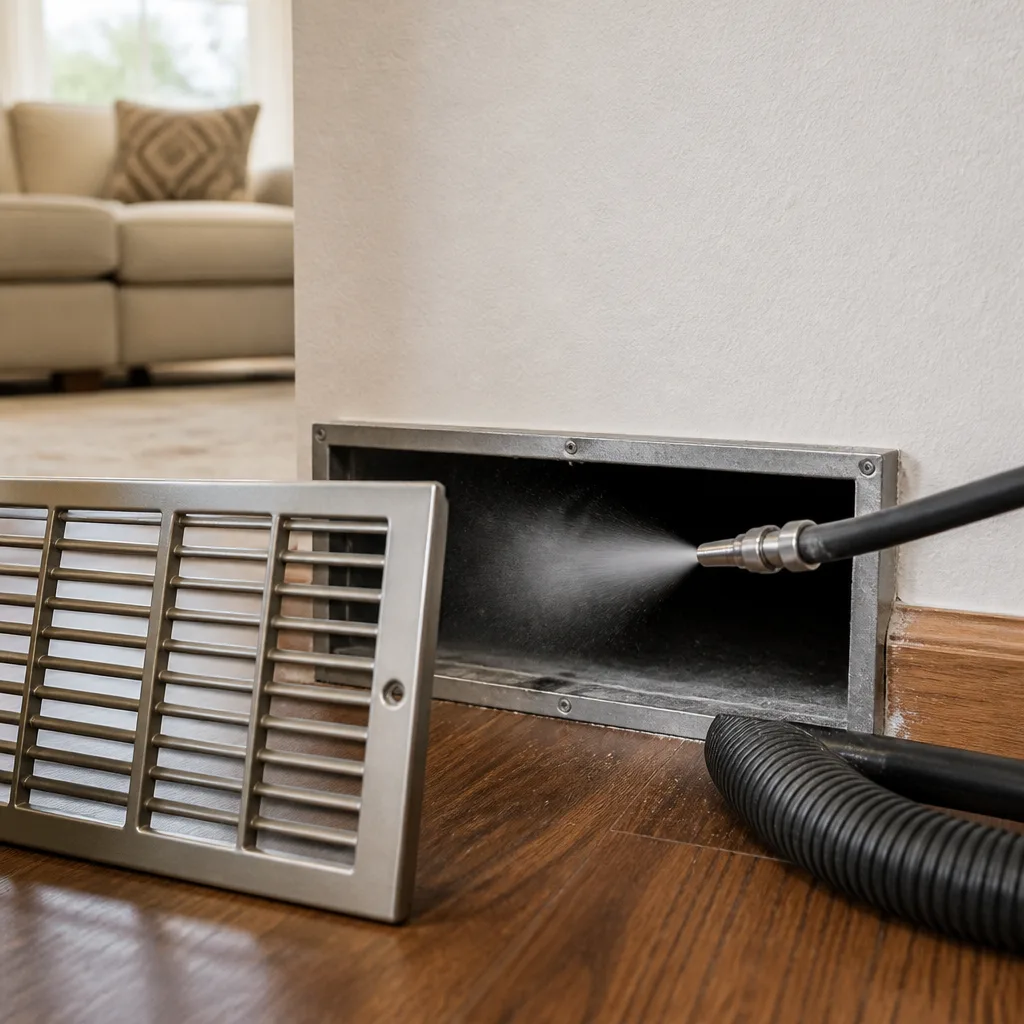 Sanitizing & deodorizing
Whole-system duct and dryer vent check with before-and-after photos - you see exactly what came out of your vents
That "$99 whole-house special" is a bait ad - the real number appears once they are in your hallway, or the "clean" is a shop-vac at the register. We photograph the inside of your ducts before and after instead.
Seasonal Air Duct Cleaning Care for Houston: Year-Round Homeowner’s Guide
Houston doesn’t have four seasons. It has two HVAC stress seasons and two transition windows. Your air conditioner runs somewhere between 2,800 and 3,200 hours a year here, compared to a national average closer to 1,500. That means your ductwork sees roughly double the airflow, double the humidity exposure, and double the particulate load of a typical American home. By the time you notice dust on the registers or a musty smell when the blower kicks on, the ducts have usually been telling you something for months. This guide maps duct care to Houston’s actual climate calendar so you can schedule work during the two windows when it actually makes sense to do it.
Quick Answer
In Houston, the two practical windows for air duct cleaning are March through May and October through November. These transition periods sit between summer cooling season and the short winter heating stretch, when your HVAC system is under the least strain. Scheduling duct cleaning during these months means lower demand, easier scheduling, and a system that’s verified clean before it gets pushed hard again.
Styles & brands we work with
Table of Contents
- Houston’s Real HVAC Calendar: What Your System Does Each Season
- Why March and October Are the Only Practical Cleaning Windows
- Summer: Why You Shouldn’t Clean Ducts in Peak Cooling Season
- Hurricane Season and Your Ductwork: What June Through November Does to Air Systems
- Spring Allergy Season: Timing a Cleaning to Beat Houston’s Pollen Calendar
- The Short Houston Winter: Heating Season Duct Concerns Most Homeowners Miss
- A Simple Seasonal Log: Tracking Filter Changes and Duct Work Year Over Year
Houston’s Real HVAC Calendar: What Your System Does Each Season
Here’s what your system is actually doing across a Houston year, and what each period means for the air moving through your ducts.
January to February: The only time many Houston homes run heat consistently. Cool air pulls moisture from outdoor air, and condensation patterns inside ductwork shift. This is when we see the most complaints about dry air, static electricity, and dust that seems to appear overnight. The blower is running, but at lower volume than summer.
March to May: The first transition window. Temperatures swing, and the system alternates between heating and cooling. This is the single best period to inspect and clean ductwork because the system isn’t under sustained load, and any work done now will hold through the summer.
June to September: Peak cooling. The blower runs near-constantly. Humidity sits high. Any contamination in the ducts gets distributed steadily through the home. Scheduling work now means competing with emergency AC calls, paying higher demand pricing, and often accepting rushed work from crews stretched thin.
October to November: The second transition window. Cooling demand drops, heating hasn’t fully kicked in. This is the other practical window for air duct cleaning in Houston, especially if you missed spring or if summer exposed problems like musty air or visible debris at the registers.
December: Short heating bursts, mild days. The system runs intermittently. Duct issues are usually noticed during these cold snaps when dust burns off the heat exchanger and produces that distinctive smell most Houston homeowners mistake for a problem. It’s usually just accumulated dust in the ducts.
Why March and October Are the Only Practical Cleaning Windows
We’ve been cleaning ducts in Houston since 2004, and the pattern is consistent: March and October are when thoughtful homeowners schedule this work. The reason is operational, not marketing. When your system is under maximum strain in July or January, any service disruption matters more. The house is hotter or colder while work happens. Technicians are stretched. And any dust that gets kicked loose during cleaning is more likely to circulate because the system gets turned back on immediately under full load.
During a transition month, the system runs lightly. After cleaning, it might cycle a few times a day. Any residual dust settles. You have time to verify the work was done right before you depend on the system again.
What March Cleaning Prepares You For
- Summer cooling season: roughly 2,500 hours of blower runtime between June and September.
- Peak pollen season: February through April in Houston, when oak, pine, and grass pollen load the outdoor air.
- Humidity: summer air in Houston regularly sits above 70% relative humidity, which makes duct interiors more hospitable to mold and dust mites if organic debris is present.
- Hurricane season: starting June 1, when storms can force water and debris into exterior HVAC components.
What October Cleaning Prepares You For
- The short heating period: December through February, when accumulated dust burns off hot coils and produces odor.
- Winter humidity shifts: cool air holds less moisture, so dust that was damp and settled in summer becomes dry and airborne.
- Spring allergy season: if ducts were cleaned in October, they’re still clean when pollen season hits in February.
- Holiday gatherings: more people in the house means more dander, more cooking particulates, more airflow demand.
Neither window is inherently better. The practical answer for most Houston homeowners: pick one, do it every two to three years, and stick to the same window so your seasonal log stays consistent.
Summer: Why You Shouldn’t Clean Ducts in Peak Cooling Season
July and August are the worst months to schedule duct cleaning in Houston, and it has nothing to do with the quality of the work. It’s about system access, demand, and what happens to the house during the process.
During peak cooling, your AC system may run 16 to 18 hours a day. When a crew disconnects the supply plenum, cuts access into the main trunk line, or removes registers while the blower is off, the house heats up quickly. Newer high-efficiency systems can add 8 to 10 degrees to a well-insulated home in under an hour with no air movement. That alone makes summer cleaning unpleasant.
But the bigger issue is demand pricing. Every AC company in Houston is at maximum capacity from June through September. Emergency calls get priority. That means scheduled duct cleaning gets squeezed into shorter windows, often at evening hours, and pricing reflects the strain. Some companies add seasonal surcharges that are not always disclosed upfront.
At Hollis Air Duct Houston, we write the price down before any work starts, and it does not move at the door. That policy applies in every season. But we’ll still tell you plainly that summer is the wrong time to do this work if you can avoid it. Wait until October. The system will be cleaner going into winter, and the job will be done under less pressure.
Hurricane Season and Your Ductwork: What June Through November Does to Air Systems
Houston sits directly in the path of Gulf storm systems from June 1 through November 30. The ductwork inside your walls and attic is sealed, but the equipment that feeds it is not. Condenser units sit outside. Roof caps and exterior vents face driving rain. Soffit vents channel wind-blown moisture into attic spaces.
What we see after major storms in Houston falls into three categories:
- Debris infiltration through damaged roof caps or vent covers: pine needles, shingle granules, and drywall dust get pulled into return ducts when the system kicks on after a storm.
- Pressure changes in sealed systems: when high winds press against a home, air pressure differentials can force unfiltered air through small gaps in duct connections, pulling attic insulation and dust into the duct interior.
- Post-storm moisture intrusion: even when no water visibly enters the home, the humidity spike after a hurricane or tropical storm settles inside cool ductwork and condenses. Any dust present becomes damp and sticky, which is exactly the environment where mold begins to grow.
Here’s the step-by-step approach we recommend after any named storm passes within 50 miles of Houston:
- Visually inspect all exterior vents, roof caps, and the condenser unit for visible damage or debris.
- Check the filter. If it’s wet, discolored, or clogged with storm debris, replace it immediately.
- Run the system for 30 minutes and note any unusual odor, visible dust at registers, or reduced airflow.
- If any of these signs appear, schedule an inspection before the system runs another week. Damp dust inside ducts will not dry out on its own in Houston’s humidity.
- Do not duct-tape over a damaged roof cap and call it done. That’s a temporary fix that traps moisture inside the duct run.
One practical note: after Hurricane Harvey, we saw a surge in duct sealing in Houston among homeowners who discovered leaks during post-storm inspections. When ducts leak, the system pulls humid attic air into the conditioned space, which drives up cooling costs and makes the house feel damp even when the AC runs constantly. If your energy bill spikes after a storm, the answer is often a duct leak, not a failing compressor.
Spring Allergy Season: Timing a Cleaning to Beat Houston’s Pollen Calendar
Houston’s allergy season doesn’t wait for spring. It starts in February, peaks in March and April, and lingers through May. Oak pollen is usually the worst offender, followed by pine, ash, and grass. Unlike northern cities where the ground freezes and pollen counts drop to zero, Houston’s growing season means something is pollinating nearly year-round.
The mistake most homeowners make is reacting to allergy symptoms instead of planning for them. By the time you’re sneezing in March, pollen has already been working its way through your return registers and settling inside the ductwork. A cleaning scheduled in early March removes the previous year’s accumulation before the worst of the season arrives. One scheduled in late April cleans ducts that have already been loaded with weeks of peak pollen.
Here’s what actually matters for allergy-sensitive households in Houston:
- Filter quality matters more than duct cleaning frequency. A MERV 11 or MERV 13 filter catches most pollen before it enters the system. We recommend filters from Honeywell and Aprilaire because they hold their shape under Houston’s humidity and maintain airflow better than cheap fiberglass filters.
- Duct leaks bypass the filter entirely. If your return ducts pull air from a dusty attic through a loose connection, that air never touches the filter. This is why a house can have a clean filter and still show dust on registers.
- Dust is mostly shed skin cells, fabric fibers, and pet dander, not outdoor pollen. But pollen that enters the system acts as an irritant that makes indoor dust reactions worse. Removing the accumulated load twice a decade is enough for most homes.
If someone in the house has asthma or severe seasonal allergies, aim for a March cleaning every two years. For most Houston households, every three years is adequate if filters are changed regularly. See our Air Duct Cleaning Maintenance Checklist for Houston Homeowners for a full schedule.
The Short Houston Winter: Heating Season Duct Concerns Most Homeowners Miss
Houston’s heating season is short, usually four to eight weeks, rarely more than a few consecutive cold days. But those cold snaps reveal duct problems that summer cooling masks.
The most common: a burning or musty smell when the heat first kicks on. This is dust that settled on the heat exchanger or inside the supply ducts during months of cooling-only operation. When the furnace or heat pump kicks on, that dust burns off. It’s usually harmless, but it’s a signal that the ducts are carrying more particulate buildup than they should. If the smell persists beyond the first few cycles, it may indicate mold growth in ducts or a dead pest in the system, which happens more often in Houston than homeowners expect.
Winter is also when air leaks become more noticeable. Cold air settles in the attic, and if your ducts have unsealed joints, the system pulls that cold air into the house. Rooms far from the blower feel colder than rooms near it. The fix is duct sealing, not turning the thermostat higher.
Heating season is a good time to run a simple check:
- Turn the heat on for 20 minutes and walk the house.
- Note any rooms that stay cold, any registers that blow weak air, and any unusual sounds.
- Check the filter. In winter, filters load faster because the system pulls in more indoor dust from closed-window operation.
- Write everything down in your seasonal log so the pattern is visible year over year.
A quick note on dryer vent cleaning in Houston: winter is also the season when lint accumulates faster, because clothes dry slower in cool, humid air and the dryer runs longer per load. The dryer vent is separate from your HVAC ducts, but it’s worth checking in the same visit if you schedule duct work in fall or winter.
A Simple Seasonal Log: Tracking Filter Changes and Duct Work Year Over Year
Most Houston homeowners can’t remember when they last changed a filter, much less when the ducts were last inspected. A simple log solves this. It doesn’t need to be complex. A note on the refrigerator or a note in your phone works.
Here’s the format we suggest:
- Date: month and year
- Filter changed: yes or no, and what MERV rating
- Visible dust at registers: none, light, heavy
- Unusual odors: none, musty, burning dust, other
- Room temperature differences: none, slight, noticeable
- Contractor visits: date, company, what was done, price
Review the log each March and October. If you see three consecutive entries with visible dust, odor, or temperature differences, it’s time to schedule a duct inspection. If the log is clean for two years, keep doing what you’re doing.
This log becomes even more valuable when you sell the home. A documented maintenance history for the HVAC system and ducts is a real selling point in Houston’s market, where buyers are often concerned about mold and air quality.
Common Mistakes to Avoid
- Cleaning ducts during peak summer cooling season. The system is under maximum load, demand pricing applies, and any disruption heats the house quickly. Schedule for March or October instead.
- Skipping filter changes between duct cleanings. A duct cleaning does not free you from filter maintenance. In Houston’s climate, filters should be changed every 45 to 60 days, more often if you have pets or live near construction.
- Reacting to allergy season instead of planning for it. By the time Houston’s oak pollen peaks in March and April, the ducts have already been drawing pollen for weeks. Early March is the window.
- Ignoring a musty smell after a hurricane or heavy storm. Damp dust inside ducts will not dry on its own in Houston humidity. It grows mold. Inspect after any named storm, even if the house appears dry.
- Assuming a clean filter means clean ducts. The filter only catches what passes through it. Leaky return ducts pull unfiltered attic air directly into the conditioned space, bypassing the filter entirely.
- Using duct tape on HVAC ductwork. Despite the name, duct tape fails quickly in hot attic conditions. Proper duct sealing uses mastic or foil-backed tape rated for HVAC use.
- Treating all duct cleaning companies as equal. Houston has no shortage of companies advertising $49 whole-house duct cleaning. Those prices are teasers designed to get a van in your driveway. The price will rise once equipment is set up. Find a company that writes the price down before work starts and keeps it there.
See the difference
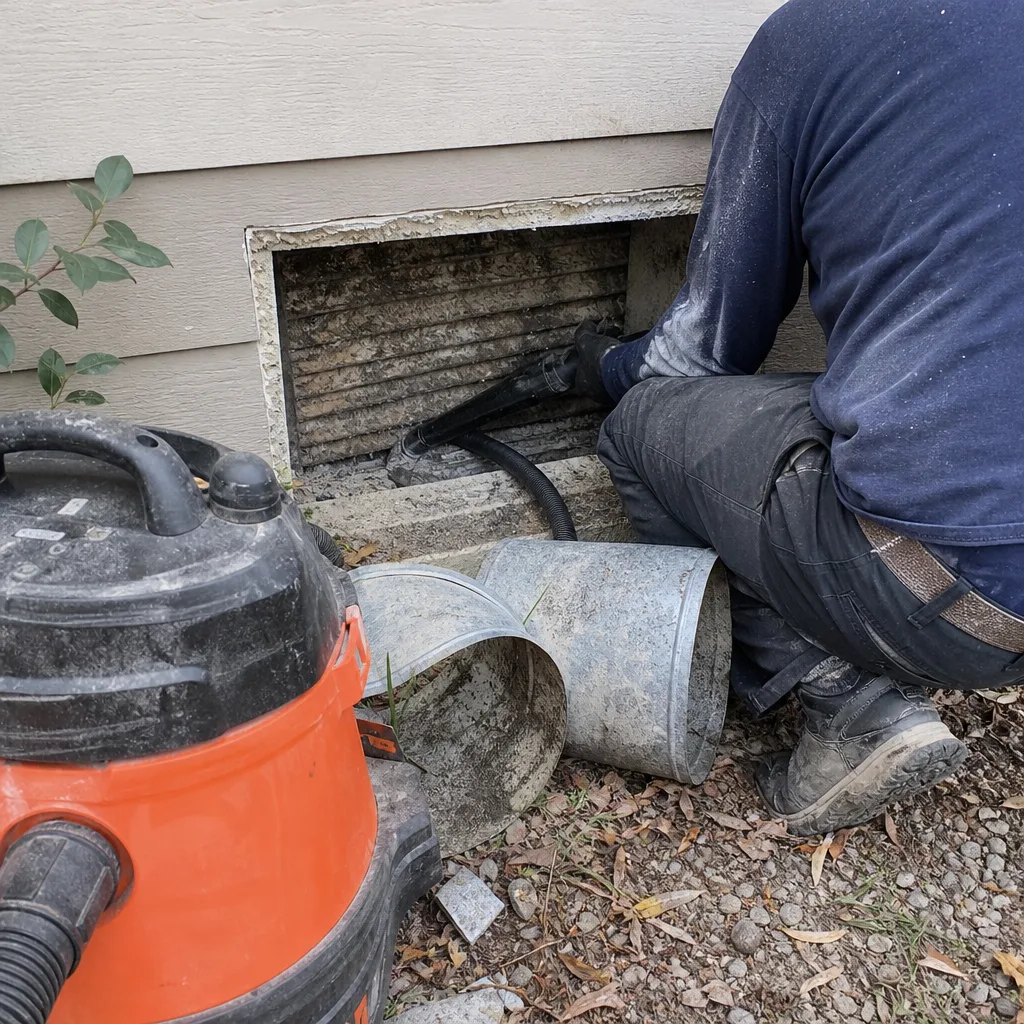 Before
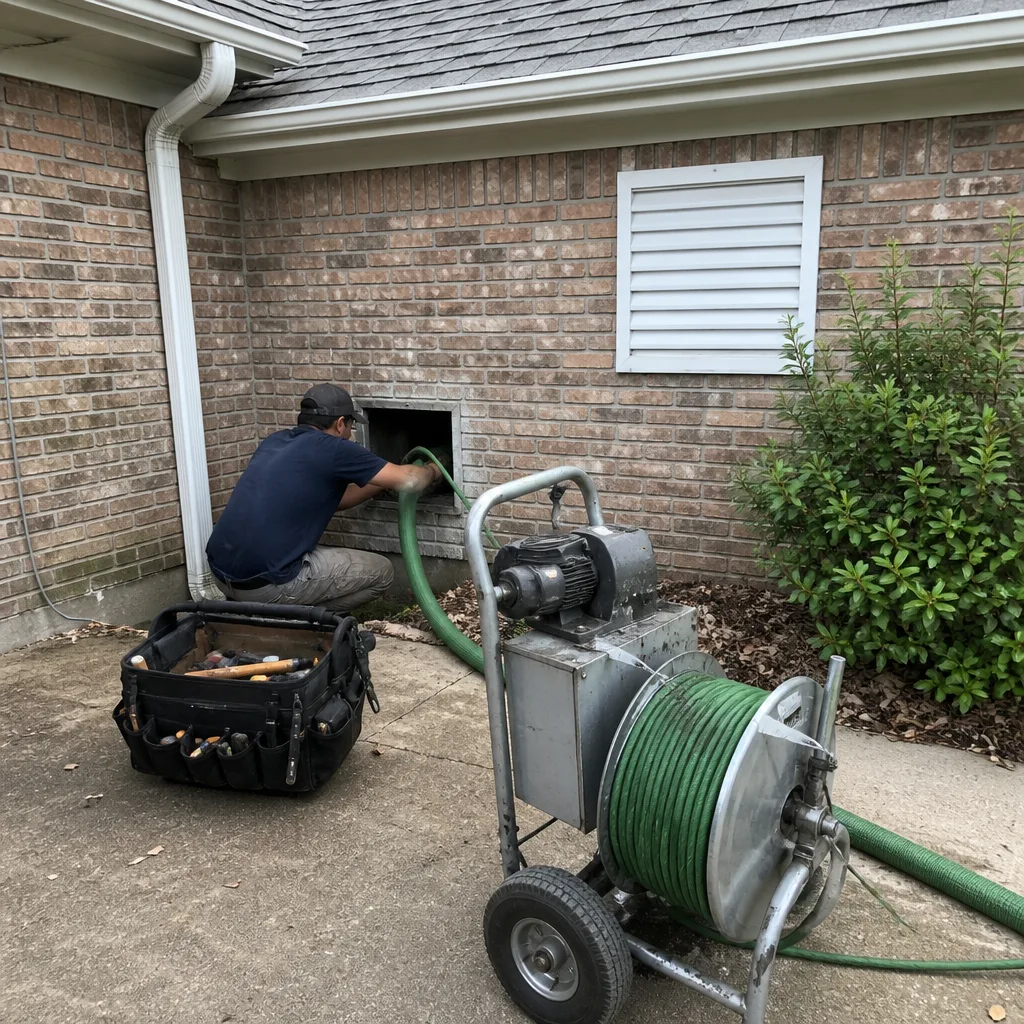 After
After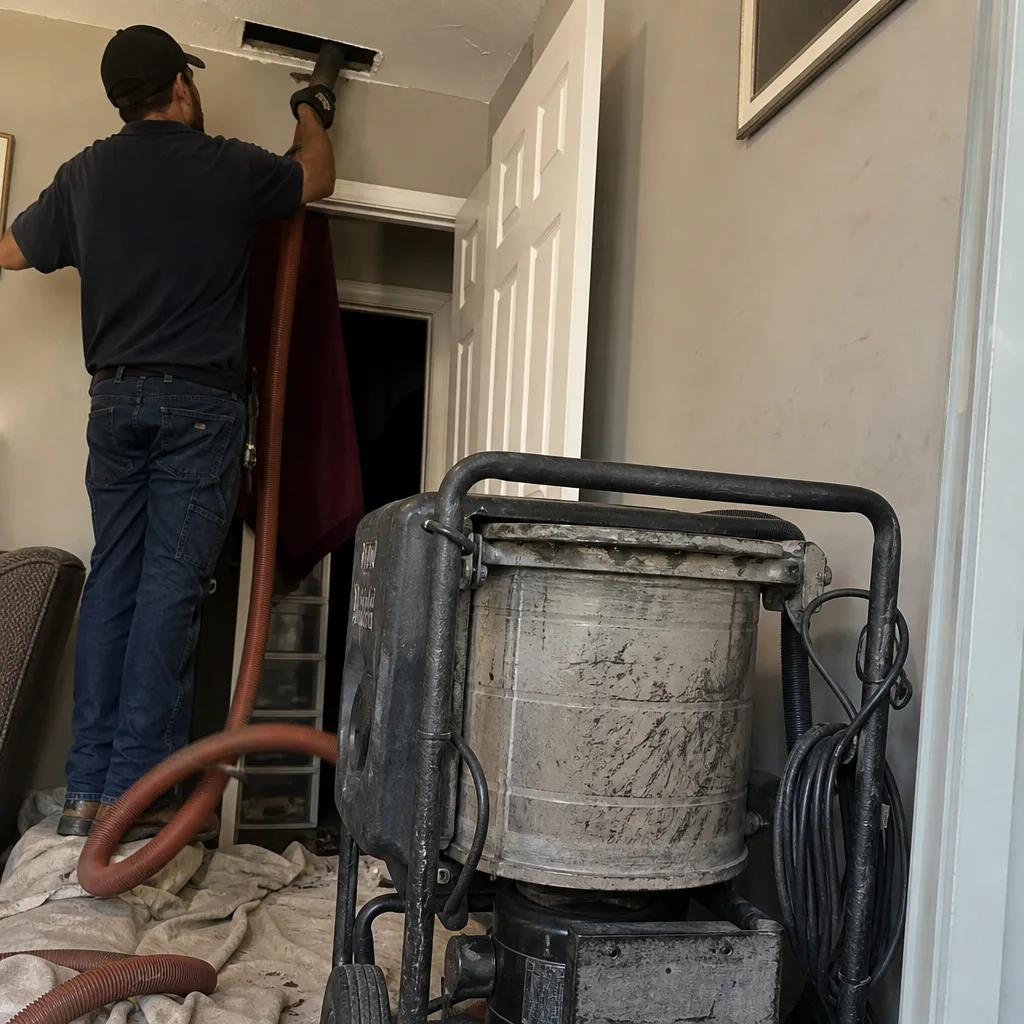 Before
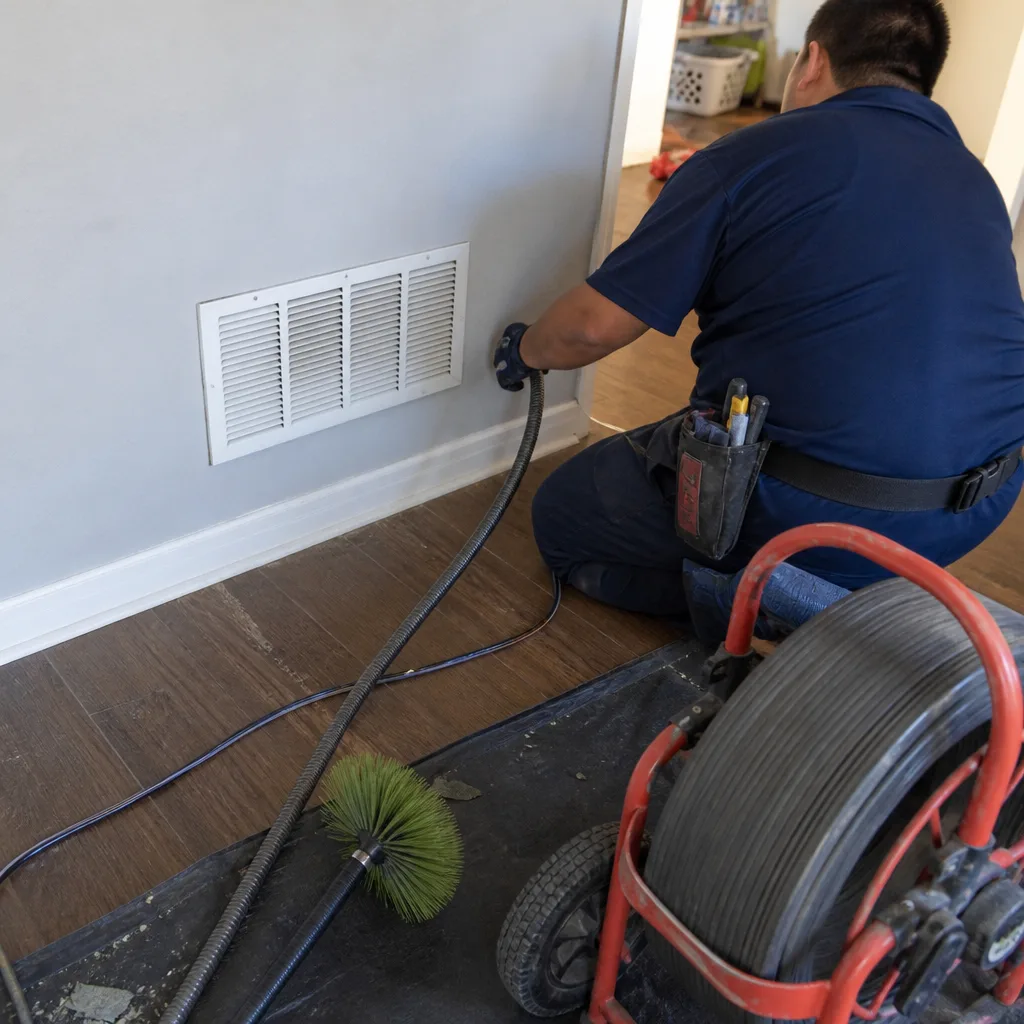 After
After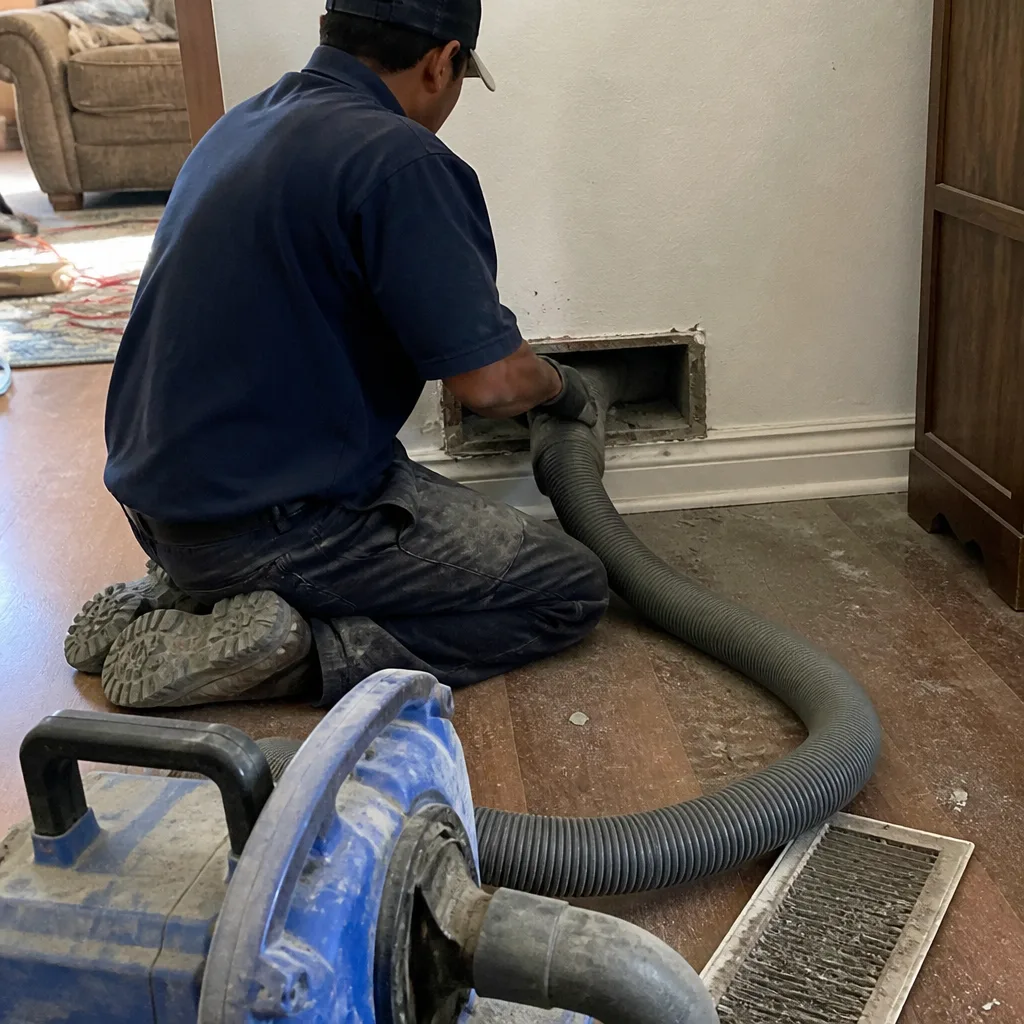 Before
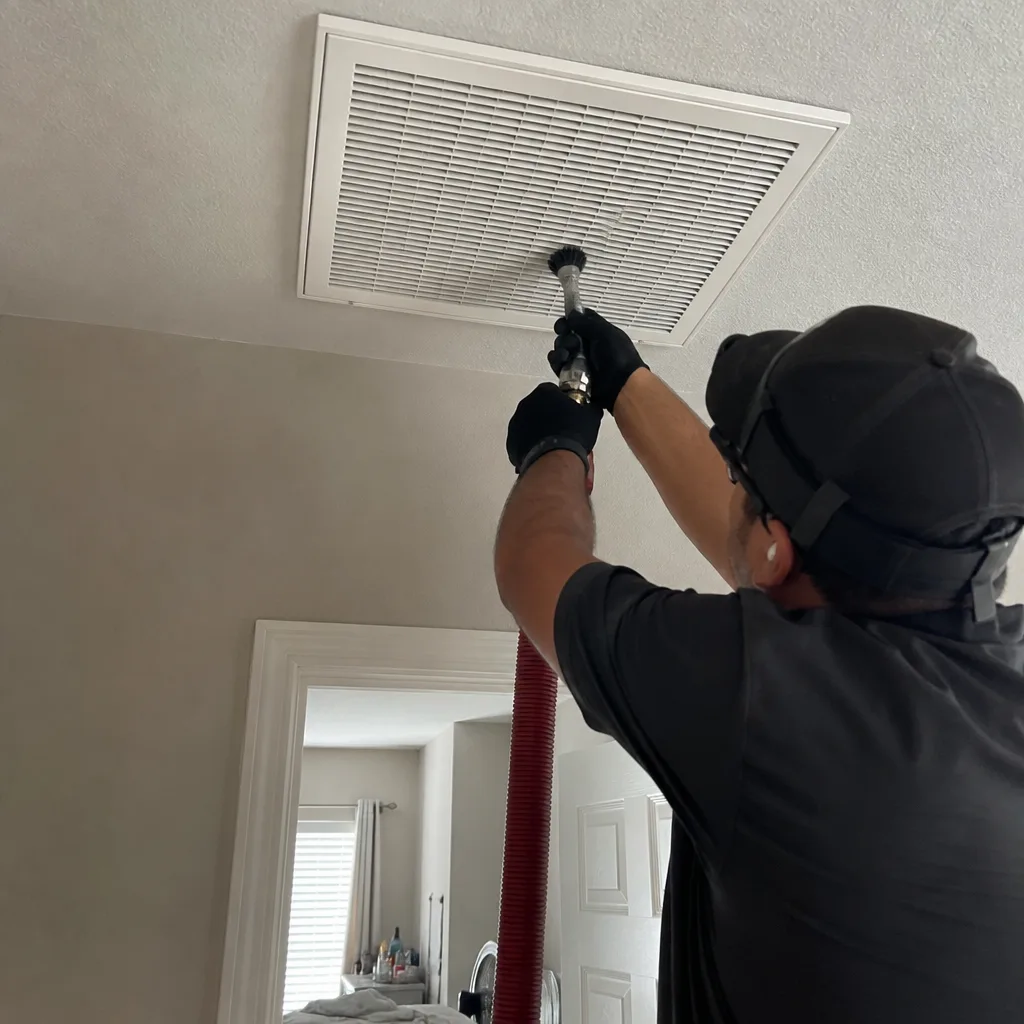 After
AfterWhen to Call a Professional
Schedule a professional duct inspection if you see visible mold on registers or duct surfaces, if rooms consistently run 5 degrees warmer or cooler than the rest of the house, if you hear whistling or rattling from ductwork when the blower runs, or if your energy bill rises 20% or more without a change in usage. Musty odors that persist after filter changes, dust reappearing within days of cleaning, and any water intrusion event also warrant a call.
Hollis Air Duct Houston offers free estimates in Houston. Call (713) 936-5800 to schedule an inspection during your next March or October window. We write the price down before any work starts, and every job is covered by the 365-Day Done Right Promise.
Frequently Asked Questions
Every two to three years for most Houston homes. Homes with pets, smokers, recent renovations, or allergy-sensitive occupants may benefit from every two years. Homes with high-quality filtration and regular filter changes can often go five years or more before professional cleaning is needed.
March or October. Both months sit between HVAC stress seasons, so the system is under light load, scheduling is easier, and the work holds until the next peak period. March prepares the system for summer cooling and allergy season. October prepares it for the short heating period and winter dust.
For a typical single-family Houston home, whole-system duct cleaning runs between $350 and $650. Smaller homes under 1,500 square feet may run $250 to $400. Larger two-story homes with multiple returns can run $600 to $900. Duct sealing, if needed, is priced separately. Call (713) 936-5800 for an exact written quote before any work starts.
Low-price duct cleaning quotes are typically bait. The $49 or $99 whole-house price covers almost nothing once the crew arrives. Common add-ons include per-vent charges, sanitizing sprays, filter replacements, and “discovered” mold treatments. The final invoice is often higher than a straight quote from a company that priced the job honestly upfront. Ask any company to put the full price in writing before work begins. If they won’t, that’s your answer.
Ask for before-and-after photos of the duct interior. Any honest company using professional negative-air equipment from manufacturers like Nikro or Abatement Technologies can show you the inside of your ducts on camera. If the company cannot or will not provide photos, assume nothing was actually removed. Also check for visible dust at registers within a week. A proper cleaning should eliminate re-soiling for at least a year.
Yes, but it’s not a cure. Removing accumulated pollen, dust, and pet dander from the duct system reduces the volume of irritants circulating through the home. Combined with MERV 11 or higher filtration, a cleaned system noticeably reduces allergy symptoms for many Houston households. The key is timing: clean before peak pollen season in early March, not after symptoms have already started.
The Bottom Line
Houston’s climate gives you two practical windows each year to maintain your ductwork: March and October. During these transition months, the HVAC system is under light load, pricing is stable, and any work done will hold through the next high-stress season. Hurricane season adds a wildcard that makes post-storm inspections prudent for any home within 50 miles of a named storm’s path. Allergy season is predictable, and a March cleaning gets ahead of the worst pollen. Track everything in a simple seasonal log, keep filters changed, and call (713) 936-5800 when the log shows it’s time. A full guide to our process is on our Hollis Air Duct Houston home page.
Written by Roy Castellanos, Owner at Hollis Air Duct Houston, serving Houston since 2004. Browse our more guides & resources for Houston homeowners.