
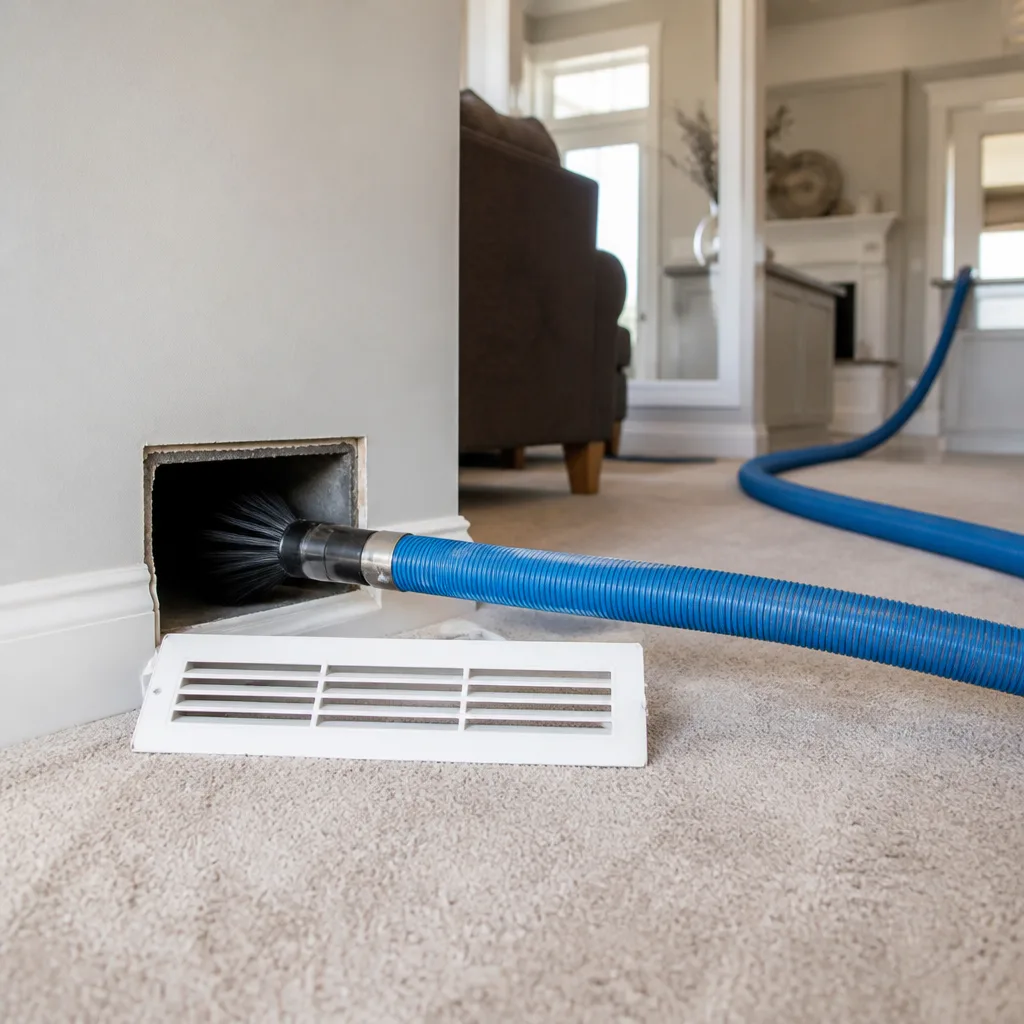
 Whole-home duct cleaning
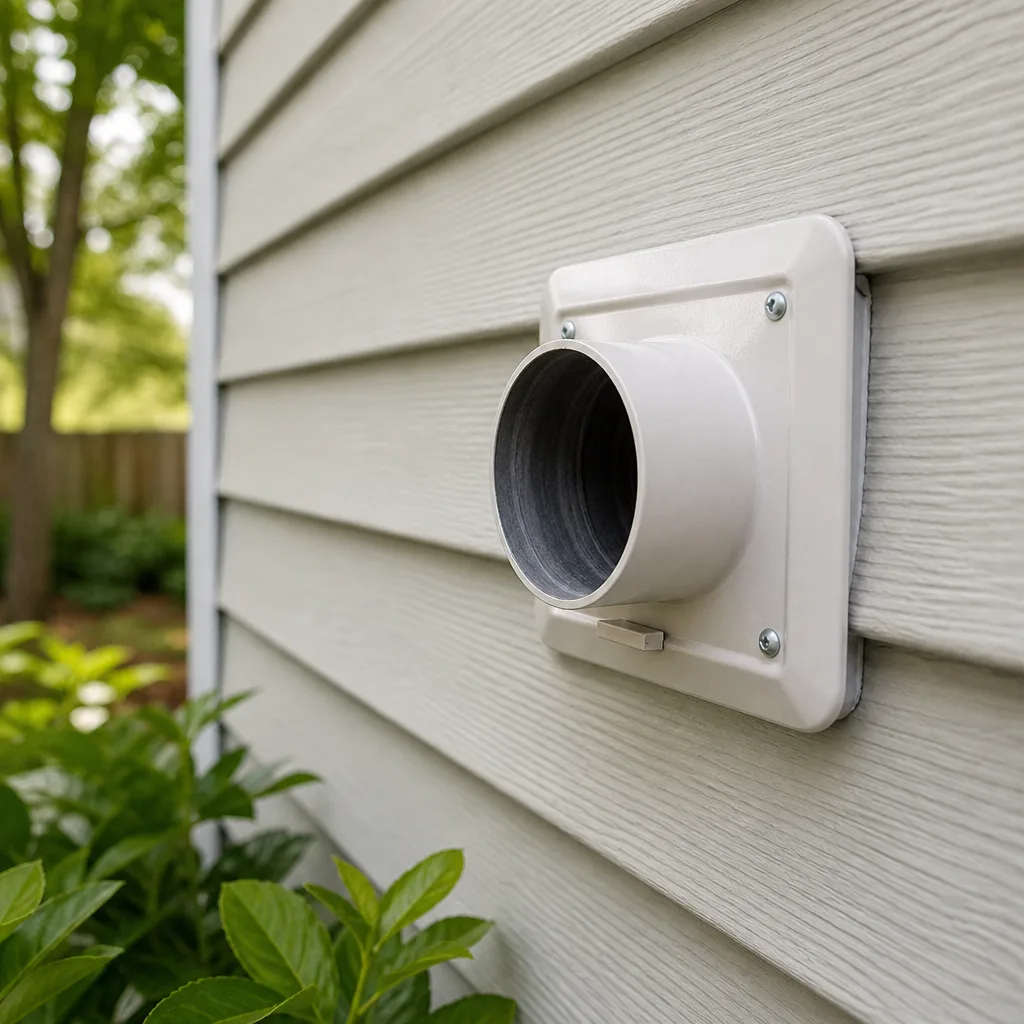 Dryer vent cleaning
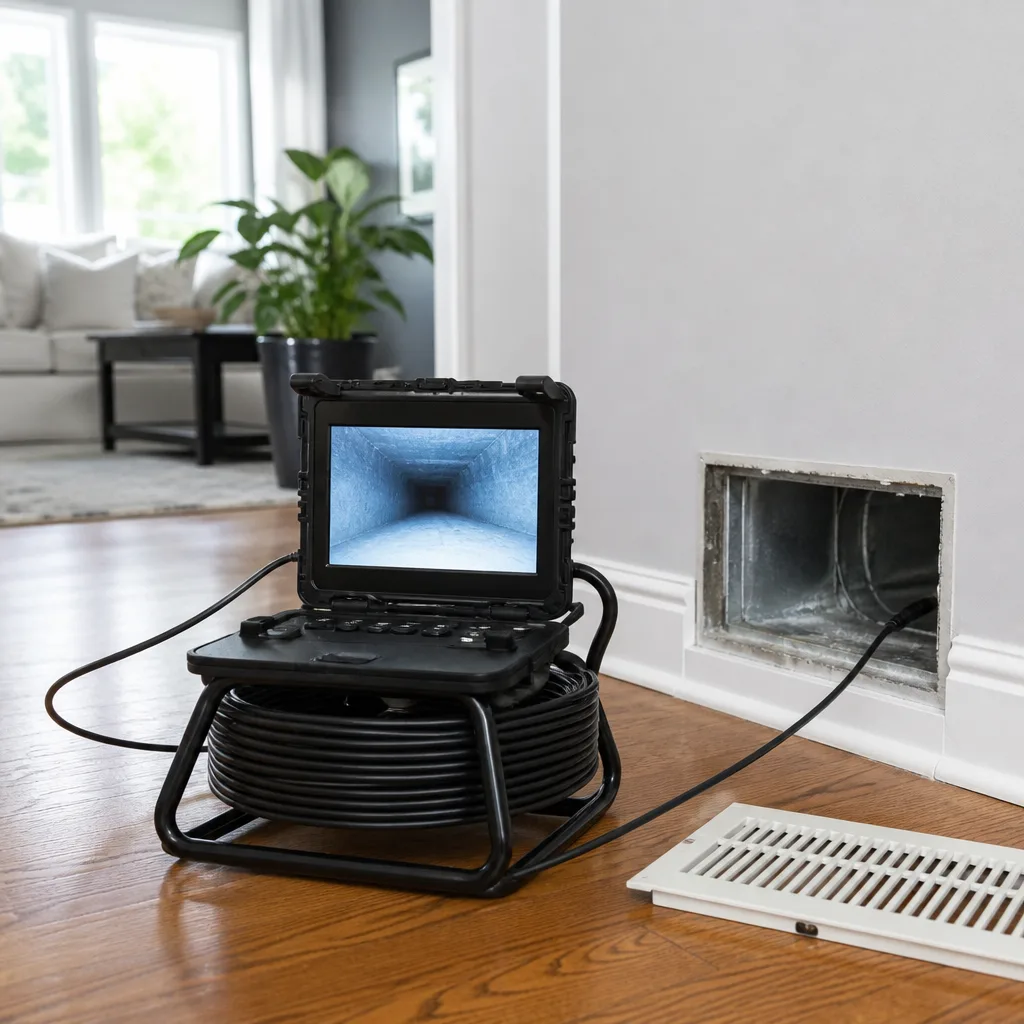 Camera inspection
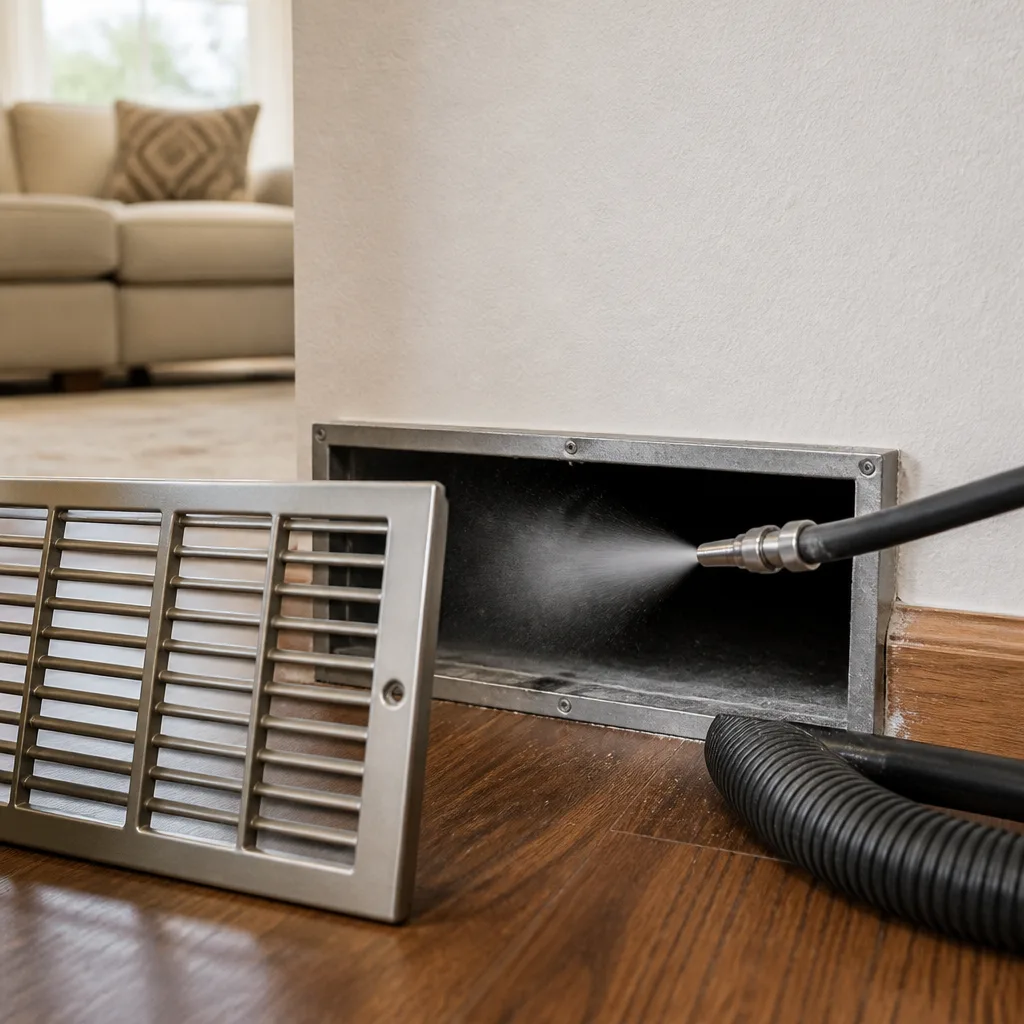 Sanitizing & deodorizing
Whole-system duct and dryer vent check with before-and-after photos - you see exactly what came out of your vents
That "$99 whole-house special" is a bait ad - the real number appears once they are in your hallway, or the "clean" is a shop-vac at the register. We photograph the inside of your ducts before and after instead.
Rotobrush Vent Sanitizing: The Houston Owner’s Guide
We stock and install Rotobrush-compatible vent sanitizing parts across Houston, with installed pricing typically running $240 to $480 depending on your unit’s model year and which component failed. Most swaps take less than an hour once we’re on site. The usual story we hear: an owner runs the Rotobrush through a vent run, notices the sanitizer isn’t misting the way it did last season, or catches a faint electrical smell from the housing, and realizes the sanitizing module has stopped pulling its weight. You don’t need a new machine. You need the right part matched to your unit, priced in writing, and installed without a surprise.
Roy Castellanos and the Hollis Air Duct Houston crew have been servicing Rotobrush equipment in Houston homes and businesses for well over a decade, including plenty of units out in the Energy Corridor where older construction means duct systems that haven’t seen proper sanitizing attention since long before anyone worried about it. One thing we’ve learned: Houston’s humidity punishes sanitizing components harder than dryer climates ever will.
Which Rotobrush Models This Applies To
The Rotobrush vent sanitizing components we service and stock parts for span the aiR+ series, the Raptor line, and the older Flex and Sprinter platforms still running in plenty of Houston vans and shop floors. The gotcha most owners miss: a sanitizing module labeled for one series will not always seat correctly in another, even when the housing looks identical from the outside. Rotobrush changed fitting geometry between generations, and the difference can be a matter of millimeters.
Before you order anything, check the model plate on the machine body. It will list a series code and a manufacture date. If the plate is worn off, measure the sanitizer port opening and note whether your unit uses a threaded or quick-connect fitting. That single measurement eliminates most wrong-part orders. For Rotobrush specifically, we default to OEM sanitizing components when the unit is still under any applicable coverage. For older units where OEM pricing makes no sense, we carry quality aftermarket equivalents that match the port spec and output range. We say it plainly on every quote: OEM or aftermarket, the price is written down before we touch the machine.
Styles & brands we work with
Signs Your Rotobrush Vent Sanitizing Is Failing
- Weak or uneven mist output. The pump diaphragm is the first thing to fatigue in Houston’s heat. When output drops to a sputter, the sanitizing coverage is no longer consistent across the vent run.
- Sanitizer pooling at the nozzle instead of atomizing. That usually means a clogged tip or a failing check valve. If the nozzle drips after shutoff, the valve seat is worn and the module is bleeding product between cycles.
- Electrical smell or intermittent power cutout. Heat and humidity corrode the wiring connections near the module. This is the symptom we treat most seriously because it can affect other circuits on the unit.
- Reservoir leaking around the cap or seam. Rotobrush reservoirs on older units used a gasket material that hardens over time. Houston’s temperature swings accelerate that hardening. Once the gasket fails, the unit draws air instead of sanitizer.
- Sanitizer consumption drops noticeably on the same job type. If you’re suddenly using half the product you used to, the metering is off and the vents are not getting the stated concentration. That’s a calibration or component failure, not a “new normal.”
See the difference
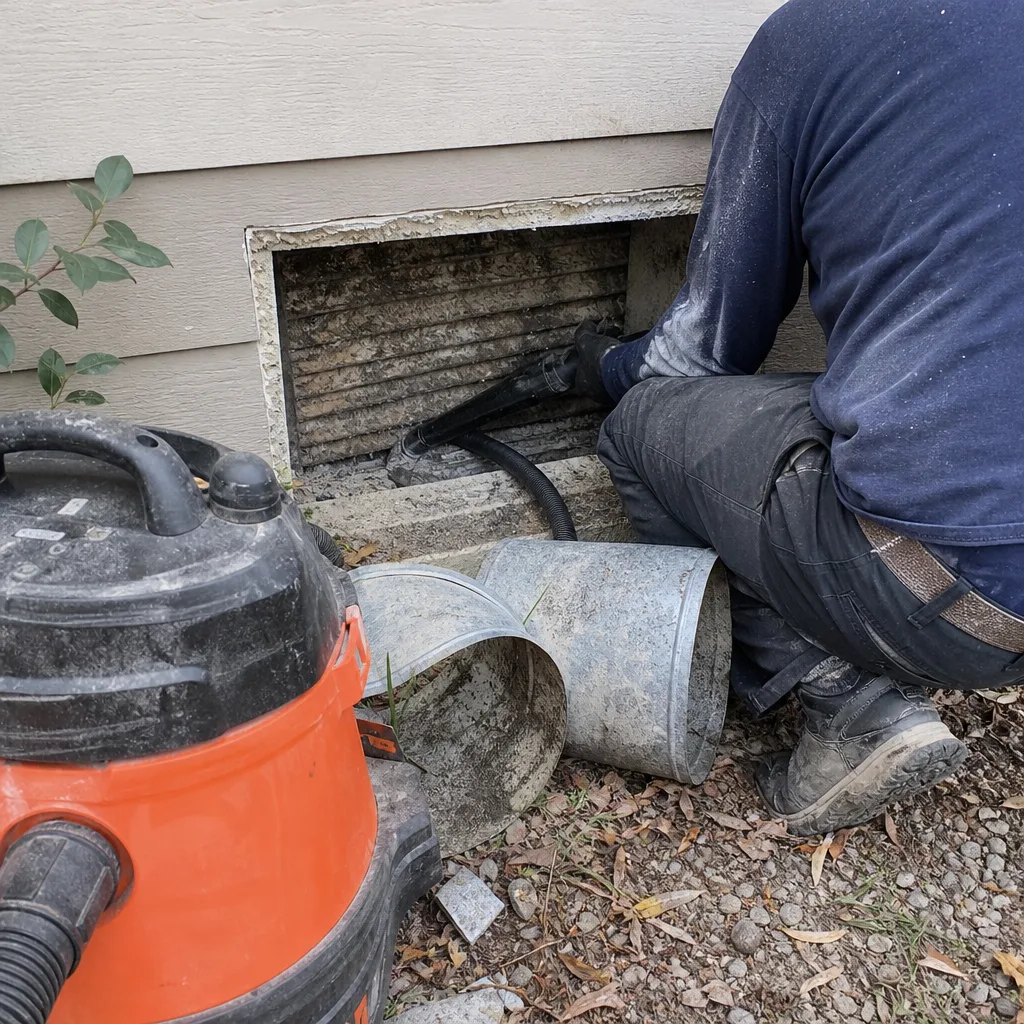 Before
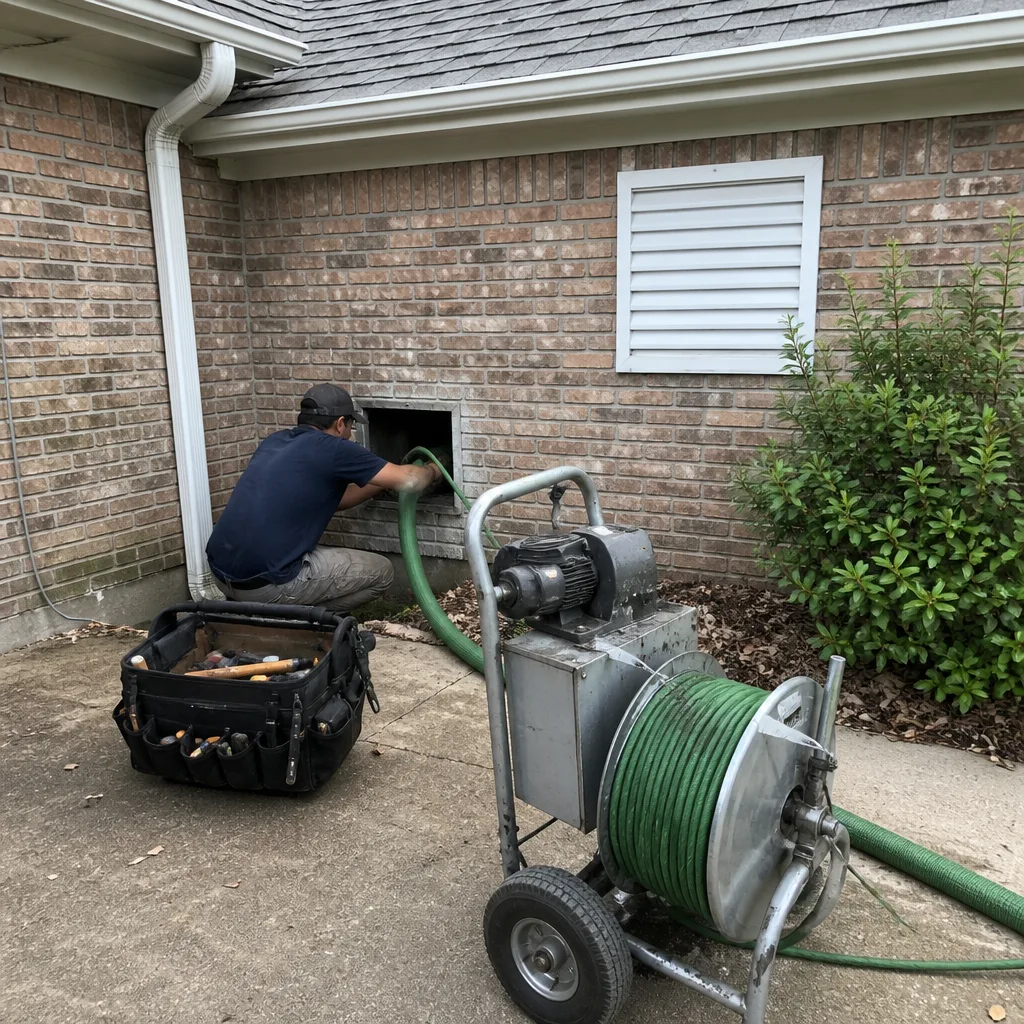 After
After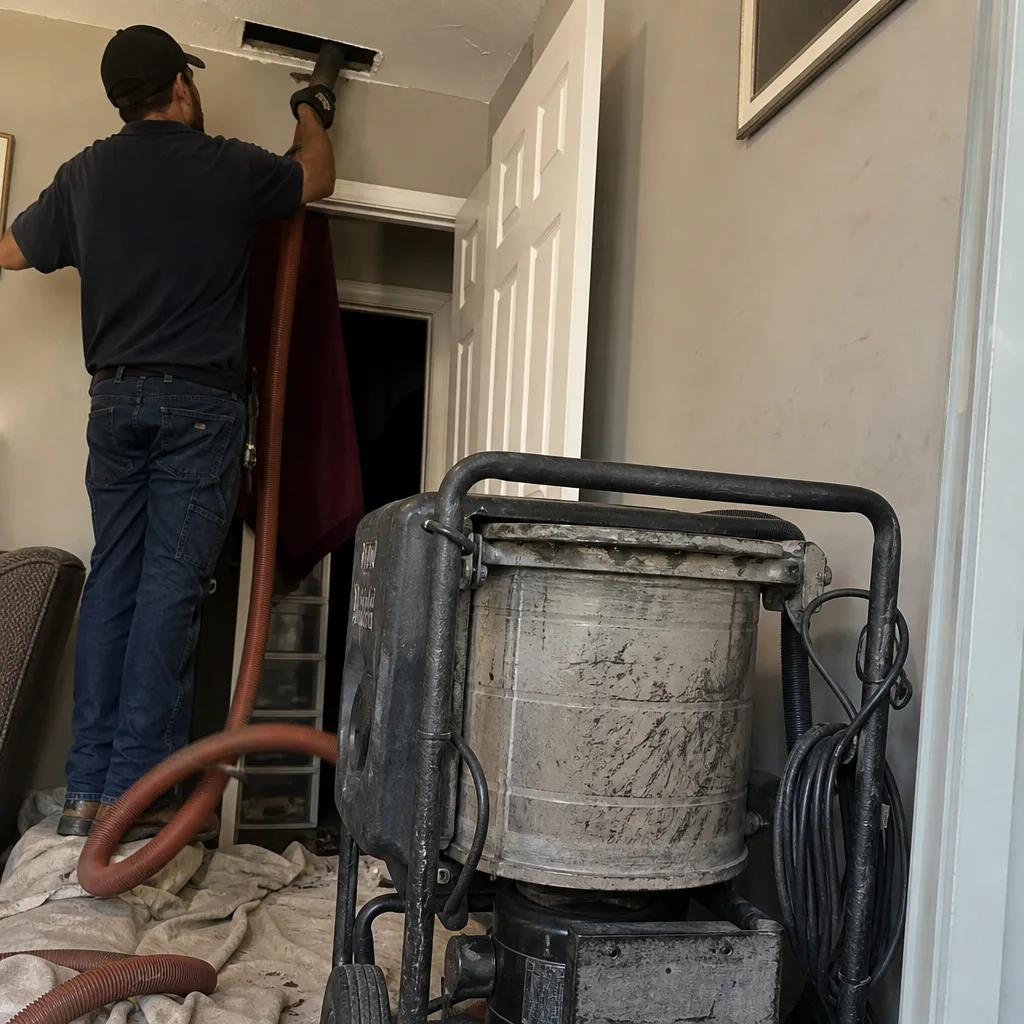 Before
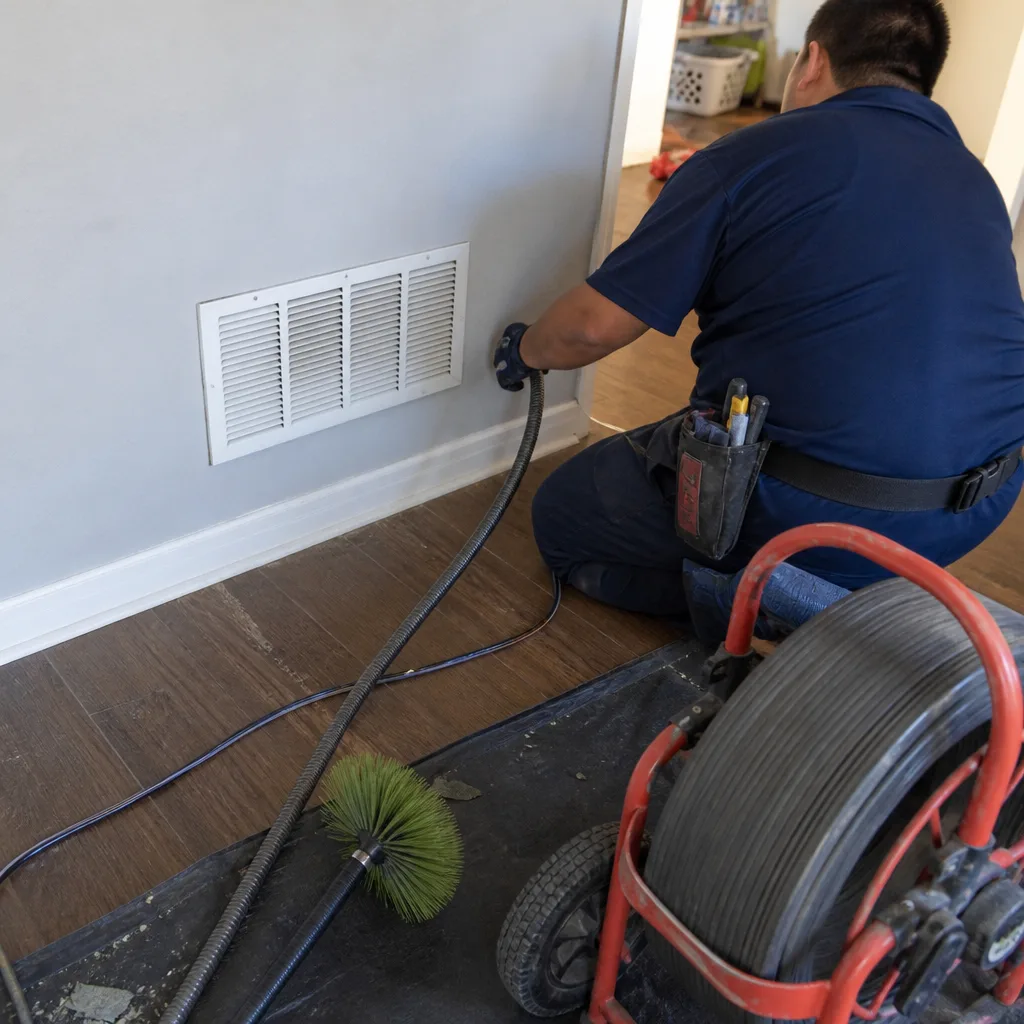 After
After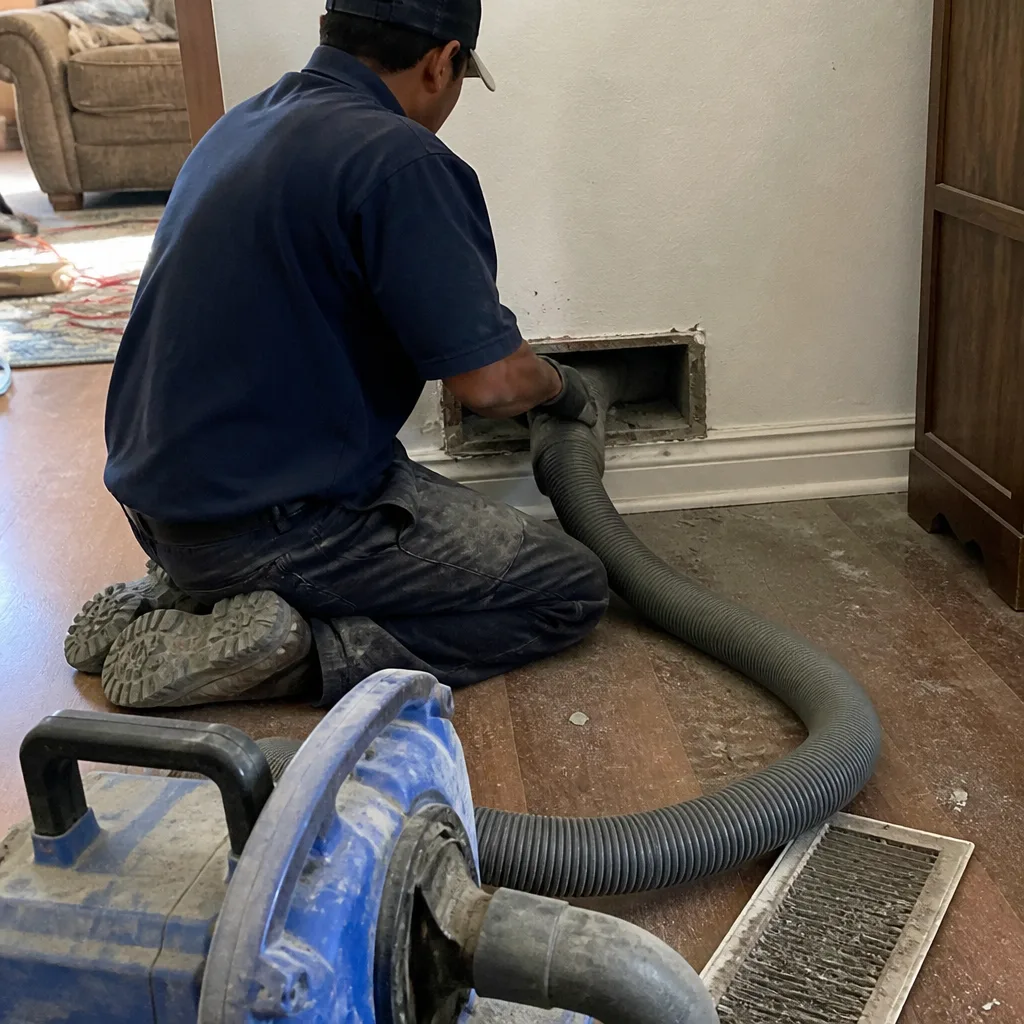 Before
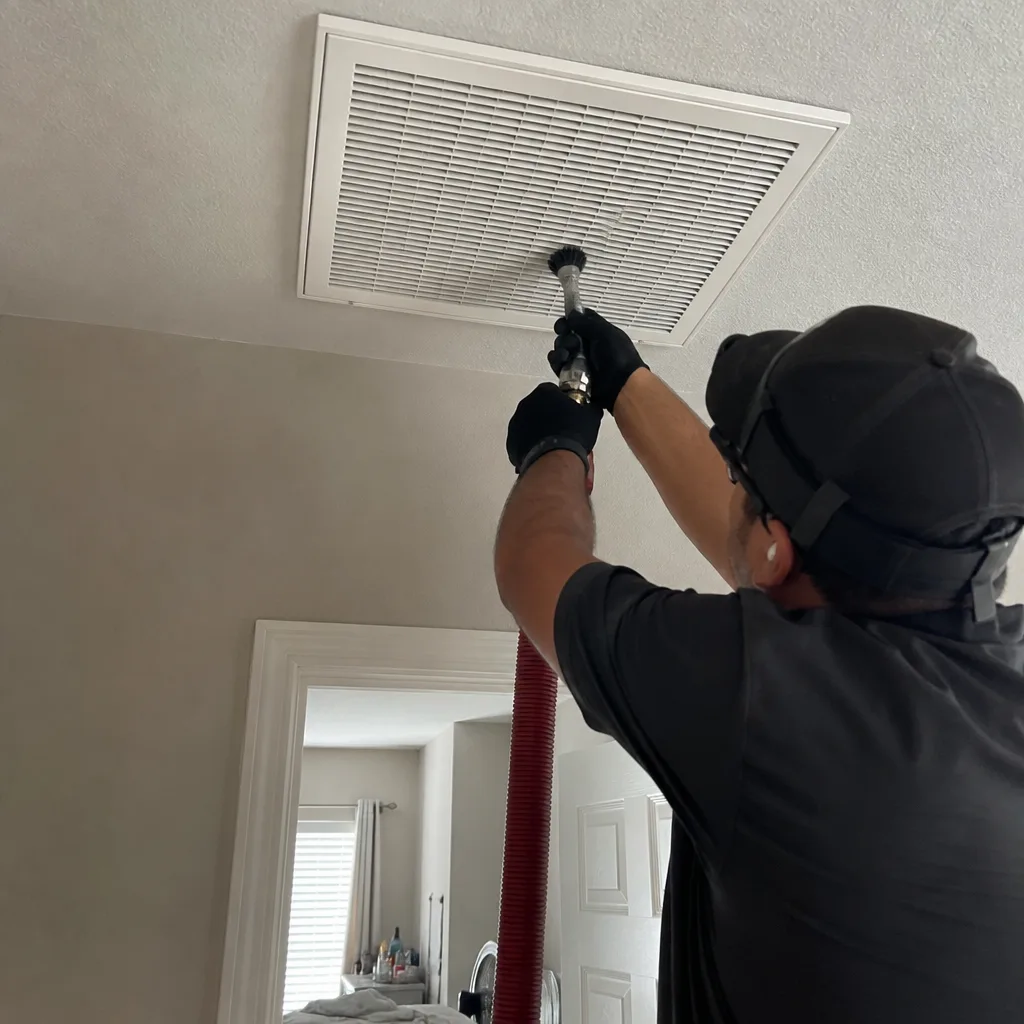 After
AfterReplacement Cost & What’s Included
For Houston jobs, expect to pay between $240 and $480 installed for a Rotobrush vent sanitizing component replacement. The spread comes down to which part failed: a nozzle or check valve is a lower-ticket repair, while a full pump module or reservoir assembly runs toward the top of the range. If your unit uses a quick-connect module, it’s a faster job than a threaded fitting that needs careful seating.
Every job from Hollis Air Duct Houston includes the part, the labor, the calibration check, and a written price before we start. No estimate that balloons once we open the housing. The work is covered by the 365-Day Done Right Promise: if the replacement part fails within a year, we come back and make it right at no charge, including a free second visit. That’s in writing on every invoice.
DIY or Call Us?
If you’re comfortable with the basics, you can check two things safely: confirm the model plate and measure the port fitting so you know what part you’re dealing with. That’s worth doing before any call. What we don’t recommend: opening the sanitizing module housing to swap a pump or rebuild a valve if you’re not certain about the wiring. These components carry electrical current, and on older aiR+ and Flex units, the wiring routing is tighter than it looks. A short from a rushed splice can damage the main board, and that turns a $300 part into a much larger repair.
What makes sense for most Houston owners is a call to (713) 936-5800. Tell us the series code off the plate and we’ll tell you over the phone what the likely culprit is, what the part costs, and how long the swap will take. The estimate is free, and it won’t change when we roll up.
FAQs
In Houston’s climate, expect 3 to 5 years from the sanitizing pump and metering components before output degrades noticeably. Units run in high-humidity attics or frequently transported between job sites tend to land on the shorter end. The nozzle and check valve are usually the first items to go.
Sometimes. A clogged nozzle can often be cleaned, and a worn check valve can be swapped for a new valve rather than a full module. If the pump diaphragm is split or the reservoir has a hardened gasket, replacement is the honest fix. We’ll tell you which one applies once we look at the unit, and the price is set before we start the work.
Most Rotobrush vent sanitizing component replacements take 45 to 75 minutes on site. The longest part is usually removing and reseating the module with the fitting aligned correctly, especially on older threaded units. We price the job as a flat rate, so time on site doesn’t change what you pay.
We keep the most commonly replaced Rotobrush sanitizing parts on the truck in Houston: nozzles, check valves, pump modules for the aiR+ and Raptor series, and reservoir gaskets. If your unit needs something unusual, we can usually have it in hand within a few business days. We also stock compatible sanitizing components for other system brands we service, including Lennox, Trane, and Carrier.
If your Rotobrush vent sanitizing is acting up, don’t run another job with weak output and hope it clears up. Call us at (713) 936-5800 for a free estimate. One flat price, written down before the work starts, backed by a full year. Clean air doesn’t announce itself – you just stop noticing the problem.
Written by Roy Castellanos, Owner, Hollis Air Duct Houston at Hollis Air Duct Houston, serving Houston and nearby areas.